Hand, foot, and mouth disease (HFMD) is an acute viral infection common in children under 5 years old. It occurs year-round, with peak outbreaks typically observed from march to may and from september to december. Doctor Do Thanh Tra, from the Pediatrics Department at Tam Anh General Hospital TP HCM, provides guidance on recognizing early signs of the disease.
Fever, irritability
The disease often begins with non-specific symptoms. Children may experience a mild to moderate fever, ranging from 37,5 to 38,5 degrees Celsius, accompanied by irritability, poor appetite, and sometimes a sore throat. Some cases involve excessive drooling due to lesions in the oral cavity. These initial symptoms can easily be mistaken for an upper respiratory viral infection. Parents should monitor for more characteristic signs that typically emerge later.
Oral ulcers
One distinct symptom is the appearance of ulcers or blisters, approximately 2-3 mm in diameter. These lesions are primarily found on the soft palate, buccal mucosa, gums, and tongue. They cause pain, leading to poor feeding, reduced eating, and increased irritability in affected children.
Skin lesions
HFMD typically causes small blisters on the palms, soles, knees, or buttocks, ranging from 2-10 mm in size. These blisters contain clear fluid and appear on a reddish base. They may be itchy but are generally not painful. Once they dry, they leave dark marks without forming ulcers. Parents should perform a full-body check on their child, paying close attention to easily overlooked areas such as between the fingers, between the toes, the buttocks, and around the anus. If a child is diagnosed with HFMD, parents should keep them home from school to prevent further spread.
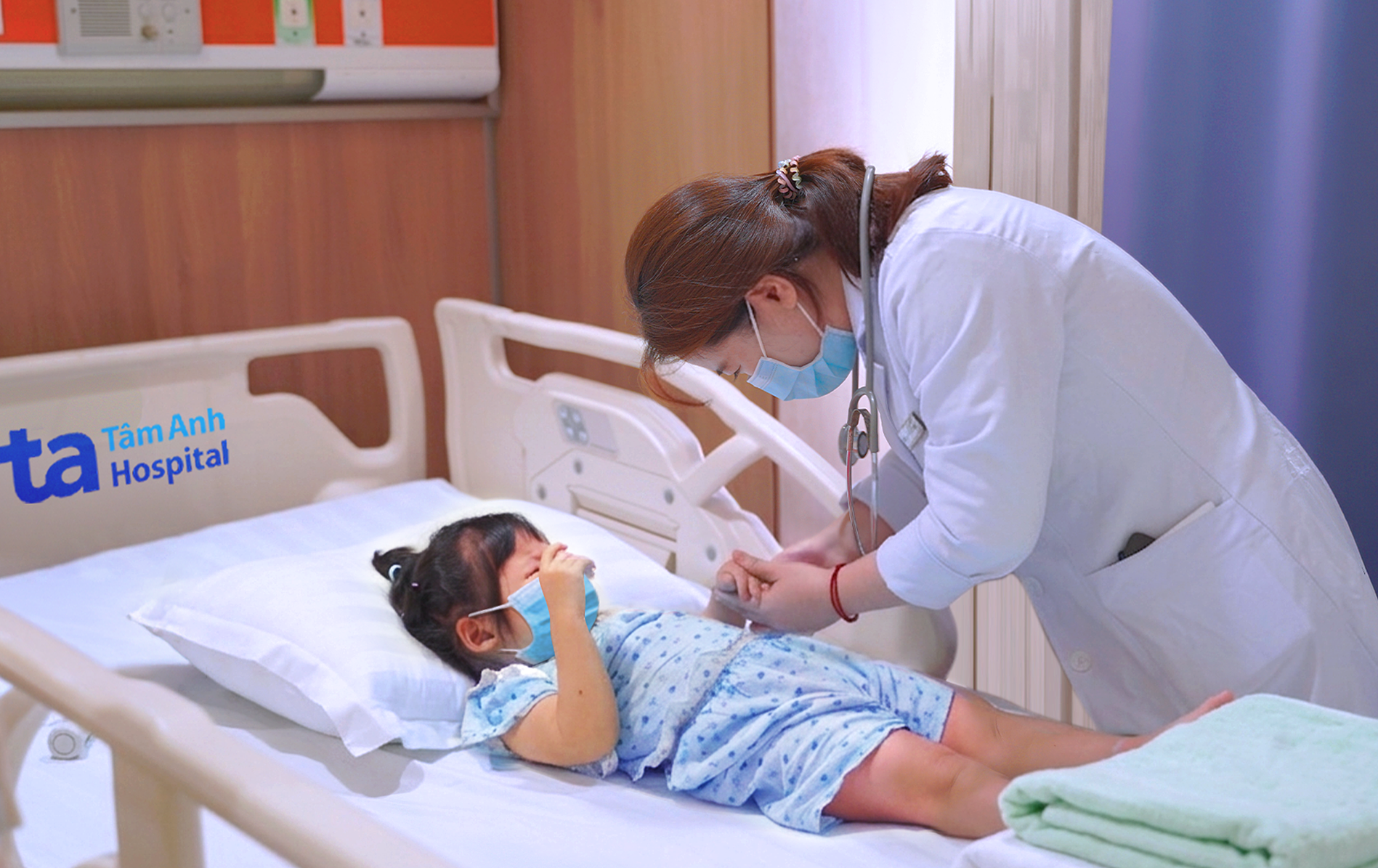 |
Doctor Tra examines a child with hand, foot, and mouth disease at Tam Anh General Hospital. *Photo: Minh Tam* |
Severe complications of HFMD, including neurological, cardiovascular, and respiratory issues, can develop early in the disease course, especially within the first 5 days. Neurological signs include startling with a jerking motion, restlessness, sluggishness, limb tremors, and an unsteady gait. Respiratory and cardiovascular signs may present as a rapid heartbeat, mottled skin, irregular breathing, rapid breathing, and chest retractions.
Doctor Tra advises parents to seek immediate medical attention if their child exhibits one or more of the following signs: a fever of 39 degrees Celsius or higher, or a fever lasting over two days; startling with a jerking motion; limb tremors; inability to sit steadily; an unsteady gait; or limb weakness. Other concerning symptoms that warrant an immediate visit to the doctor include frequent vomiting, rapid breathing, difficulty breathing or abnormal breathing, mottled skin, sluggishness, prolonged irritability or drowsiness, excessive sweating, lethargy, difficulty waking, or seizures.
If a child has HFMD, parents should ensure they stay home from school for at least 7 days and isolate them from healthy children to prevent transmission. Parents should also prioritize preventive measures and home care for the sick child, including frequent handwashing with soap. Hands should be washed before eating, after using the toilet, after changing diapers, after wiping saliva, and after any contact with the child's secretions. Additionally, parents should prevent children from mouthing toys, sucking their thumbs, or sharing spoons, cups, or towels with others.
Parents must regularly wipe and wash frequently touched surfaces daily, such as doorknobs, tables, chairs, and floors. Children's toys should be cleaned with soap or a disinfectant solution to limit the spread of the disease.
There is currently no specific treatment for HFMD; management primarily focuses on alleviating symptoms. In mild cases, doctors prescribe outpatient care, schedule follow-up appointments, and educate parents on severe signs to monitor. Parents should manage fever, ensure adequate hydration, provide a full nutritional diet, and offer soft, easily swallowed foods in small, frequent meals.
Minh Tam
| Readers can submit questions about neonatal pediatrics here for doctors to answer. |