Tam arrived at Tam Anh General Hospital Ho Chi Minh City in critical condition. Dr. Huynh Khiem Huy, from the intensive care and anti-poisoning department (ICU), stated the patient required mechanical ventilation, was in a deep coma, had low blood pressure, and showed signs of septic shock.
Tests revealed widespread systemic infection with very high inflammatory markers, coagulopathy, acute liver failure, acute kidney failure, and severe respiratory failure. Dr. Huy diagnosed the patient with sepsis, septic shock, and multi-organ failure, which originated from a skin and soft tissue infection in the foot and rapidly spread to the lungs, liver, kidneys, and central nervous system.
About one week prior, Tam sustained a small scratch on his right toe. It did not bleed much, so he did not disinfect it. Days later, he developed a high fever, chills, and fatigue. His condition worsened, and he became disoriented, losing consciousness. He was admitted to a local hospital, where doctors intubated him before transferring him to a higher-level facility.
Lab results and clinical assessments at Tam Anh General Hospital Ho Chi Minh City indicated that Tam likely contracted *Burkholderia pseudopallei*, the causative agent of Whitmore's disease, also known as 'flesh-eating bacteria'. This bacterium resides in soil and muddy water, typically entering the body through skin wounds. It is particularly dangerous because it progresses silently but can cause severe sepsis upon eruption.
Beyond attacking internal organs, the bacteria also spread to the heart via the bloodstream. A bedside echocardiogram revealed abnormal lesions on the aortic valve, leading doctors to suspect infective endocarditis. This condition occurs when bacteria attach to heart valves, causing inflammation, disrupting cardiac function, and carrying the risk of forming infected emboli that can travel through the bloodstream, leading to blockages in the brain and other organs.
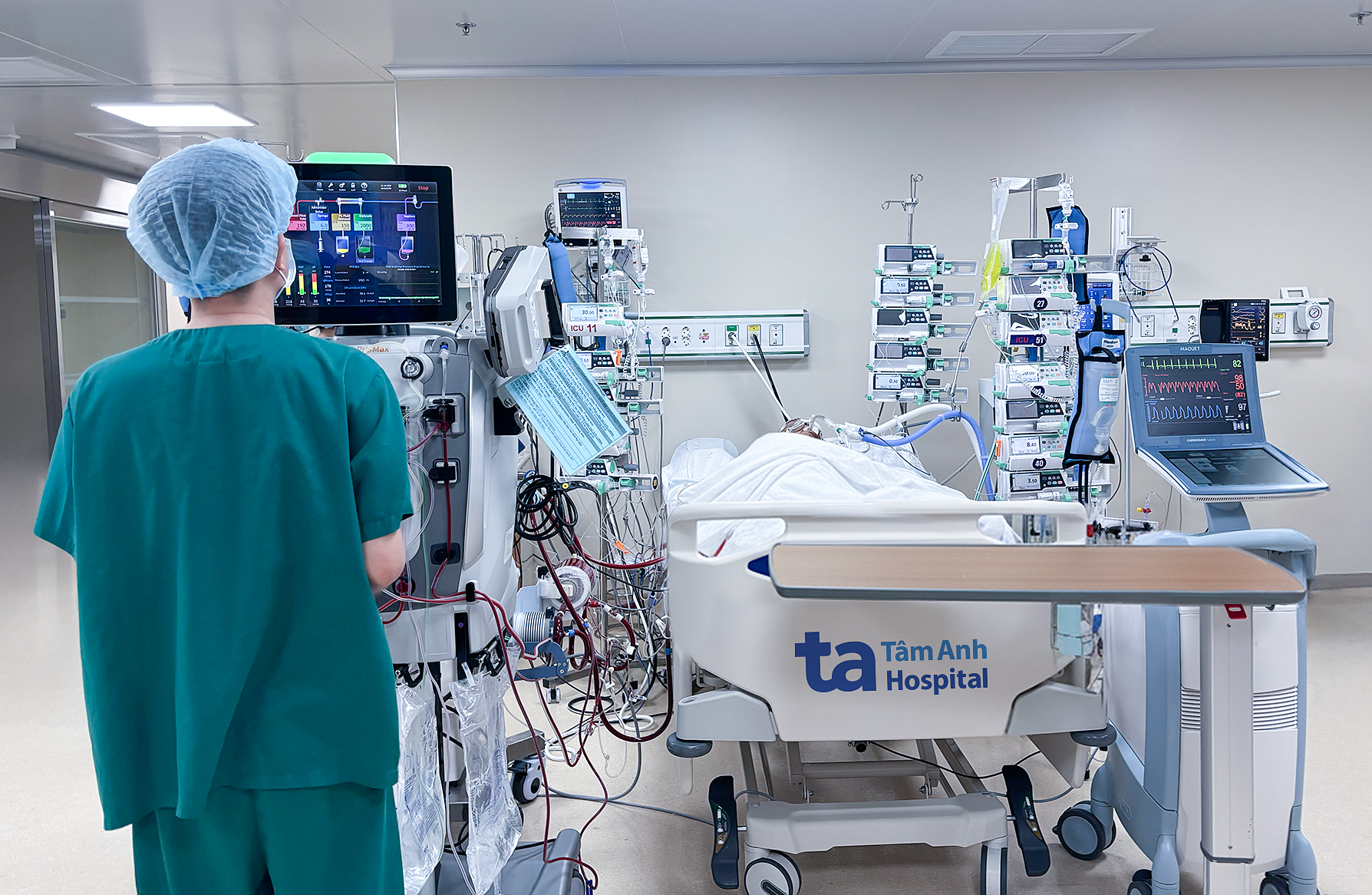 |
The patient is undergoing continuous hemodialysis and monitoring in the intensive care and anti-poisoning department (ICU). *Photo: Tam Anh General Hospital*
The patient is on invasive mechanical ventilation, receiving vasopressors to maintain blood pressure, and a combination of potent, high-dose, long-term antibiotics. Due to severe liver and kidney failure, doctors prescribed continuous hemodialysis combined with multiple plasmapheresis sessions. This aims to remove bacteria, toxins, and inflammatory mediators from the blood, thereby reducing the burden on his failing organs. Concurrently, the patient is undergoing close cardiovascular monitoring with repeated echocardiograms to detect early severe complications on the heart valves, ensuring readiness for intervention should heart failure or dangerous embolism occur.
The patient's prognosis is currently unfavorable, and he remains under close monitoring and intensive resuscitation.
Dr. Huy advises individuals who frequently work in fields, wade through mud, or come into contact with contaminated soil and water to wear protective footwear to prevent skin abrasions. Even small wounds should be thoroughly cleaned, properly disinfected, and closely monitored for unusual signs such as swelling, pain, redness, warmth, fever, chills, or fatigue. Patients should seek early hospital diagnosis and appropriate treatment to prevent sepsis from progressing to septic shock.
Nhat Thanh
*Patient's name has been changed