Answer:
During sleep, the muscles around the throat, tongue, and soft palate, which normally keep the upper airway open, tend to relax. Alcohol suppresses central nervous system activity, causing these throat muscles to over-relax. This allows the tongue and throat tissues to sag, narrowing the airway behind the throat and obstructing airflow. As air passes through this narrowed airway, soft tissues vibrate, producing loud, prolonged snoring.
Currently, there is no specific measure to prevent snoring after drinking alcohol, especially for individuals who already snore. However, your husband can manage snoring by limiting heavy meals and avoiding alcohol close to bedtime. It is best not to drink alcohol for at least 3 to 4 hours before sleeping.
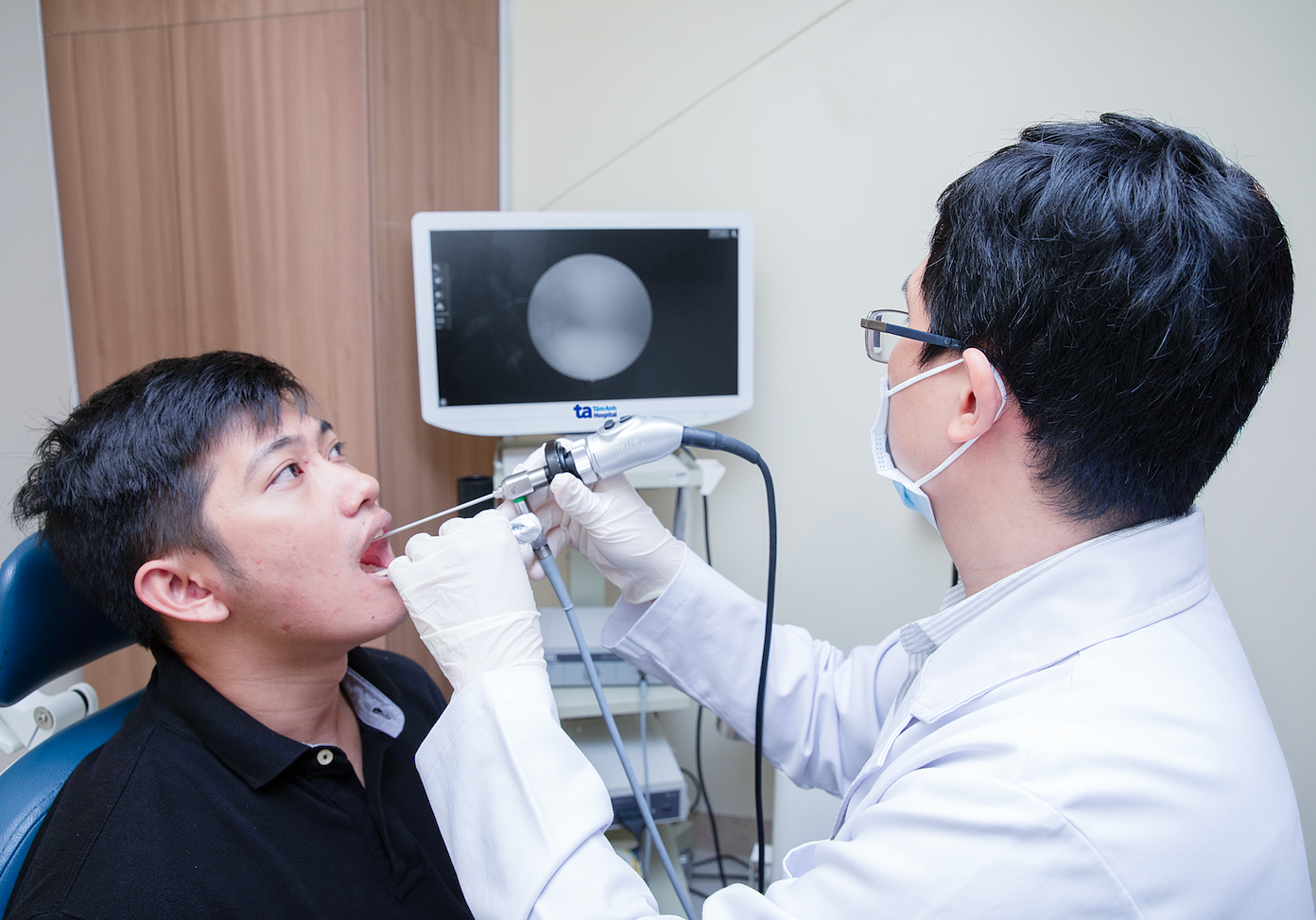 |
Doctor Tuong performs a throat endoscopy on a patient. *Photo: Tam Anh General Hospital* |
Drinking enough water, especially warm water, helps reduce dryness and swelling of the airway mucous membranes. This also thins thick, sticky throat secretions that can obstruct breathing. When sleeping, lie on your side instead of your back, and elevate your head to reduce airway collapse. Using saline gargles and nasal rinses can help clear the respiratory tract before bed. Regular exercise and maintaining a healthy weight also contribute to reducing snoring.
Snoring that occurs after drinking alcohol, following an exhausting workday, or due to an improper sleep position is typically a normal physiological condition. It often improves with changes in lifestyle habits and sleep posture. However, frequent, persistent loud snoring, especially when accompanied by difficulty breathing during sleep, intermittent pauses in breathing, morning headaches, fatigue, or daytime sleepiness, may indicate an underlying medical condition. Such conditions include obstructive sleep apnea syndrome, a deviated nasal septum, hypertrophied nasal turbinates, nasal polyps, enlarged tonsils or adenoids, and nasopharyngeal tumors.
If your husband snores loudly even without consuming alcohol, he should consult an ear, nose, and throat (ENT) specialist for examination, diagnosis, and suitable treatment. For individuals with moderate to severe obstructive sleep apnea, doctors may prescribe continuous positive airway pressure (CPAP) therapy. This method helps keep the airway open during sleep, improving sleep quality and reducing the risk of complications. In cases of upper airway structural abnormalities, doctors may recommend surgery.
Doctor Truong Tri Tuong
Center for Ear, Nose, and Throat
Tam Anh General Hospital, TP HCM
| Readers can ask questions about ear, nose, and throat conditions here for doctors to answer. |