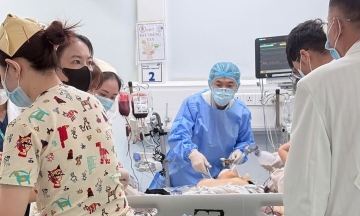
On 7/5, doctors at Quang Ninh Obstetrics and Pediatrics Hospital announced that a 4-year-old boy admitted to their facility was battling level 4 hand, foot, and mouth disease, a condition with a very severe prognosis and a high risk of death. The young patient required immediate intervention, including sedatives, pain relievers, intubation, mechanical ventilation, and cardiovascular support medications.
Despite initial treatments, the patient responded poorly, and his condition rapidly deteriorated. Cardiovascular and respiratory system dysfunctions worsened, leading to a severe reduction in heart function and acute pulmonary edema. Tests confirmed the presence of a severe hyperinflammatory response, commonly known as a "cytokine storm," which was causing extensive multi-organ damage, particularly to the heart muscle.
Following an urgent consultation, the medical team decided on continuous hemodialysis and administered additional anti-inflammatory drugs. These aggressive measures aimed to mitigate the severe organ damage caused by the cytokine storm.
Two days later, the patient's condition showed significant improvement, with his organs beginning to recover. He was successfully taken off hemodialysis, weaned from mechanical ventilation, and the dosage of cardiovascular support medications was reduced.
After two weeks of intensive treatment, the child made a remarkable recovery. He regained the ability to sit up, walk, eat, and resume normal daily activities. He continues to take prescribed medication and attends regular follow-up appointments.
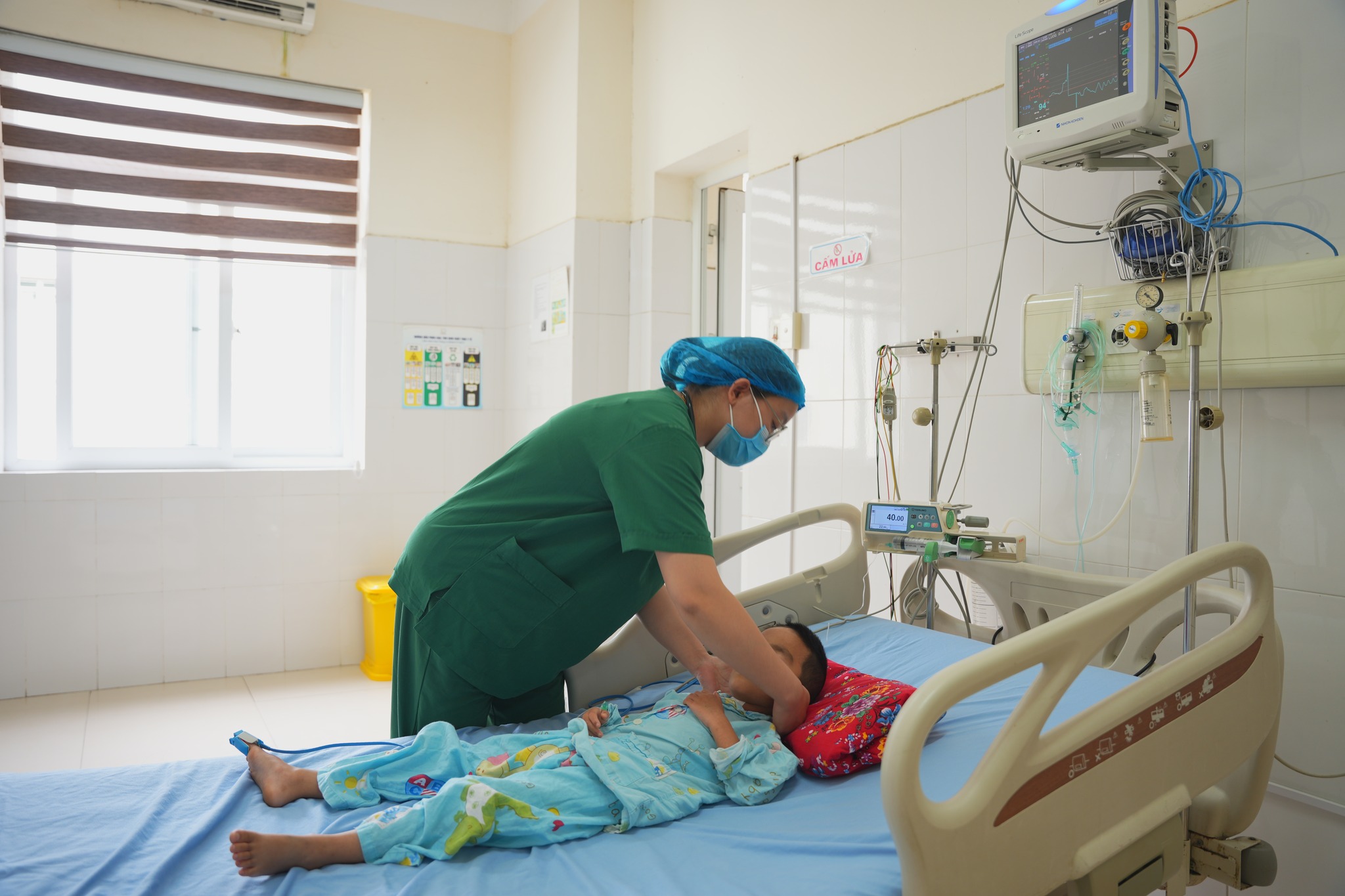 |
The patient received intensive care at the hospital. Photo: Hospital provided |
Over the past month, Quang Ninh Obstetrics and Pediatrics Hospital has observed a noticeable increase in hand, foot, and mouth disease cases compared to previous years. A significant number of children required hospitalization, with most testing positive for the highly virulent EV71 virus strain.
Hand, foot, and mouth disease is an infectious illness caused by enteroviruses, primarily transmitted from person to person through the digestive tract. While it occurs year-round and can affect all ages, it is most prevalent in children under 5 years old. The disease manifests primarily as skin and mucous membrane lesions in the form of blisters, typically appearing on the oral mucosa, palms, soles of the feet, buttocks, and knees.
This disease can lead to dangerous complications such as neurological issues (encephalitis, brainstem encephalitis, meningitis), myocarditis, and acute pulmonary edema, which can be fatal if not detected and treated promptly. Severe complications are often associated with the EV71 virus and carry a risk of long-term sequelae.
To prevent the spread of hand, foot, and mouth disease, doctors recommend frequent hand washing with soap. This practice is crucial before preparing food, eating, feeding young children, using the toilet, after changing diapers, and after contact with blisters. Additionally, objects should be cleaned with soap and disinfected with common detergents.
Parents and caregivers are advised to avoid close contact such as hugging or kissing, and not to share clothes or personal items with infected children. When a child is sick, it is important to keep them away from crowded places like daycare or school. Children should be instructed to cover their mouth and nose when sneezing or coughing. Immediate hospitalization is necessary if a child exhibits abnormal signs like high fever, lethargy, or loss of consciousness.
Thuy An