After giving birth to her first child 13 years ago, Trang conceived a second time but suffered a miscarriage. The couple's artificial insemination attempts were unsuccessful.
Doctor Le Xuan Nguyen, from the Center for Reproductive Assistance at Tam Anh General Hospital, Ho Chi Minh City (IVF Tam Anh Ho Chi Minh City), noted Trang had a near-depleted egg reserve, with an anti-Mullerian hormone (AMH) level of 0,5 ng/mL (normal is around 2-3,5 ng/mL). Her husband's weak sperm reduced the chance of natural conception, necessitating early reproductive assistance if they wished for more biological children.
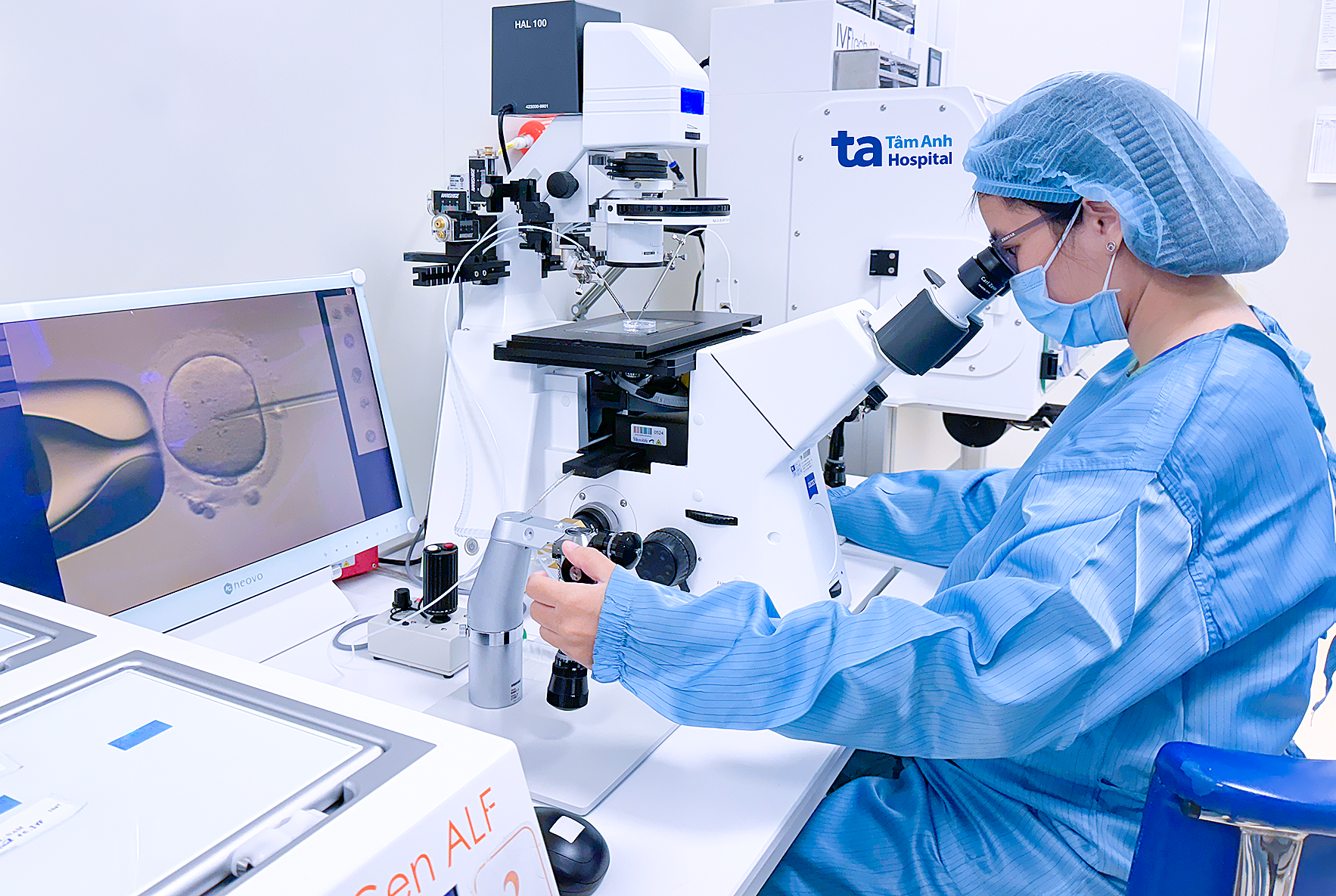 |
An embryologist injects sperm into the egg cytoplasm (ICSI technique). *Photo: IVF Tam Anh*
The doctor promptly initiated ovarian stimulation and egg collection, retrieving 8 mature oocytes over two cycles. These were combined with her husband's sperm, resulting in three day 5 embryos. Despite preparing an ideal uterine lining, Trang had an ectopic pregnancy after embryo transfer, requiring removal of her right fallopian tube. Two subsequent embryo transfers also failed.
In her second egg stimulation cycle, Trang obtained 5 mature oocytes, leading to three good quality day 5 fresh embryos. This time, the doctor performed a hysteroscopy to assess the uterine conditions for embryo implantation. This invasive procedure, performed under anesthesia, is for patients with multiple failed embryo transfers.
Biopsy analysis revealed chronic endometritis, which limits embryo implantation. The doctor prescribed anti-inflammatory medication for Trang for two weeks. Once her uterine lining met standards, Trang underwent embryo transfer and conceived. In 5/2026, she delivered a daughter via C-section at 39 weeks, weighing 3 kg.
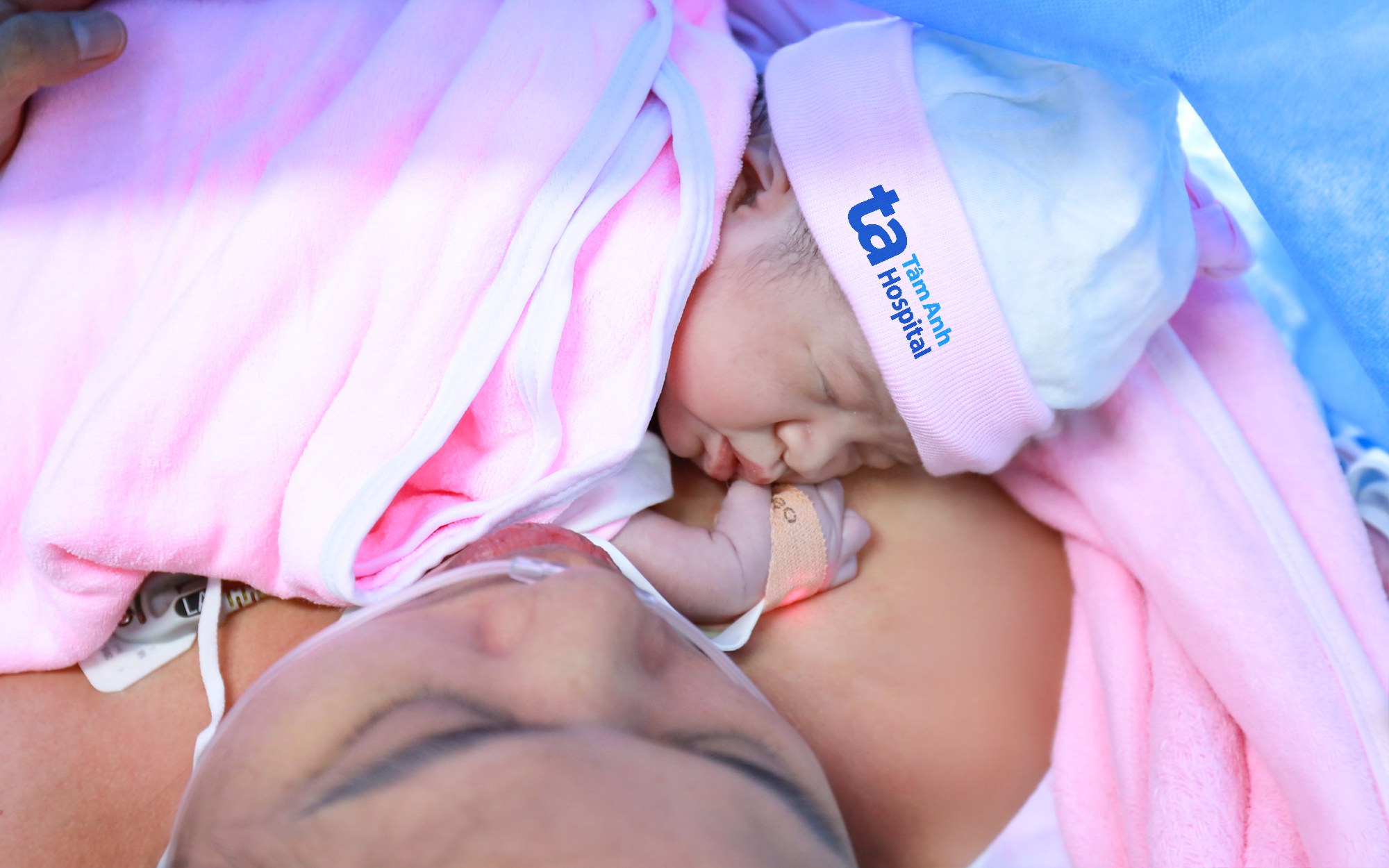 |
Trang's daughter had skin-to-skin contact with her mother immediately after birth. *Photo: Tam Anh General Hospital*
The Ministry of Health reports that the rate of secondary infertility – infertility after having had a child – in Vietnam increases by 15-20% annually, accounting for over 50% of infertility cases. According to Doctor Le Xuan Nguyen, female infertility can stem from various causes: uterine conditions, fallopian tube issues, ovulation disorders, reproductive organ infections, or a history of abortions or C-section scars.
Furthermore, female fertility naturally declines over time. After the age of 30, both the quantity and quality of eggs begin to diminish, becoming more pronounced after 35, thus reducing the likelihood of natural conception. Some women have few oocytes, creating few embryos, and may even require oocyte donation.
Doctors advise women who have already given birth not to be complacent or delay plans for additional children. Women over 35 who attempt to conceive for 6 months without success should seek early medical consultation to identify the cause and receive timely treatment.
Nguyet Nhi
*Character's name has been changed*
| The Tam Anh General Hospital System is offering a promotional program, "Nha Via Bau Vang - Support up to 10 million VND," for infertile couples undergoing in vitro fertilization (IVF) across its system from now until 9/7/2026. Find more information here. |