Many people habitually squat during daily activities such as washing clothes, cleaning the house, or resting. While providing temporary comfort and convenience, squatting causes significant health detriments, especially to the joints.
Doctor To Dinh Cuong, Level 1 Specialist in Physical Therapy and Rehabilitation at Tam Anh General Hospital, TP HCM, stated that the knee joint is the most severely affected area when squatting. When walking on relatively even ground, the knee joint bears pressure two to three times the body's weight, but this pressure increases several times over when squatting. This situation compresses articular cartilage and ligaments, accelerating cartilage erosion and promoting faster joint degeneration. The articular cartilage and meniscus are further damaged as the knee joint undergoes extensive rotation when standing up from a squatting position.
When squatting, the knee joint is excessively flexed, causing a sudden increase in pressure on the patella. This can lead to the kneecap dislocating from its natural trochlear groove, resulting in sharp pain at the front of the knee and damage to the patellofemoral cartilage. A similar mechanism affects the hip joint, causing continuous stretching of surrounding muscle groups and ligaments, leading to chronic aches in the pelvic and hip regions.
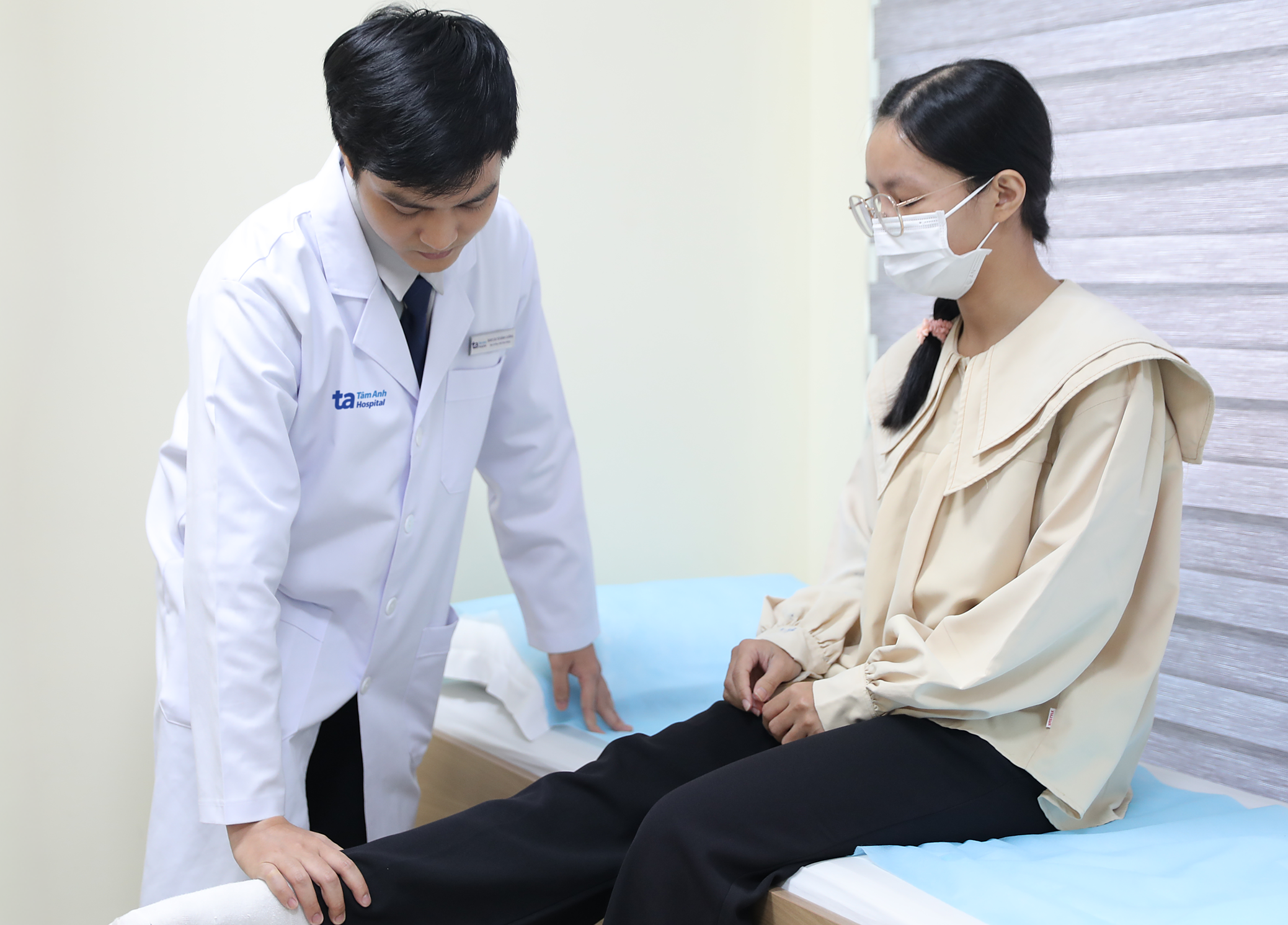 |
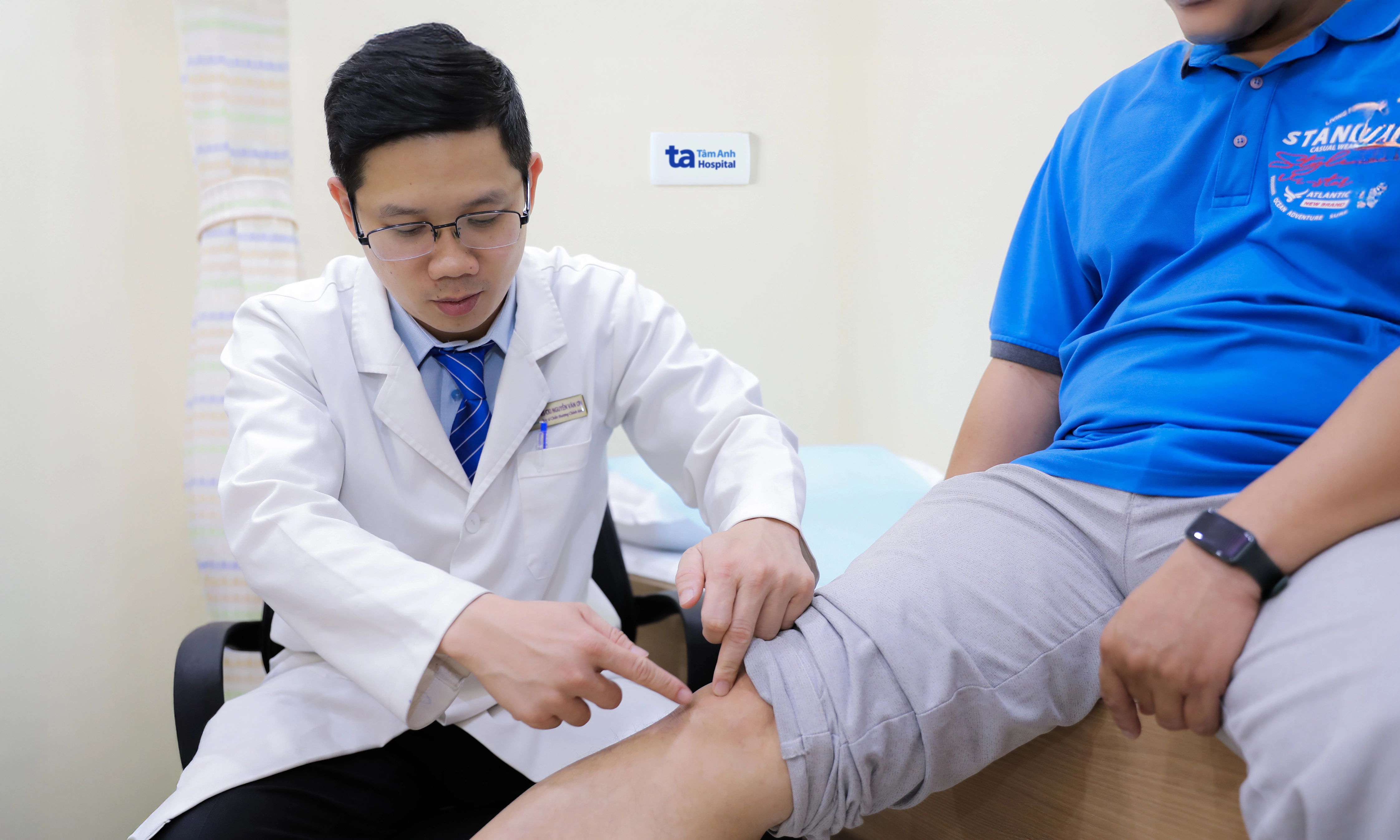
Doctor Cuong assesses a patient's joint function. Photo: Tam Anh General Hospital |
Deep hip flexion for prolonged periods also compresses soft tissues and the synovial capsule in the hip joint, causing inflammation, swelling, and restricted mobility and rotation. Frequent squatting can reduce the quality of synovial fluid, affecting cartilage nourishment and joint lubrication, leading to dry and stiff joints.
The spine often tends to hunch when squatting, losing its natural physiological curve. This can lead to issues such as overstretching of back muscle groups, resulting in fatigue and chronic lower back pain. Pressure on the intervertebral discs can push the nucleus pulposus outwards, increasing the risk of herniated discs and sciatica. Regular squatting can also cause the body to lose the habit of maintaining a straight back, leading to a hunchback or scoliosis. This posture also tightly compresses blood vessels in the thighs and calves, impeding blood circulation, causing numbness and increasing the risk of varicose veins.
Doctor Cuong advises sitting on chairs instead of squatting to avoid putting pressure on the joints. If squatting is unavoidable, limit it to no more than 20 minutes. When needing to stand up, use your hands for support to avoid suddenly shifting your entire body weight onto your legs. It is advisable to change positions every 30 minutes to relax your joints.
Individuals with joint problems, especially those at high risk, should visit a hospital if they detect any unusual signs such as joint swelling or pain, clicking sounds during movement, or joint stiffness after prolonged sitting or upon waking in the morning. Early detection and timely treatment help reduce the risk of complications and the need for joint replacement later.
Phi Hong
| Readers can submit questions about musculoskeletal diseases here for doctors to answer |