Ms. Thanh's lesions appeared around her anus. They were small but caused itching. Doctors diagnosed her with chronic dermatitis, eczema, and infection. Recently, the sores did not heal, prompting her to seek treatment at Tam Anh General Hospital, TP HCM. Dr. Dang Thi Ngoc Bich, Head of Dermatology and Aesthetic Dermatology, observed large, shallow, red lesions on the patient's perianal and genital skin, with white plaques on the surface and surrounding skin darker than normal. These lesions gradually spread to adjacent skin areas, unlike typical dermatitis.
Biopsy results confirmed Ms. Thanh had extramammary Paget's disease, a type of skin cancer. This cancer typically appears in the genital, perianal, or groin areas without forming a tumor. According to Dr. Bich, cancer cells can originate from glands in the epidermal tissue, such as sweat glands around the anus, or from adjacent organs like the rectum and bladder. They then spread to the skin surface, causing persistent but difficult-to-recognize lesions. Many cases involve prolonged treatment with topical medications without a biopsy to determine the disease's nature, leading to missed opportunities for early intervention.
 |
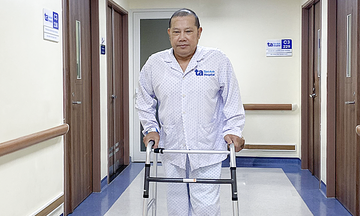
Ms. Thanh waiting for examination at Tam Anh General Hospital. Photo: Tam Anh General Hospital |
Ms. Thanh waiting for examination at Tam Anh General Hospital. Photo: Tam Anh General Hospital
Doctors detected Ms. Thanh's disease at a late stage, with lesions invading the genital area, covering approximately 20 cm2, according to Dr. Bich. Surgery would necessitate extensive skin removal, significantly impacting anal function, slowing wound healing, and posing a high risk of infection. Following a consultation, doctors prescribed radiation therapy for the patient to destroy localized cancer cells on the skin, reduce recurrence risk, and preserve anal function.
 |
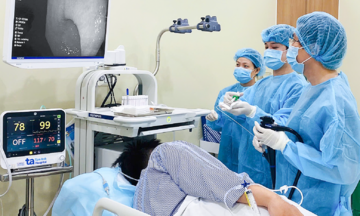
Dr. Loc advising Ms. Thanh on the radiation therapy plan. Photo: Tam Anh General Hospital |
Dr. Loc advising Ms. Thanh on the radiation therapy plan. Photo: Tam Anh General Hospital
Dr. Nguyen Huy Loc, from the Radiation Oncology Department, Oncology Center, stated that the cancerous lesions had spread extensively across the perianal and genital skin surface. Conventional radiation therapy methods might not deliver sufficient dosage directly to the superficial skin layer where cancer cells reside, thereby reducing effectiveness.
Doctors planned 33 radiation sessions over approximately six to seven weeks for the patient, focusing on the affected area while minimizing impact on adjacent organs like the rectum and bladder. To enhance precision throughout the treatment, the team integrated a tattoo-free patient positioning system (C-RAD) onto the ulcerated skin. This reduced patient discomfort and limited the risk of local irritation or infection.
Ms. Thanh received instructions for meticulous care of the irradiated skin, using specialized topical medications to protect the skin barrier, reduce dryness and flaking, and prevent infection. Following the completion of radiation therapy, the damaged skin area significantly shrank, hyperkeratosis resolved, skin color became uniform, and calluses or scales were no longer present. The cancer cells were destroyed, and she did not require chemotherapy or surgery, but long-term regular follow-up remains necessary due to the risk of late recurrence with Paget's disease.
Dr. Loc advises older adults not to overlook persistent, non-healing perianal and genital skin lesions that last for several months. Patients should visit a hospital promptly for examination to rule out malignancy.
Nhat Minh - Minh Huong
*Patient's name has been changed
| Readers can submit questions about cancer here for doctors to answer |