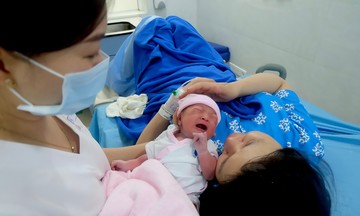
The caesarean section, performed recently at Viet Phap Hanoi Hospital, marked the end of the couple's decade-long journey to parenthood. Doctor Ho Van Thu, Head of the Obstetrics and Gynecology Department and the physician who delivered the babies, stated that the surgical team faced a critical situation during the operation. The patient experienced uterine atony, a serious obstetric complication causing postpartum hemorrhage. Doctors promptly used the B-Lynch suture technique to control the bleeding, successfully preserving the mother's uterus and ensuring the safety of the two newborns.
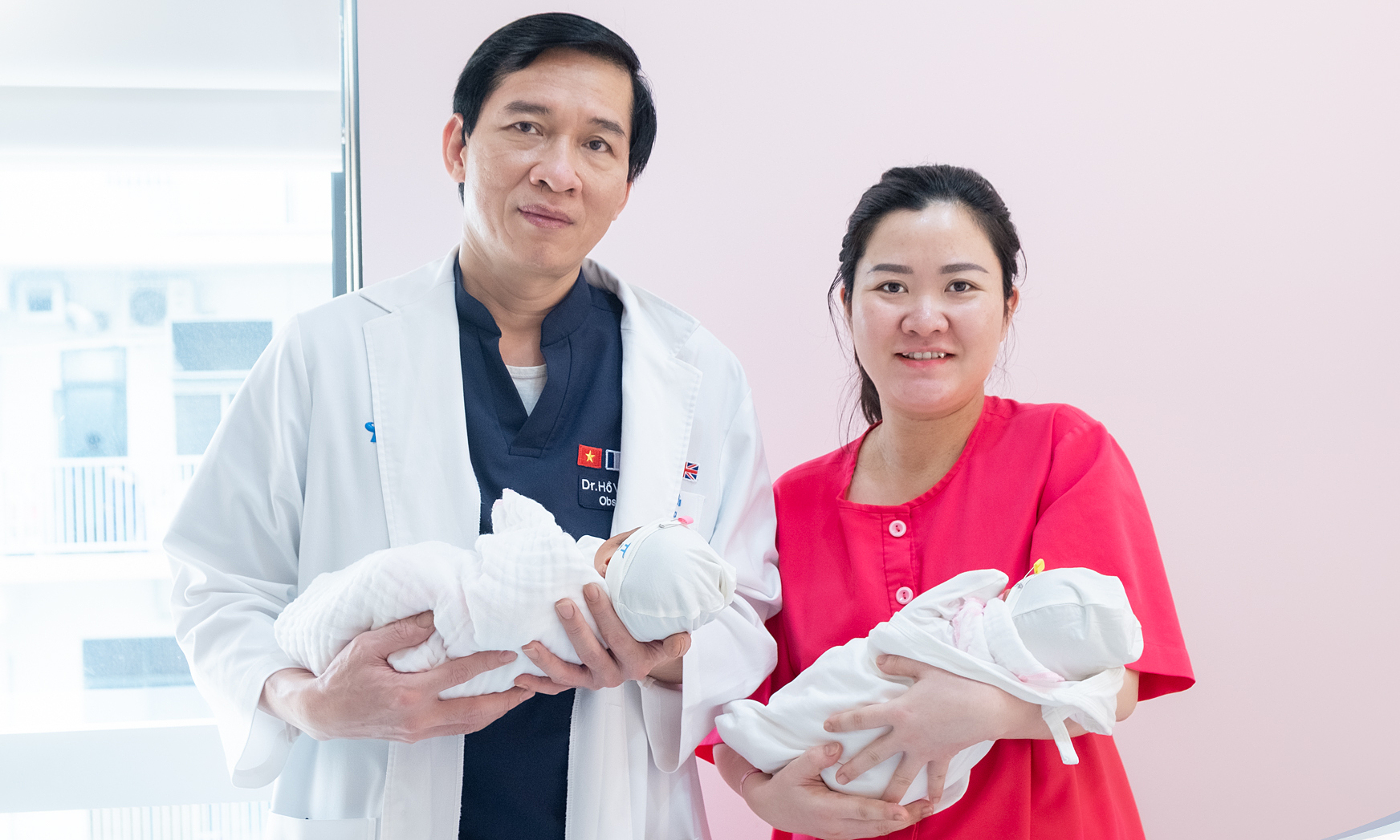 |
Dr. Ho Van Thu supported the pregnancy, helping the patient successfully deliver. Photo: Hospital provided
Before achieving this success, the patient endured a challenging and arduous journey of secondary infertility treatment. In late 2023, the couple sought out a fertility specialist after numerous unsuccessful attempts at various large and small centers. Instead of continuing to focus on embryo quality, as previous protocols had, this doctor decided to completely alter the strategy, seeking the underlying cause of repeated implantation failures despite good quality embryos.
Upon analyzing the old medical records, the doctor observed that the patient had started in vitro fertilization (IVF) at a relatively young age, between 24 and 29 years old. She had 21 embryos of good morphological quality, normal chromosomal analysis for both husband and wife, and had previously shown positive beta-hCG levels. These findings indicated a very low likelihood of embryo-related issues. The treatment team shifted its focus to evaluating the receptivity of the uterine lining.
The doctor ordered a second exploratory laparoscopy, which revealed an entirely congested uterine lining with severe stromal edema. This was identified as the primary reason why embryos failed to implant and develop. The patient then underwent a treatment period lasting over 12 months to control inflammation and improve the uterine environment.
For the 12th embryo transfer, the doctor implemented a fully personalized protocol. The team prepared the uterine lining based on the mother's actual physiological response, incorporating platelet-rich plasma (PRP) injection into the uterine cavity to enhance receptivity. On day 9 after the embryo transfer, the beta-hCG test result reached 336 IU, confirming successful embryo implantation.
The woman began her quest for a child at 24 years old. She had undergone five intrauterine insemination (IUI) attempts without success. Five years prior, an ectopic pregnancy necessitated surgery to remove her right fallopian tube, further complicating her chances of conception.
According to the World Health Organization (WHO), infertility affects approximately 17.5% of the global population. This rate is trending younger, with an increasing number of couples under 30 having to seek assisted reproductive technologies. Doctors recommend that couples seek early consultation if they have regular, unprotected intercourse for six months to one year without conceiving.
Le Nga