The organ donor was admitted to the hospital on 22/5 with severe multiple injuries following a traffic accident, experiencing multiple cardiac arrests. Doctors made efforts to resuscitate him, but the patient sustained severe brain damage and was declared brain-dead on 27/5.
During his lifetime, he wished to donate his organs to save lives, so his family decided to fulfill his wish. Immediately after receiving the donation notification, Military Hospital 108 activated its entire organ transplant coordination system. Experts held an emergency consultation to optimally allocate the organs, including the heart and liver.
On the morning of 29/5, doctors bowed in gratitude to the donor before performing the multi-organ retrieval and transplant surgery. Within more than 10 minutes, the heart and liver were removed from the donor's body, initiating a race against time for hundreds of medical professionals to transport and transplant them.
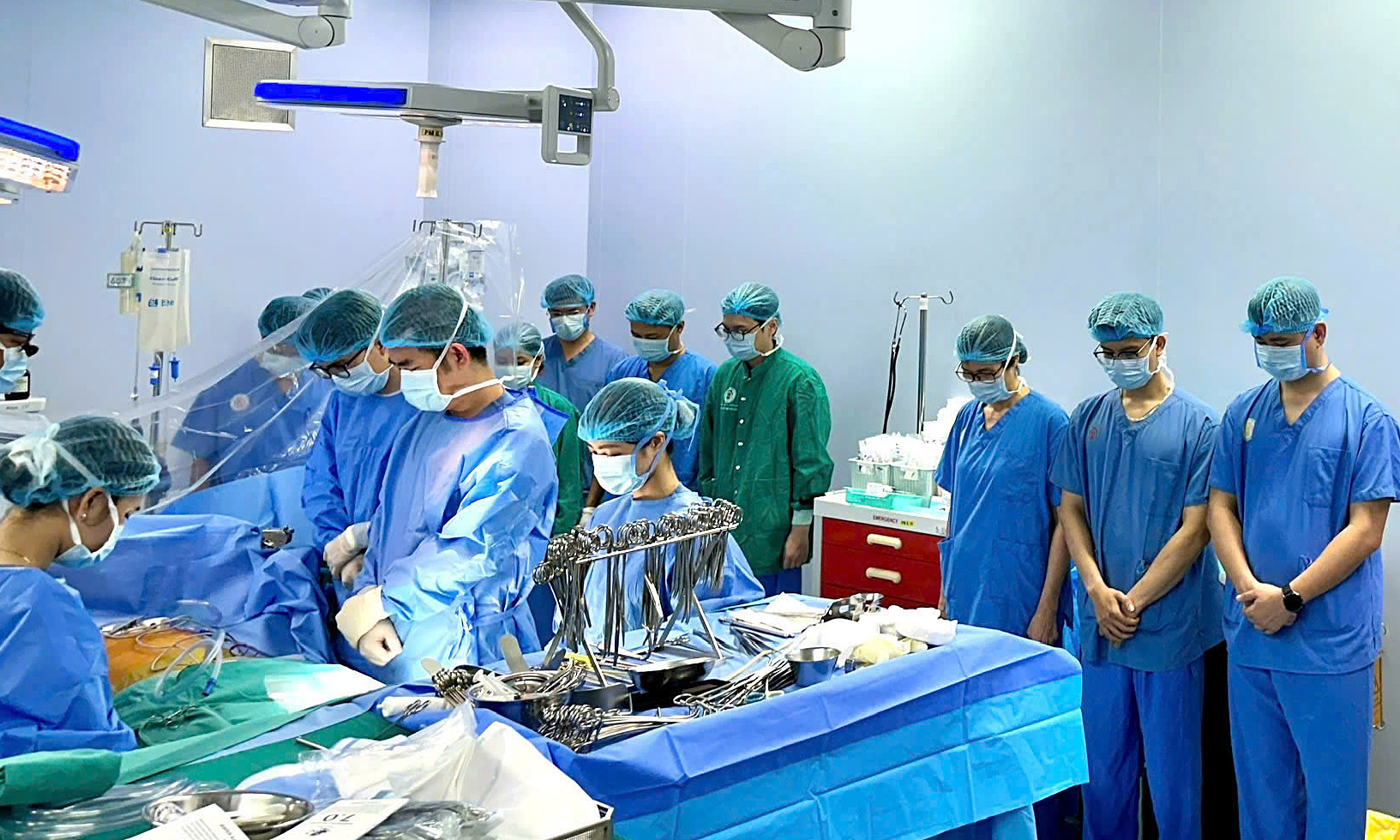 |
Medical professionals bow in gratitude to the organ donor before performing the organ retrieval and transplant surgery. *Photo: Phuong Nguyen* |
Doctor Ngo Tuan Anh, Head of the Cardiovascular Surgery Department, stated that the heart transplant for the 58-year-old male patient was particularly challenging because the recipient suffered from end-stage heart failure with severe heart dilation and a high risk of hemodynamic instability. The donor also had several incompatibilities with the recipient, raising concerns about potential right ventricular failure immediately after transplantation. The team had prepared contingency plans for all possible complications. Fortunately, after many hours of intense surgery, the new heart began its first beats in the patient's chest.
In another operating room, doctors performed a liver split from the brain-dead donor—one of the most complex techniques in liver transplantation. From one liver, two grafts were created for two different patients. The right lobe was transplanted into a 46-year-old male patient suffering from acute liver failure due to chronic hepatitis B. The left lobe was urgently transported to Hue for a one-year-old pediatric patient.
According to experts, liver splitting requires precise assessment of the liver's anatomical structure, vascular system, and bile ducts, along with calculating graft volume to ensure post-transplant function for both recipients.
Following surgery, the patients continue to receive intensive monitoring and treatment.
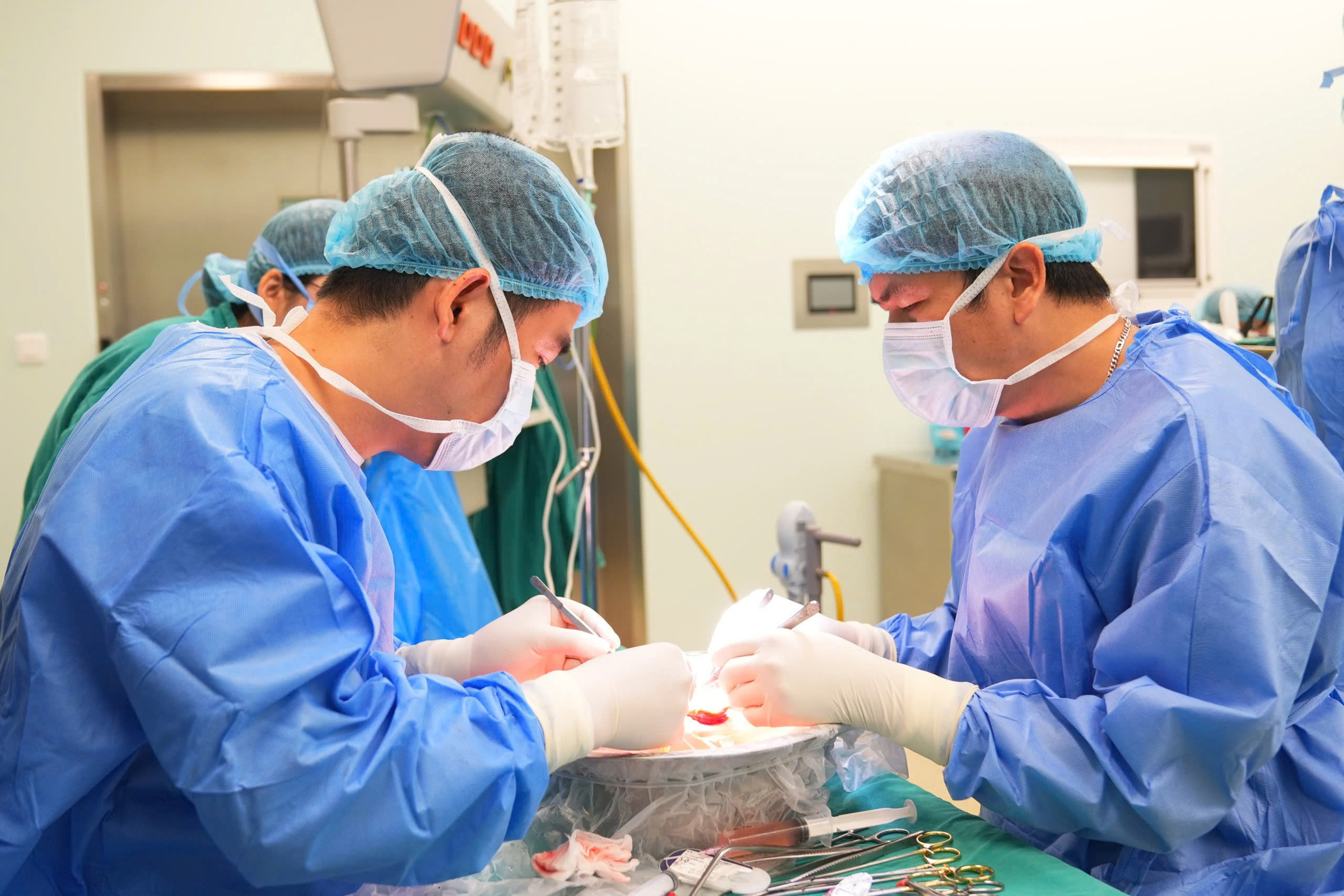 |
Doctors divide the liver for transplantation to two patients. *Photo: Hospital provided* |
Professor Le Huu Song, Director of the Hospital, hailed the transplant as a professional success, demonstrating the power of organ donation. From a family's humane decision amidst loss, one heart and one liver have helped three lives continue. One person departs, but life multiplies.
Organ transplantation is one of humanity's most significant medical achievements since the 20th century. It remains the only option to save patients in end-stage disease. To date, Vietnam has performed nearly 10,000 transplants involving six types of human organs. The transplant techniques employed by Vietnamese medical teams are approaching the level of developed countries. Currently, about 30 organ transplant centers nationwide are licensed by the Ministry of Health.
More than 177,000 people nationwide have registered to donate tissues and organs after death. In 2025, there were 66 cases of brain-dead organ donors, a significant increase compared to previous years.
Le Nga