A patient arrived at Viet Duc Friendship Hospital in critical condition, suffering complex injuries to both the urinary and digestive systems. Doctors determined the patient's kidney had severe damage (grade V), with a completely severed renal pedicle, crushed renal blood vessels, a shortened vein, and a long missing ureteral segment. Additionally, the patient had a ruptured D2 segment of the duodenum, crushed and necrotic D3–D4 segments, and pancreatic parenchymal injury.
Multidisciplinary teams, including organ transplant, urology, gastroenterology, and anesthesia-resuscitation specialists, consulted to devise an optimal treatment plan within the "golden hour." The organ transplant and renal-urology teams decided to perform an autologous kidney transplant to maximize the preservation of the patient's kidney function.
The kidney was removed from the patient's body for ex-vivo (outside the body) repair. This involved cleaning it, removing blood clots, and debriding crushed tissues. Concurrently, doctors used a homograft (a vascular segment taken from a brain-dead donor and stored at the Tissue Bank) to reconstruct and lengthen the renal vascular pedicle, before re-implanting it into the patient.
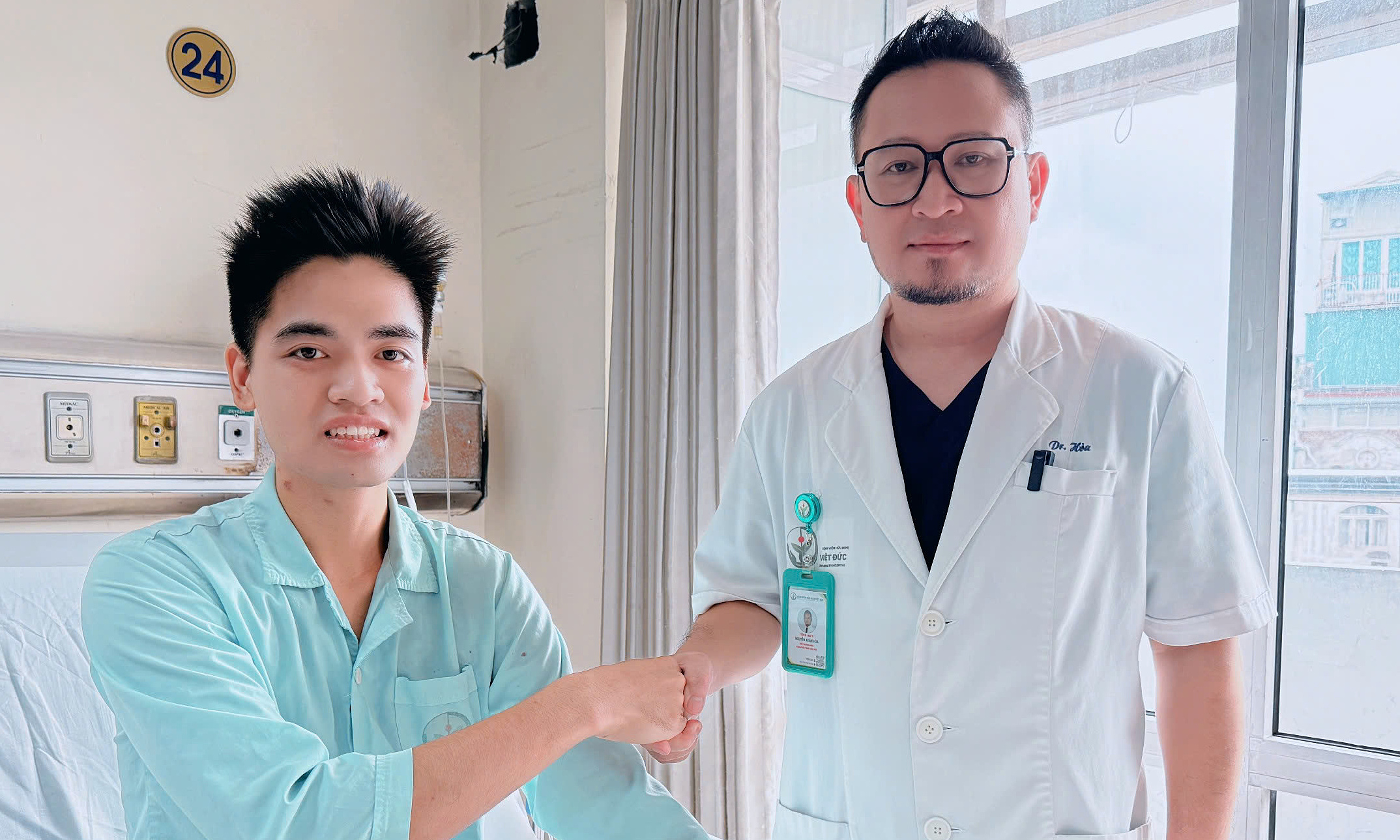 |
The patient is stable after surgery. Photo: Thai Ngoc |
Associate Professor Doctor Le Nguyen Vu, Deputy Director of the Organ Transplant Center, stated that severe renal pedicle trauma carries a high risk of kidney removal. However, if patients access specialized facilities within the 6-8 hour "golden hour," and with close, synchronized interdisciplinary coordination, kidney preservation through autologous transplant remains possible.
Simultaneously, the digestive surgery team addressed the duodenal injuries by resecting the D3-D4 segments. They then restored digestive continuity by connecting a jejunal loop to the D2 segment. According to Doctor Nguyen Xuan Hoa, Deputy Head of the Department of Digestive Surgery, incomplete treatment of digestive tract injuries could lead to peritonitis and severe infection if digestive fluid leaks into the abdominal cavity, directly impacting kidney transplant outcomes.
Following surgery, the patient recovered well. Kidney function was preserved, the patient could eat again, and their condition gradually stabilized.
Autologous kidney transplant is currently a routine technique at leading organ transplant centers. Viet Duc Hospital is a prominent institution in implementing and mastering many complex organ transplant techniques. This method is indicated for severe, complex renal artery injuries, renal vascular malformations, or long ureteral segment loss.
A key advantage is using the patient's own kidney, eliminating the need for anti-rejection medication post-surgery. The success of this case underscores the high professional capability and the crucial role of interdisciplinary coordination in effectively managing severe polytrauma cases at specialized surgical centers.
Le Nga