Thuy and her husband first sought in vitro fertilization (IVF) at the Center for Reproductive Assistance, Tam Anh General Hospital Hanoi (IVF Tam Anh) in 2016, following two years of infertility. Thuy's uterus and two fallopian tubes were clear, but her husband had weak sperm. They created 6 day-3 embryos, freezing 3 and transferring the remaining 3 fresh embryos into her uterus. Thuy conceived and gave birth to a daughter at 35 weeks.
Afterward, Thuy had two natural pregnancies, but both resulted in early miscarriages and an ectopic pregnancy, necessitating the surgical removal of her left fallopian tube. This further reduced her chances of motherhood. In early 2025, the couple returned to IVF Tam Anh, now over 40 years old, hoping to use their frozen embryos to have another child.
These embryos are preserved at extremely low temperatures, about -196°C, in liquid nitrogen. Using vitrification technology, embryos are ultra-rapidly cooled, ensuring water within the cells does not crystallize but transitions into a glass-like state. In this condition, nearly all biological activity is "frozen," allowing embryos to be stored for many years without aging.
The couple's three day-3 embryos were thawed and cultured to day-5, resulting in two good quality embryos. After endometrial preparation using a hormone replacement protocol, doctors transferred one day-5 embryo into the patient's uterus. This was done to reduce the risk of multiple pregnancies and pregnancy complications in older women. The pregnancy progressed smoothly, and Thuy gave birth to a 3 kg daughter via cesarean section.
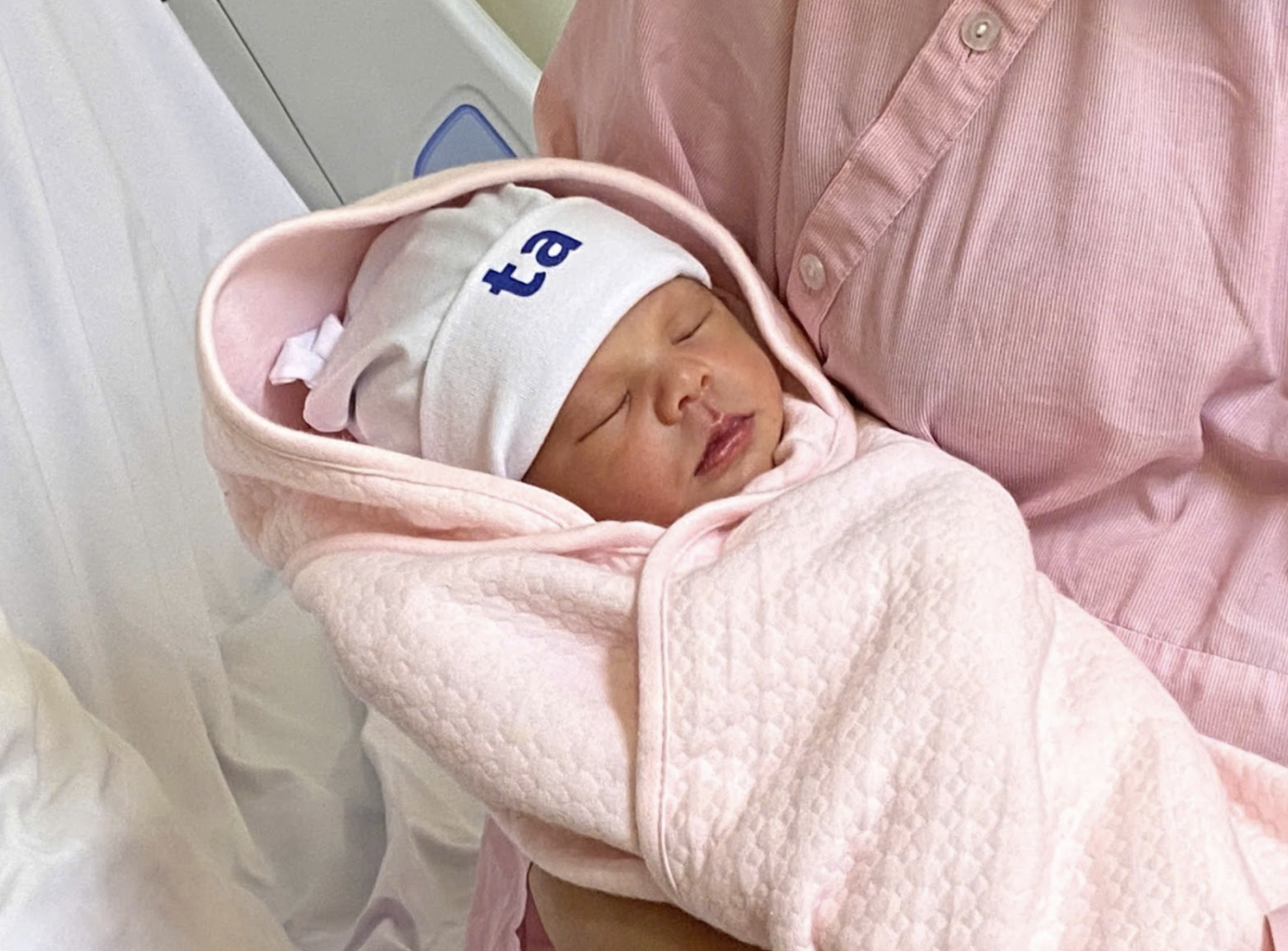 |
Thuy holding her healthy newborn second daughter, born thanks to a 10-year-old frozen embryo. Photo: Tam Anh General Hospital |
Doctor Thuy stated that egg quality primarily depends on the woman's age at the time of retrieval. Freezing eggs or embryos at a younger age improves reproductive quality, opening up opportunities for motherhood for older women or those who have experienced obstetric complications.
At IVF Tam Anh, this procedure is performed in an ISO 5 standard laboratory system. Vitrification technology ensures an embryo survival rate after thawing that exceeds 95%. The rates of pregnancy and healthy births from frozen embryos are comparable to, and in some cases even higher than, those from fresh embryo transfers, as the mother's body has more time to prepare the uterine lining. The average cumulative pregnancy rate reached over 78-80% in 2024-2025.
Thuy still has one day-5 embryo frozen, planning to transfer it soon for a third child.
Thanh Ba