Coronary artery disease (CAD) is a general term encompassing a range of damage, from mild narrowing to complete blockage. Chronic total occlusion (CTO) is considered the most severe anatomical form of CAD. CTO occurs when a coronary artery branch is 100% blocked for three months or longer, preventing blood flow through that segment.
This condition typically does not develop suddenly but results from atherosclerosis progressing over many years. Initially, cholesterol-rich plaque forms within the arterial wall, gradually narrowing the vessel. Over time, the plaque grows, hardens, and calcifies, further constricting the vessel and eventually leading to complete blockage.
Because the narrowing and blockage process occurs gradually, the body has time to adapt. Many patients experience no obvious symptoms. When symptoms do appear, they are often vague, such as transient chest pain during exertion, rapid fatigue, reduced stamina during daily activities, or even no pain at all. In the long term, the heart muscle behind the blocked segment suffers from chronic ischemia, leading to a gradual decline in cardiac pumping function and increasing the risk of heart failure and arrhythmias. CTO is a severe, widespread condition that elevates the risk of serious cardiovascular events, including myocardial infarction.
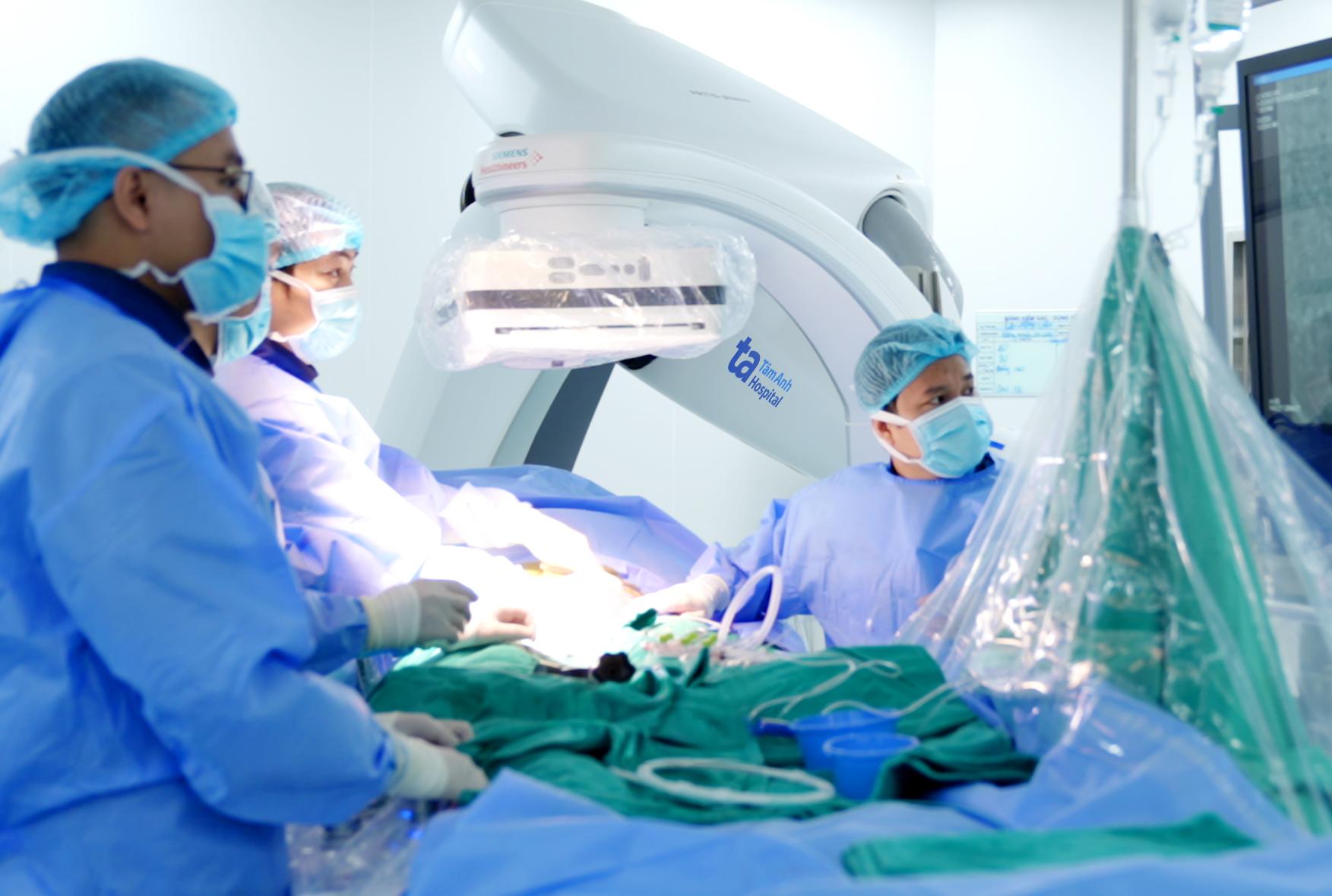 |
A team performs coronary revascularization for a patient. Photo: Tam Anh General Hospital |
To accurately diagnose CTO, doctors may order tests such as coronary ct angiography, percutaneous coronary angiography, stress echocardiography, or cardiac mri. Based on these findings, they will determine the appropriate treatment plan.
For patients experiencing chest pain, shortness of breath, or reduced exercise capacity, especially when the heart muscle shows potential for recovery, revascularization of the blocked vessel can improve heart function. Coronary artery bypass graft surgery is often chosen for complex coronary lesions or when patients have other cardiovascular conditions, such as severe valvular heart disease or advanced heart failure.
CTO presents one of the most challenging forms of coronary artery disease to manage. This difficulty arises because the vessel segment has been blocked for an extended period, leading to complex lesion structures such as longer occlusions, hardened caps, and an obscured entry point.
Thanks to technological advancements, many CTO cases can now be successfully treated. Patients should not ignore symptoms such as angina, shortness of breath, or recurrent or intermittent reductions in exercise capacity. Early medical consultation is advisable for an accurate assessment of coronary artery damage and to determine the most suitable treatment plan.
Dr. Nguyen Xuan Duy
Cardiology Department
Tam Anh General Hospital Hanoi
| Readers can submit cardiovascular questions here for a doctor's response. |