Doctor Le Thanh Huyen, from the High-Tech Eye Center at Tam Anh Cau Giay General Clinic, notes that many parents only bring their children for eye exams when their vision is already blurry. However, children with myopia often do not realize their vision is declining, especially when their prescription gradually increases over time. Incorrect glasses force children's eyes to strain, causing fatigue, poor concentration during study, and faster myopia progression if not updated.
The following signs may indicate an increase in a child's myopia, signaling a need for new glasses.
Good near vision but poor distant vision
This is the most typical sign of progressing myopia. Children can still read books and use phones normally but struggle to see the whiteboard, television screen, or distant objects clearly. If a child already wears glasses but continues to experience this, it is likely their prescription has increased, and their current glasses are no longer suitable.
Frequent squinting when looking at distant objects
Frequent squinting when looking at the whiteboard, watching television, or tilting their head to see clearly are common behaviors in children with myopia. According to Doctor Huyen, squinting is a natural reflex that helps the eyes see more clearly when vision decreases.
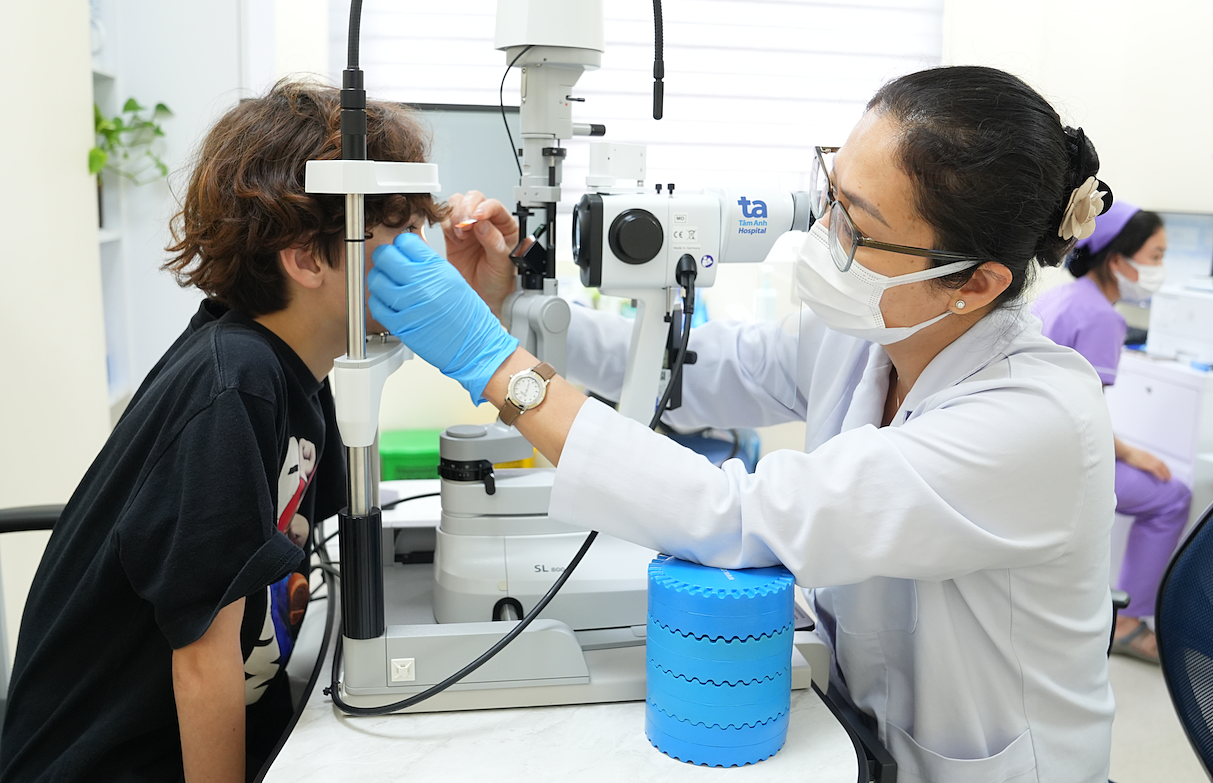 |
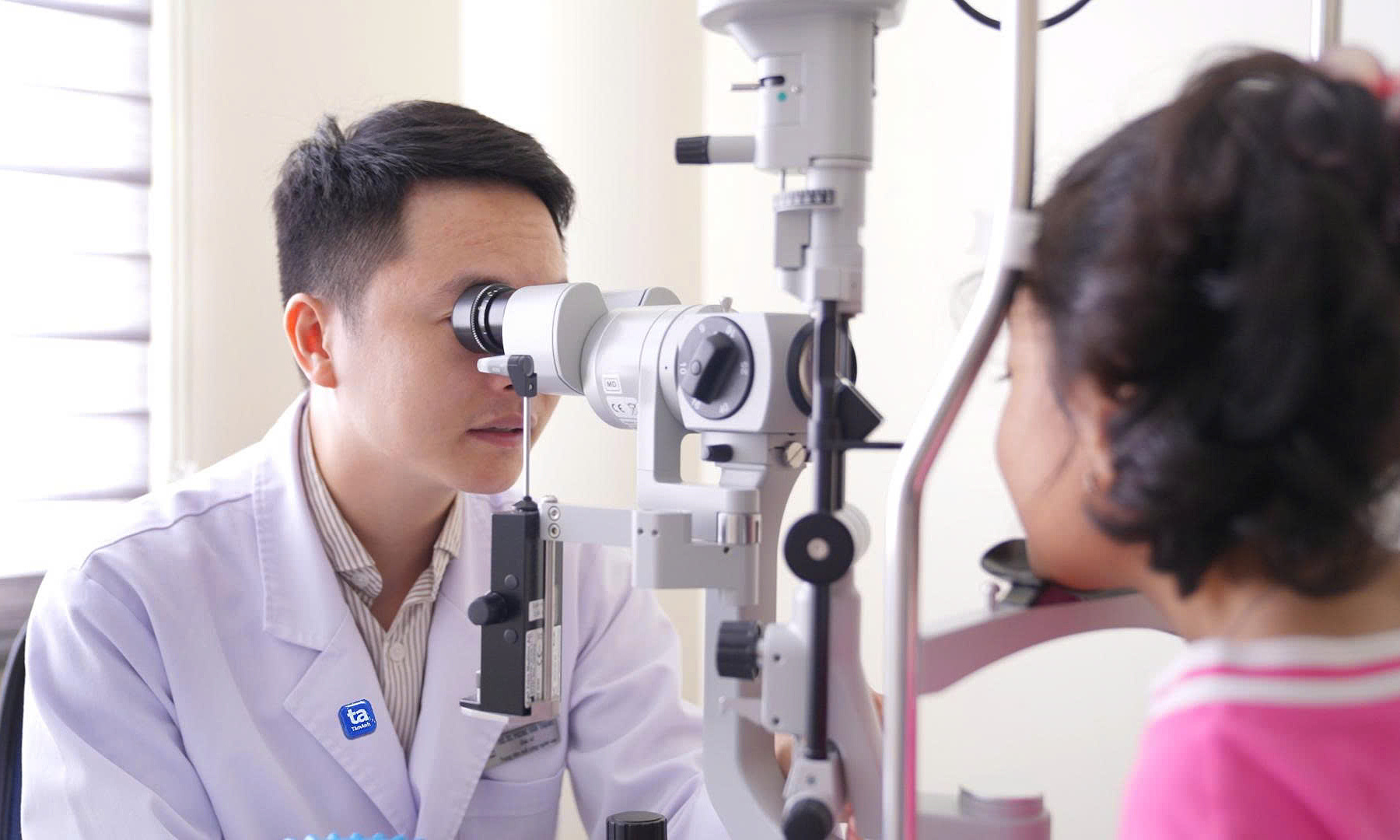
A doctor examines a boy's eyes. Illustration: Benh vien Da khoa Tam Anh |
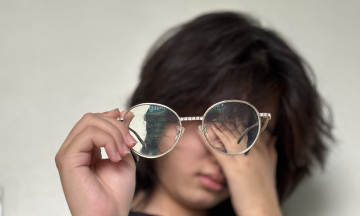
Quick eye fatigue and frequent eye rubbing
Children rubbing their eyes constantly may be due to excessive use of phones or electronic devices. However, another common cause is existing myopia or glasses that no longer match the correct prescription. When children strain to see clearly with unsuitable glasses, their eyes quickly tire, leading to frequent rubbing, watery eyes, or discomfort during long study sessions.
Children often complain of headaches
When glasses no longer have the correct prescription, children must constantly strain their eyes to see clearly, causing rapid eye fatigue and leading to headaches, especially at the end of the day or after school. If a child frequently complains of headaches but a general health check reveals no abnormalities, parents should arrange an early eye exam to identify the cause.
Sitting very close to the television or leaning close while studying
This is a fairly easy sign to recognize. As myopia increases, children unconsciously tend to sit closer to screens, lean closer to books, or move nearer to objects to see clearly. Children do not always immediately tell their parents about blurred vision. In many cases, children only show symptoms like reduced concentration during study, slower reading, or reluctance to read long texts. The cause may be decreased vision, forcing children to strain their eyes for extended periods, leading to fatigue and loss of interest in learning.
Doctor Huyen recommends that children with myopia have eye exams at least every 6 months, or even more frequently if their myopia progresses rapidly. Replacing glasses with the correct prescription at the right time not only helps children see clearly but also limits the rate of myopia progression.
Ly Nguyen
| Readers can submit questions about ophthalmology here for doctors to answer. |