For your father, the removal of 30 cm of his small intestine, from a total length exceeding 6 meters, represents a minor proportion. This typically does not significantly impact long-term nutrition. However, he may experience temporary digestive issues during the initial weeks post-surgery. These can include diarrhea or loose stools, as the intestine adjusts to its new length and changes in the gut microbiota.
Post-surgery, patients should adopt a regimen of 5-6 small meals daily to ease the burden on the reconnected intestine. Soft, easily digestible foods are recommended, with a preference for boiled items, soups, and porridges. Patients should avoid fried, spicy, or hot foods, as well as those high in coarse fiber. Regular follow-up appointments are essential for the doctor to monitor the intestinal anastomosis and prevent any micronutrient deficiencies.
The intestine serves as a vital organ for food storage and nutrient absorption. Enzymes within the intestine break down food, allowing essential nutrients to enter the bloodstream, thereby supporting the digestion of diverse foods. On average, the human intestine measures 7-8 meters in length, though its exact length varies among individuals based on factors such as height, weight, genetic predisposition, and age.
Each intestinal segment possesses distinct dimensions and functions. The small intestine, beginning at the stomach's pylorus and concluding at the ileocecal valve (its connection to the large intestine), primarily absorbs nutrients and water from digested food. About 90% of food absorption takes place here. This segment typically measures 3-5 meters; the ileum is its longest portion, while the duodenum is the shortest.
The large intestine extends from the small intestine's end to the anus. Its main functions include absorbing water, electrolytes, and any remaining nutrients not absorbed by the small intestine. This organ also produces vitamin K. Measuring approximately 1,5-1,8 meters, its longest section is the transverse colon.
 |
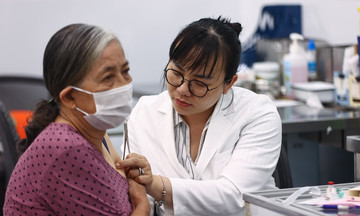
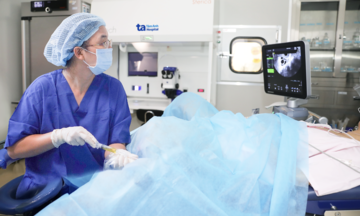
Doctor Anh Duc examines a patient. *Photo: Tam Anh General Hospital*
Dr. Nguyen Anh Duc
Center for Endoscopy and Gastrointestinal Endoscopic Surgery
Tam Anh General Hospital, TP HCM