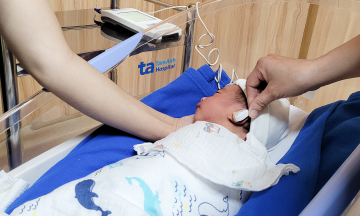
Eye discharge is a sticky, yellowish fluid that can crust, sometimes causing eyes to stick together and making them difficult to open. This condition can appear temporarily, such as in adults upon waking in the morning. Below are some common causes of eye discharge in newborns.
Blocked tear ducts
Tears are produced in the lacrimal glands, located above the eyes. This fluid cleans and lubricates the eye's surface. When blinking, eyelids push tears into the tear ducts, which drain into the nose. If a tear duct is blocked, tears cannot drain, causing excessive tearing and sticky mucus in the corner of the eye.
Eye discharge due to blocked tear ducts is common in newborns. Some infants are born with underdeveloped tear ducts. The blockage typically affects one eye, but can sometimes occur in both.
Most cases improve over time. However, if discharge accompanies symptoms like swelling or pain around the eye, it may signal an infection or other eye problem. In such instances, parents should seek medical attention for their child.
Conjunctivitis
Eye discharge in newborns can sometimes indicate conjunctivitis (pink eye), an inflammation of the thin membrane protecting the front of the eye. Unlike blocked tear ducts, conjunctivitis often causes redness in the white part of the eye. Depending on the type of conjunctivitis, symptoms may appear approximately 1-12 days after birth.
Signs can include eye discharge or fluid, swollen or sensitive eyelids, occasional skin discoloration, red eyes, and irritation. Newborn conjunctivitis can occur alongside blocked tear ducts. Additionally, infants may contract bacteria or viruses from their mother during birth, leading to conjunctivitis.
Chemical irritation
Chemical irritation can also cause conjunctivitis in newborns. Some infants receive eye drops or ointment within 2-3 hours after birth to prevent infection. However, this medication can sometimes cause irritation and symptoms resembling conjunctivitis. Chemical conjunctivitis typically lasts approximately 24-36 hours.
Eye discharge from blocked tear ducts in infants often resolves on its own by the time the child is around one year old. However, wind, cold weather, or strong sunlight can worsen symptoms, necessitating eye protection for the child. Parents can clean discharge at home by washing their hands thoroughly, then gently wiping the corner of the eye with a cotton ball or soft cloth dipped in warm water; if both eyes have discharge, use a separate cotton ball for each eye.
Doctors may also instruct parents to gently massage the tear duct area 2-3 times daily to help clear the ducts. If the area on either side of the nose becomes red or swollen, stop massaging and seek medical attention for the child.
Bao Bao (According to WebMD, Medical News Today)
| Readers can submit questions about ophthalmic diseases here for doctors to answer. |