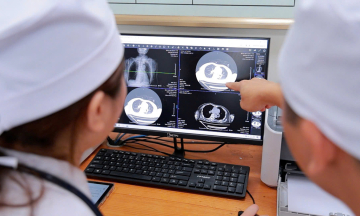
A CT scan at Tam Anh General Hospital Ho Chi Minh City revealed that the largest tumor measured about 5 cm (tumors are usually under 3 cm) and had deeply invaded the right bladder wall. Multiple tumor foci appeared simultaneously, causing malignant transformation of the entire bladder lining.
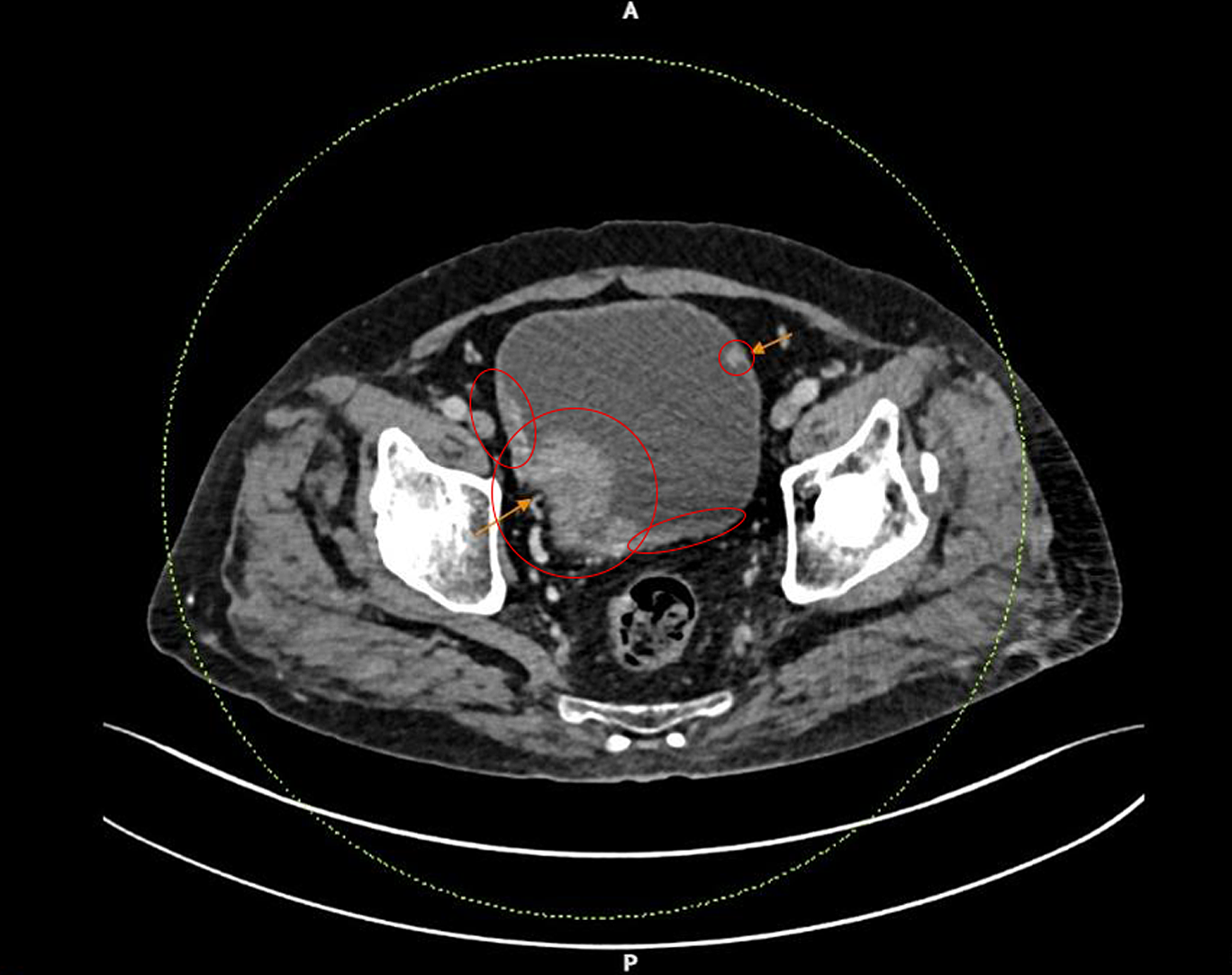 |
CT images show multiple tumors (red circles) invading the patient's bladder wall. Photo: Tam Anh General Hospital |
Master, Doctor Nguyen Tan Cuong, deputy head of the Urology Department and head of the Urological Oncology Unit at the Urology - Nephrology - Andrology Center, stated that these tumors were highly vascular and prone to rupture, leading to prolonged hematuria. Biopsy results confirmed stage T3 bladder cancer, meaning the tumor had invaded surrounding tissue layers. Multifocal conditions typically carry a higher risk of recurrence and progression, with faster invasion compared to a solitary tumor.
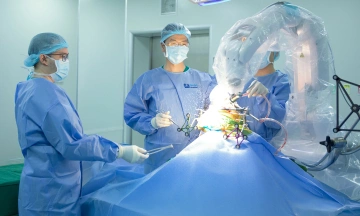
With tumors growing in multiple locations and of large size, conventional endoscopic tumor resection carried a high risk of leaving behind cancer cells or even perforating the bladder. Doctor Cuong opted for a "two-in-one" robotic surgery using the Da Vinci Xi system to remove the entire bladder containing the tumors, prostate, seminal vesicles, and perform bilateral pelvic lymph node dissection. Concurrently, a new bladder was reconstructed using a segment of the small intestine, allowing the patient to urinate naturally.
Doctor Cuong controlled four robotic arms to dissect the prostate and precisely clamp and cut large blood vessels, aided by a 3D camera that magnified the view 10-15 times, minimizing blood loss. The diseased tissue was then removed through a trocar incision. Next, the doctor resected a 15-20 cm segment of the small intestine, fashioned it into a new urine reservoir, and brought one end out through a small opening in the abdominal wall.
Three days post-surgery, Mr. Toan was discharged, instructed to practice timed urination and use his abdominal muscles to expel urine. He is scheduled for adjuvant chemotherapy to prevent recurrence and will have regular follow-up appointments to monitor kidney function.
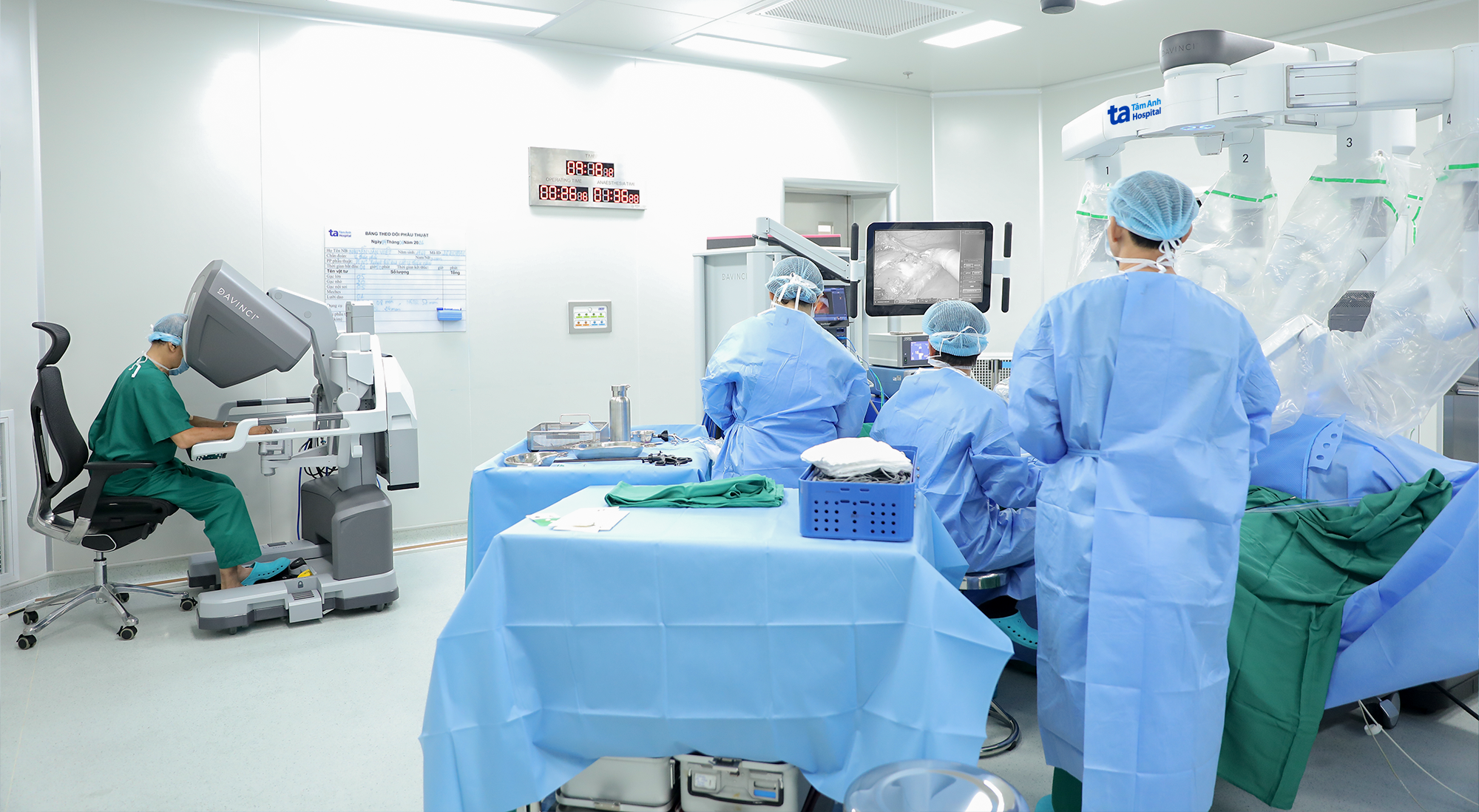 |
Doctor Cuong (seated) controls the Da Vinci Xi robot during radical cancer surgery and bladder reconstruction using the small intestine for Mr. Toan. Photo: Tam Anh General Hospital |
Doctor Cuong advises that individuals experiencing symptoms such as painless blood in urine, urinary urgency, frequent urination, dysuria, or flank pain should seek medical attention for timely diagnosis and treatment. For diagnosis, doctors typically combine cystoscopy to directly observe tumors, urine cytology, CT or MRI scans to assess disease spread, and biopsy to determine the nature and malignancy of the tumor.
The public should quit smoking, limit prolonged exposure to industrial chemicals, and thoroughly treat cystitis to avoid risk factors for bladder cancer.
Dinh Lam
*Patient's name has been changed