Before admission, Ong Chien suffered from left chest pain and shortness of breath. He had a history of hypertension, type two diabetes, and chronic kidney disease. According to Dr. Phung Van Thao, from the Cardiology Department at Tam Anh General Hospital Hanoi, upon admission, Ong Chien presented with congestive heart failure and acute pulmonary edema, with results confirming acute myocardial infarction. He had severe narrowing in multiple coronary artery branches that supply most of the blood to the heart muscle, including the left main coronary artery.
The medical team placed two stents in the left and right coronary arteries. They also performed drug-coated balloon angioplasty on a segment of the circumflex artery and a side branch to restore blood flow to the heart. The patient was temporarily out of critical danger and continued to be closely monitored.
On the second day after emergency treatment, Ong Chien developed ventricular tachycardia, which then progressed to ventricular fibrillation and cardiac arrest. "This is one of the most dangerous complications of acute myocardial infarction", Dr. Thao stated. The medical team performed advanced cardiopulmonary resuscitation, successfully restoring his heartbeat.
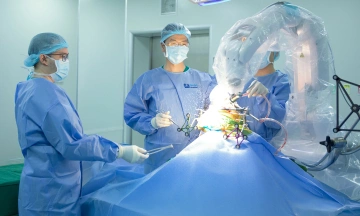
Even after coronary revascularization, the patient's heart pumping function remained impaired, with a left ventricular ejection fraction (ef) of only about 31%, compared to a normal range of 50-70%. Ong Chien was categorized as high-risk for dangerous ventricular arrhythmias, including sudden cardiac death. Following a consultation, doctors implanted an implantable cardioverter-defibrillator (icd) in him. This device continuously monitors heart rhythm and intervenes promptly in case of dangerous arrhythmias, preventing the risk of sudden death.
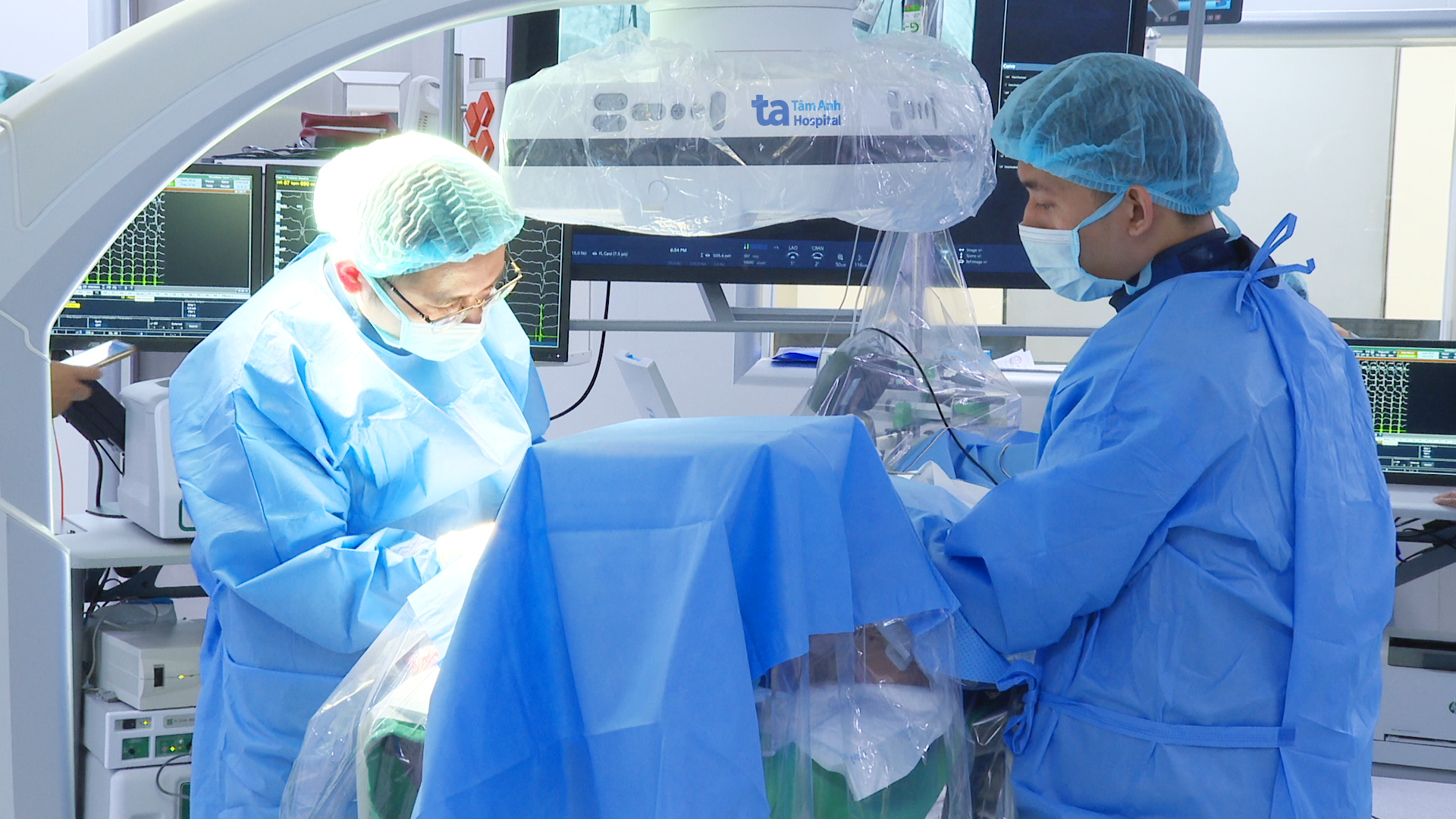 |
The medical team performed the implantation of an implantable cardioverter-defibrillator (icd) for the patient. *Photo: Tam Anh General Hospital* |
According to Dr. Thao, while balloon angioplasty and stent placement re-establish blood flow and temporarily avert dangerous cardiovascular risks from myocardial infarction, they do not eliminate all complications. After intervention, some patients, especially the elderly, those with multiple underlying conditions, severe coronary artery damage, or impaired heart function, can still experience heart failure, ventricular arrhythmias, or sudden cardiac arrest. This occurs because the previously damaged heart muscle has not fully recovered.
Following the intervention, doctors must assess the patient's condition and develop a suitable treatment plan.
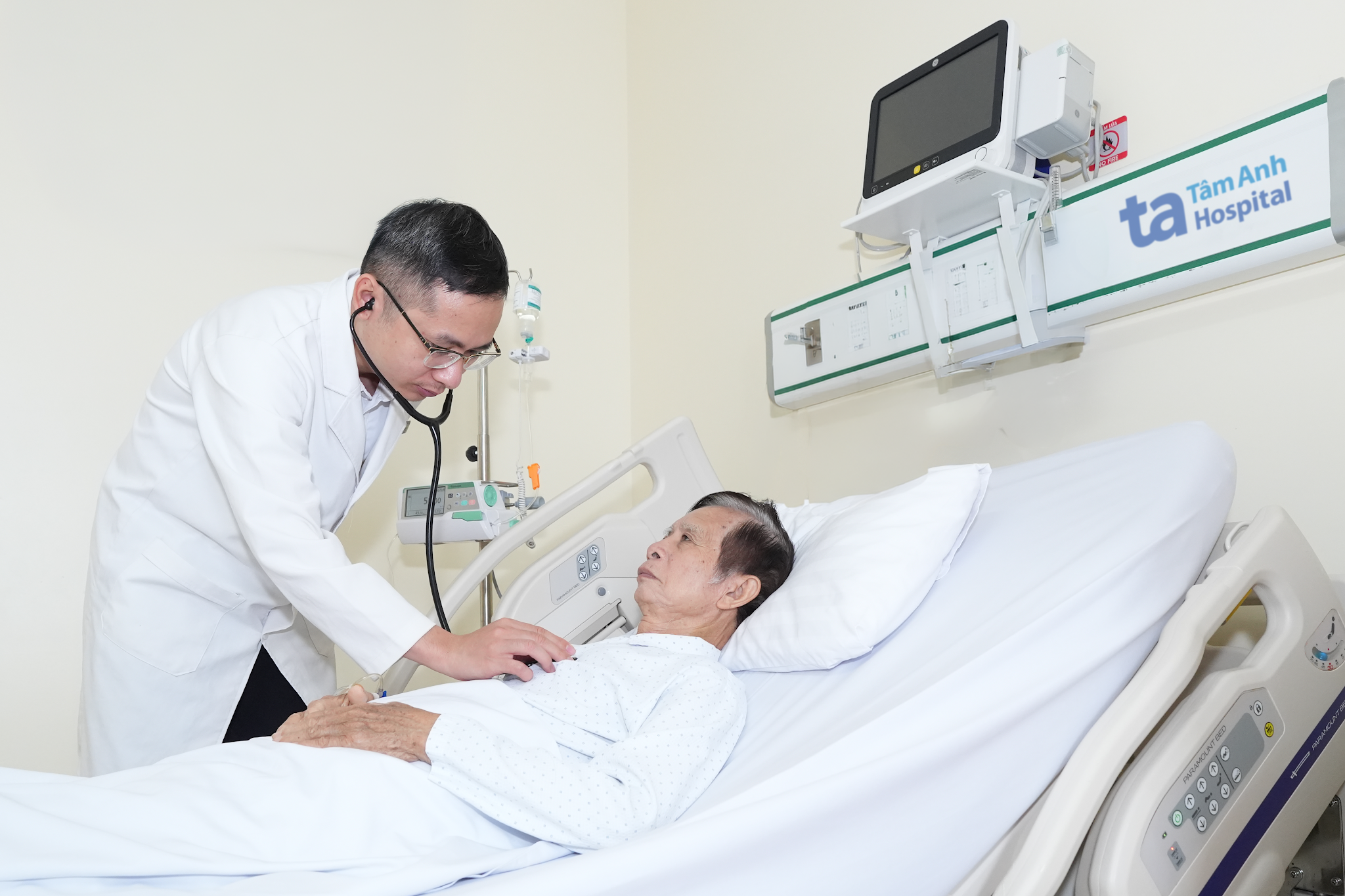 |
Dr. Thao examined Ong Chien and provided instructions before his discharge. *Photo: Tam Anh General Hospital* |
After more than three weeks of intensive treatment, Ong Chien's chest pain resolved, his shortness of breath decreased, and his cardiovascular condition stabilized, leading to his discharge. He has complex underlying medical conditions, including damage to the carotid, renal, and lower limb arteries, requiring regular follow-up appointments.
Dr. Thao advises patients not to be complacent after stent placement or discharge following myocardial infarction treatment. Patients must attend scheduled follow-ups, strictly adhere to medication regimens, effectively control risk factors such as: hypertension, diabetes, and dyslipidemia, and maintain a healthy lifestyle. If any unusual symptoms appear, such as chest pain, shortness of breath, palpitations, dizziness, or fainting, patients should seek immediate medical attention.
Ly Nguyen
| Readers can submit questions about cardiovascular diseases here for doctors to answer. |