Mr. Tam, a Vietnamese-American, visited Tam Anh General Hospital, Ho Chi Minh City, due to severe pain in his right knee, making it difficult to walk. In addition to definitive surgical treatment for his osteoarthritis, he wished for a quick recovery to return to the US in about three months. Dr. Dang Khoa Hoc, Head of the General Orthopedic Trauma Department, prescribed a total knee replacement for Mr. Tam using the CUVIS-Joint robot.
Mr. Tam's right knee had degenerated to its end stage, showing structural deformation. The CUVIS-Joint robot's software reconstructed the natural anatomical landmarks of the joint, as they were before the illness. From this, the robot created a detailed surgical plan, specifying the bone cut location and thickness, the direction of the cut, the implant placement, and the most suitable artificial joint size.
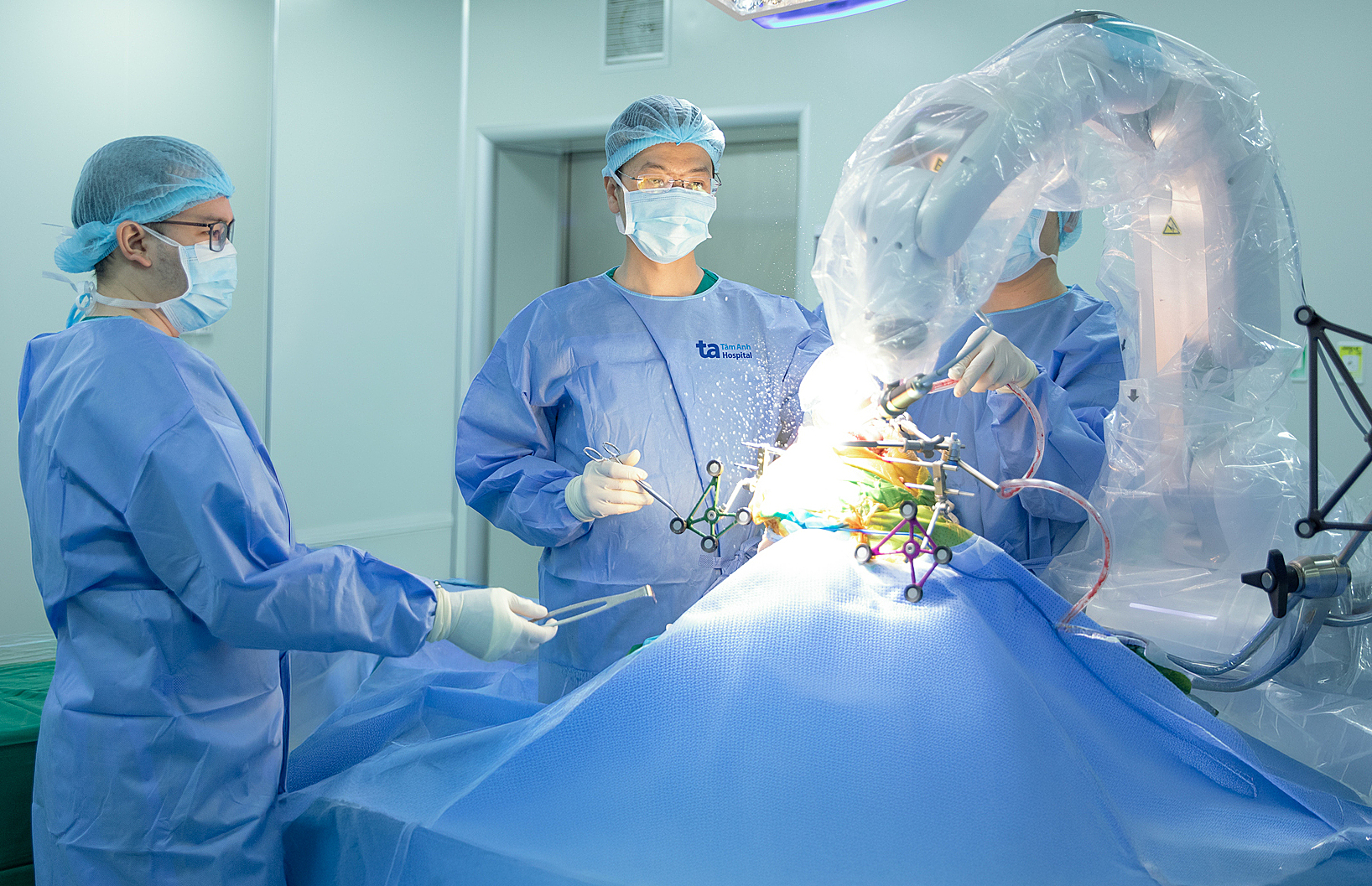 |
Dr. Hoc (center) performing knee replacement surgery for a patient with the assistance of the CUVIS-Joint robot. Photo: Tam Anh General Hospital |
During the surgery, the robot generated a "GPS map" to accurately navigate crucial points on the patient's actual bone surface, ensuring alignment with the software-generated images. The robot also optimized limb alignment and soft tissue balance, which helps the knee joint move more naturally and stably after surgery.
After finalizing all personalized parameters for the patient, the surgeon commanded the robot to perform bone cuts according to the plan with millimeter precision, maximally preserving healthy bone and surrounding soft tissues. The appropriately sized artificial joint was then placed, fitting perfectly into the patient's body, which helps avoid the risk of joint loosening, dislocation, and extends the joint's lifespan.
Thanks to the robot's assistance, the surgery proceeded quickly. Mr. Tam experienced less pain and minimal blood loss, being discharged after three days. Two weeks later, he could perform light exercise. At his 6-week follow-up appointment, he had recovered approximately 90%, was almost pain-free, and his daily activities were unaffected. He is scheduled to return to the US next week, much earlier than initially planned.
Patients undergoing knee replacement who experience long periods of sitting and inactivity during a long flight back to the US can face risks such as deep vein thrombosis, pulmonary embolism, leg swelling, and temporary joint pain and stiffness. However, due to his easy movement, Mr. Tam was guided by doctors to walk and perform in-situ exercises, which effectively improved blood circulation and prevented these risks.
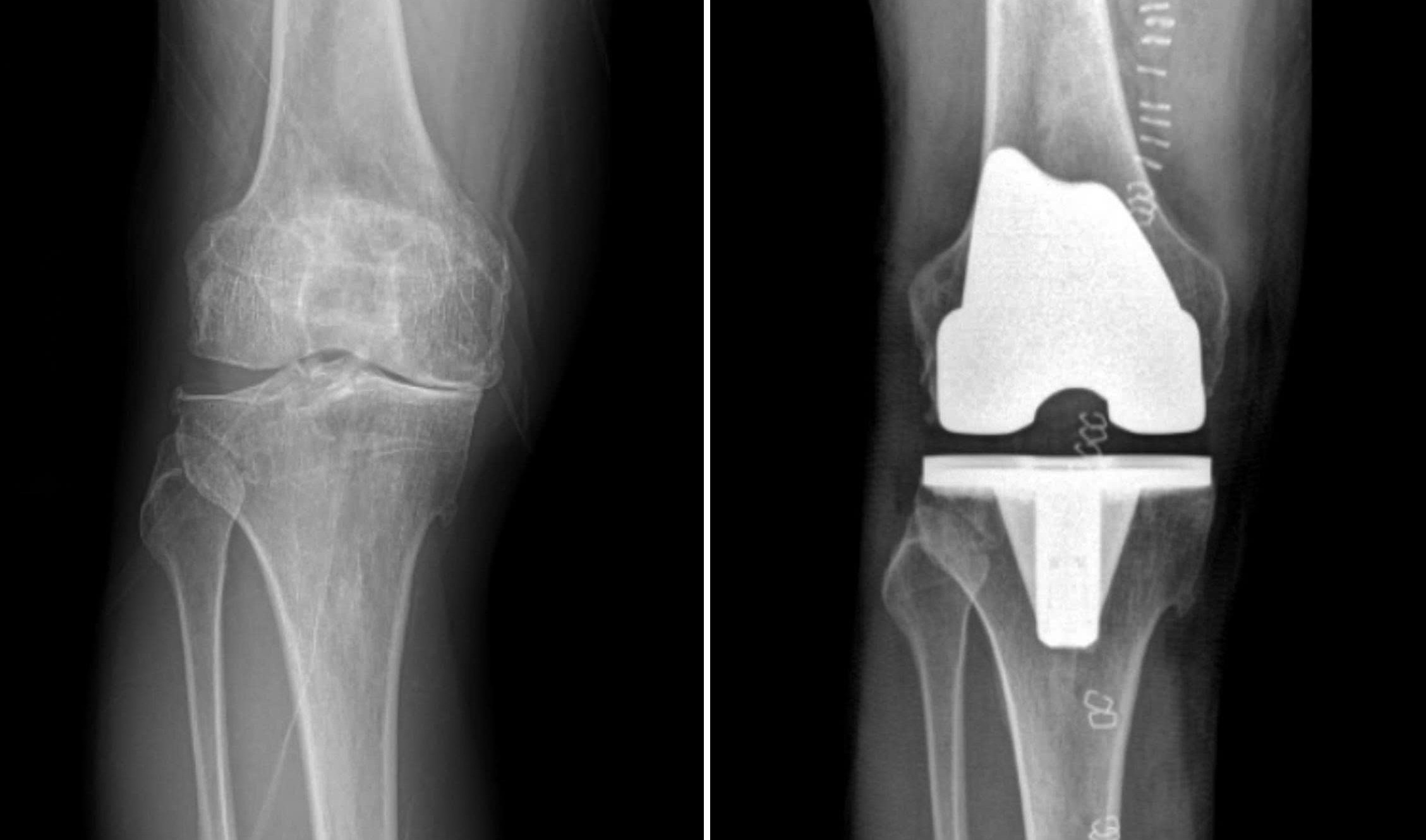 |
Mr. Tam's knee joint before (left) and after surgery. Photo: Tam Anh General Hospital |
Dr. Hoc advises that when joint replacement is indicated, patients should seek early treatment and avoid delays. Prolonging treatment can lead to numerous complications affecting quality of life, such as persistent pain and limited mobility.
Phi Hong
*Patient's name has been changed