The signing ceremony took place on 28/4 during a cooperation conference between Binh Dong Ward People's Committee and various entities aimed at developing grassroots healthcare. Participants included the 115 Emergency Center, Nguyen Trai Hospital, Ho Chi Minh City Institute of Traditional Medicine, and the Drug Crime Investigation Police Department. The partners are collaborating to build an early and remote healthcare network through "first medical touchpoints," ensuring residents have timely, continuous, equitable, and effective access to care in their neighborhoods.
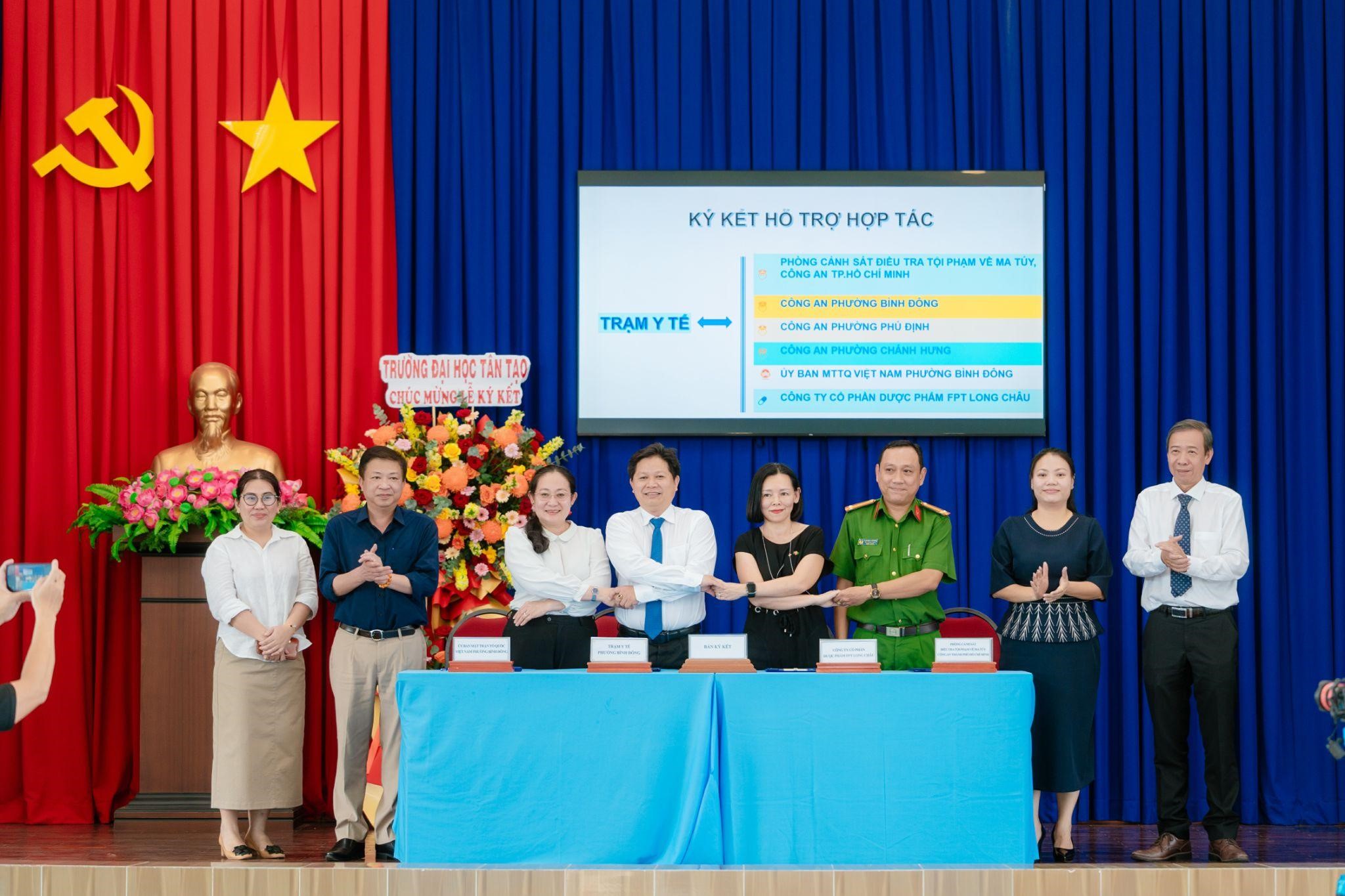 |
Representatives of the units signed a strategic cooperation agreement to develop grassroots healthcare in Binh Dong Ward, enhancing community health. Photo: Hoang Khanh
Long Chau and Binh Dong Ward People's Committee have agreed on strategic cooperation pillars: raising public awareness through communication, expanding official medical information channels, early detection and timely consultation, and social welfare activities. Both units emphasized a shared vision: acting quickly and effectively, with a people-centric approach.
Accordingly, Long Chau and Binh Dong Ward People's Committee are launching multi-channel community awareness programs, utilizing pharmacy systems, medical stations, communication materials (leaflets, posters, banners), and digital platforms. This ensures residents everywhere can access visual and comprehensive information. Content focuses on disseminating medical information, preventing infectious diseases—especially dengue fever and common dangerous illnesses—and highlighting the role of proactive healthcare, early detection, timely treatment, and treatment adherence.
 |
Ms. Nguyen Bach Diep, chairperson of FPT Retail and general director of the Long Chau pharmacy and vaccination center system, affirmed the company's sustained commitment to community care programs for a healthy Vietnam. Photo: Hoang Khanh
Leveraging the expertise of Binh Dong Ward Medical Station and Long Chau's extensive network of pharmacies and vaccination centers, the two parties are enhancing health consultation services, risk screening, and early detection of medical conditions within the community. A Long Chau representative stated, "At service points, residents receive quality medicine, safe, transparent services, and knowledge sharing from Long Chau medical professionals on disease prevention, periodic health monitoring, and guidance on seeking care at medical facilities upon noticing unusual symptoms."
Extending their commitment to a healthy Vietnam, Long Chau and Binh Dong Ward will collaborate to organize community healthcare programs, expanding access to essential medical services for residents, particularly policy beneficiaries and disadvantaged individuals in the area.
At the event, Dr. Nguyen Van Vinh Chau, deputy director of the Ho Chi Minh City Department of Health, highlighted that medical stations are primary touchpoints, playing a crucial role in public care. They are frontline forces in effectively implementing the spirit of Resolution 72-NQ/TW, particularly in prevention and community health management. According to him, systematic disease prevention at the grassroots level will enhance public health awareness, enabling early detection for timely treatment, thereby reducing the burden of illness, saving medical costs, and improving quality of life.
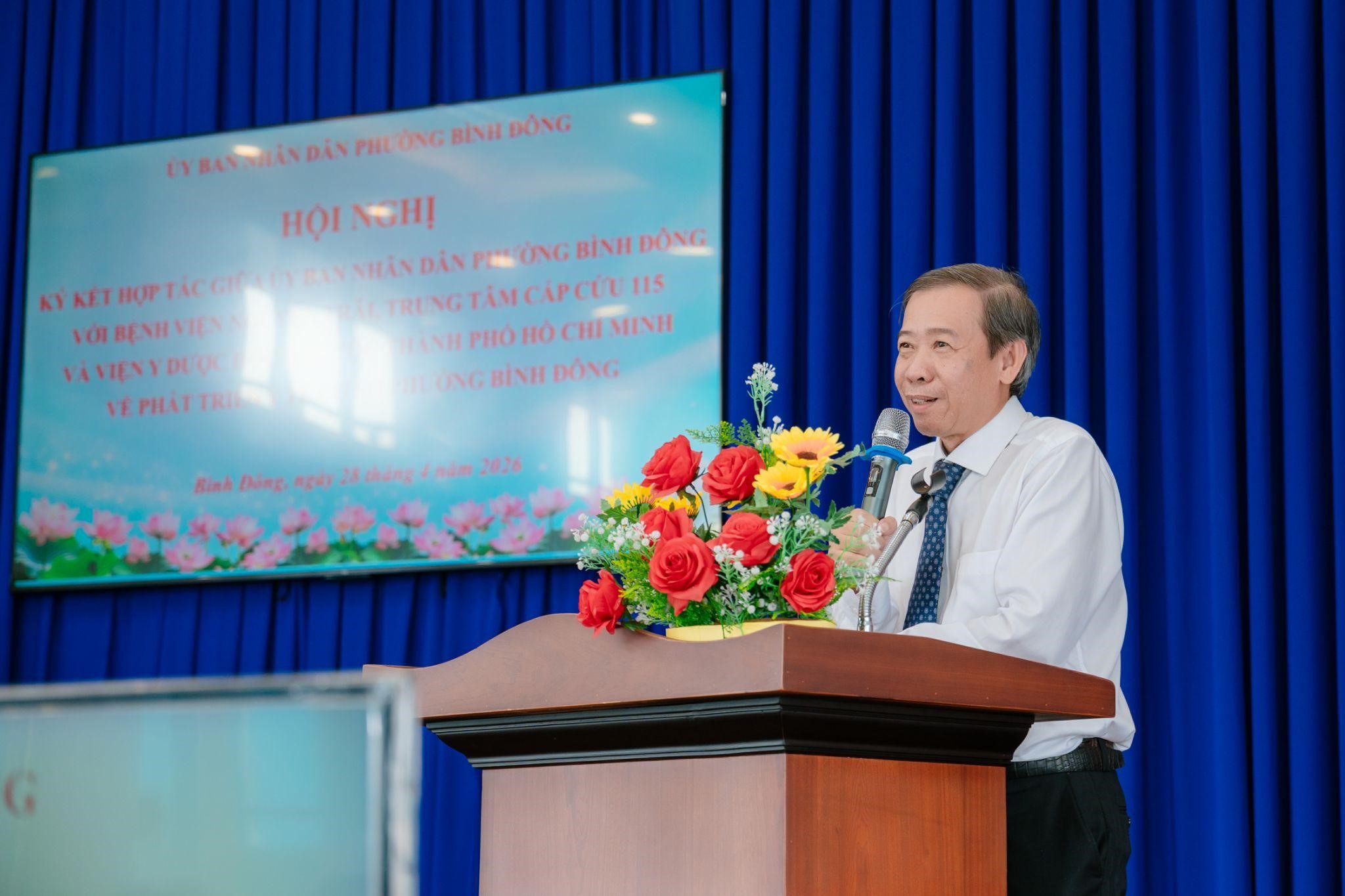 |
Dr. Nguyen Van Vinh Chau, deputy director of the Ho Chi Minh City Department of Health, emphasized the role of grassroots healthcare in community health management. Photo: Hoang Khanh
Ms. Vu Yen Oanh, vice chairperson of Binh Dong Ward People's Committee, affirmed that improving the quality of ward medical station operations and caring for residents' health is a key task for Binh Dong Ward. In addition to enhancing medical expertise, the ward medical station also proactively signed agreements with the ward's Vietnam Fatherland Front, the Long Chau pharmacy and vaccination center system, and other units for community support activities, providing free assistance and consultation to policy beneficiaries and disadvantaged residents. She expressed hope that connecting public-private resources among businesses, hospitals, police, and medical facilities will create a sustainable community healthcare system, bringing practical value to residents.
Current health policies emphasize a significant shift in healthcare from a treatment-focused approach to proactive disease prevention. Resolution 72-NQ/TW of the Politburo, "On breakthrough solutions to strengthen the protection, care, and improvement of public health," clearly outlines the direction: prioritizing prevention, building a healthcare system close to the people, promoting smart management, and gradually reducing the burden of medical costs. To achieve these goals, strengthening preventative measures and raising community awareness at the grassroots level is an urgent requirement.
 |
With a system of over 2,500 pharmacies and 200 vaccination centers, along with a team of skilled pharmacists, Long Chau is becoming a "healthcare pillar" in the community, serving over 33 million Vietnamese people. Photo: Hoang Khanh
Public-private partnership in developing grassroots healthcare continues to be a strategic step for the Long Chau pharmacy and vaccination center system in its journey to enhance community healthcare quality, in response to the spirit of Resolution 72-NQ/TW of the Politburo and Resolution No. 282/NQ-CP of the Government.
Previously, Long Chau collaborated with Ho Chi Minh City Police to develop the Digital Citizen Station model in residential areas, contributing to bringing digital health and social welfare services closer to residents in a synchronized and sustainable manner.
Kim Anh