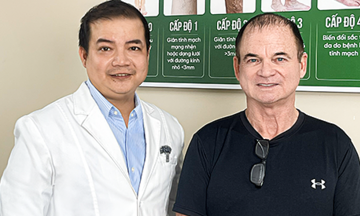
Mr. Van had a bile duct stent placed last year but failed to attend regular follow-up appointments. Recently, he developed a high fever, chills, and upper abdominal pain radiating to his right side, along with a poor appetite, prompting him to visit Tam Anh General Hospital Hanoi.
Laboratory tests revealed elevated white blood cell and procalcitonin levels, along with decreased platelet count and coagulation indicators, indicating a severe infection. Elevated bilirubin suggested cholestasis. An MRI scan confirmed a large common bile duct stone, causing dilation of both intrahepatic and extrahepatic bile ducts, mild pancreatic duct dilation, and the presence of the old bile duct stent. Dr. Dinh Huong, from the Department of Gastroenterology, Hepatology, and Pancreatology, diagnosed the patient with a bile duct infection caused by a large common bile duct stone.
Dr. Huong noted Mr. Van's advanced age and underlying hypertension, which presented significant surgical risks. The medical team opted for endoscopic retrograde cholangiopancreatography (ERCP), a minimally invasive procedure designed to minimize complications, allowing doctors to visualize the bile ducts and determine the most suitable intervention.
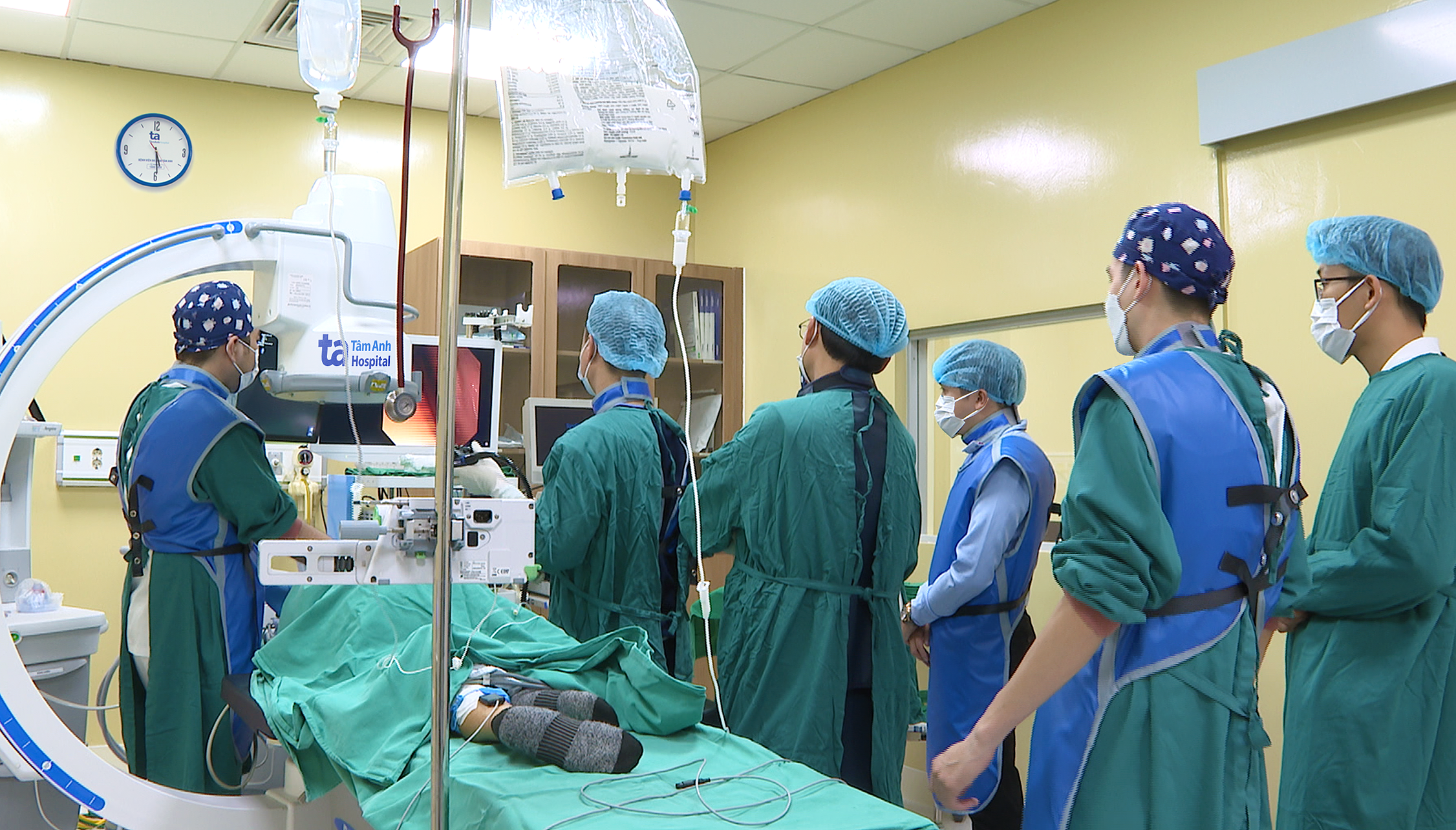 |
The endoscopic retrograde cholangiopancreatography team restores bile duct flow for the patient. Photo: Tam Anh General Hospital.
During the endoscopy, the team found two old bile duct stents and no bile flow. To alleviate the obstruction, they removed the old stents, irrigated the bile ducts, and placed two new stents to restore proper flow. The patient received broad-spectrum antibiotic treatment from the time of admission to manage the infection.
After the intervention, Mr. Van's health significantly improved, his fever subsided, abdominal pain ceased, he could eat normally, and was discharged after 6 days.
According to Dr. Huong, the ability of bile ducts to contract and maintain flow diminishes with age, making them prone to accumulating sludge and forming new stones. This increases the risk of recurrent obstruction, even after stent placement. Furthermore, stents can become obstructed by bile sludge or food refluxing from the duodenum into the bile ducts, leading to drainage failure and subsequent infection. Therefore, patients with common bile duct stones should undergo regular follow-up examinations to assess drainage effectiveness, detect early signs of obstruction, and ensure timely intervention.
After discharge, patients should maintain a healthy diet, drink sufficient water, and engage in gentle physical activity. Eating smaller, more frequent meals, increasing fiber intake, and limiting alcohol and fried foods support optimal bile flow, thereby reducing the risk of bile sludge accumulation and new stone formation. Should any unusual symptoms arise, such as fever, jaundice, right upper quadrant pain, or pale stools, prompt medical consultation is recommended to prevent potential complications.
Ly Nguyen
*Patient's name has been changed
| Readers can ask questions about digestive diseases here for doctors to answer. |