


This information was highlighted by Deputy Minister of Health Nguyen Thi Lien Huong at the launch ceremony of the Nutrition Information Portal, a specialized digital platform for public health organized by the National Institute of Nutrition on 28/1 in Hanoi.
Deputy Minister Huong cited that in Southeast Asia, Vietnamese men have the 5th highest life expectancy at 74,7 years, a high level compared to countries with similar living standards. However, the quality of life is not commensurate, as each person endures approximately 10 years of illness. Most people begin to suffer from chronic diseases from age 64, significantly reducing their healthy lifespan. In contrast, Japanese people can live healthily until 80 out of a total life expectancy of 86 years.
 |
Deputy Minister of Health Nguyen Thi Lien Huong. *Photo: Minh Nhat* |
Leaders from the Ministry of Health pointed out that the core reason for the paradox of "long life but not healthy" lies in irrational nutrition. Vietnam is grappling with a dual burden: while rates of malnutrition and stunting have not decreased significantly, overweight and obesity are on the rise. Deficiencies in vitamin A and micronutrients directly impact people's stature and physical strength.
"Unbalanced eating habits and the overuse of processed foods high in salt, sugar, and fat cause Vietnamese people to face non-communicable diseases like hypertension, cardiovascular disease, diabetes, and cancer earlier," Huong stated.
To address this situation, Resolution 72 identified a breakthrough solution: shifting the mindset from focusing on treatment to proactive prevention and comprehensive healthcare. The government has set specific targets for 2030: the average life expectancy for Vietnamese people should reach 75,5 years, with a minimum of 68 healthy life years. In this strategy, nutrition plays a pivotal role in human physical development.
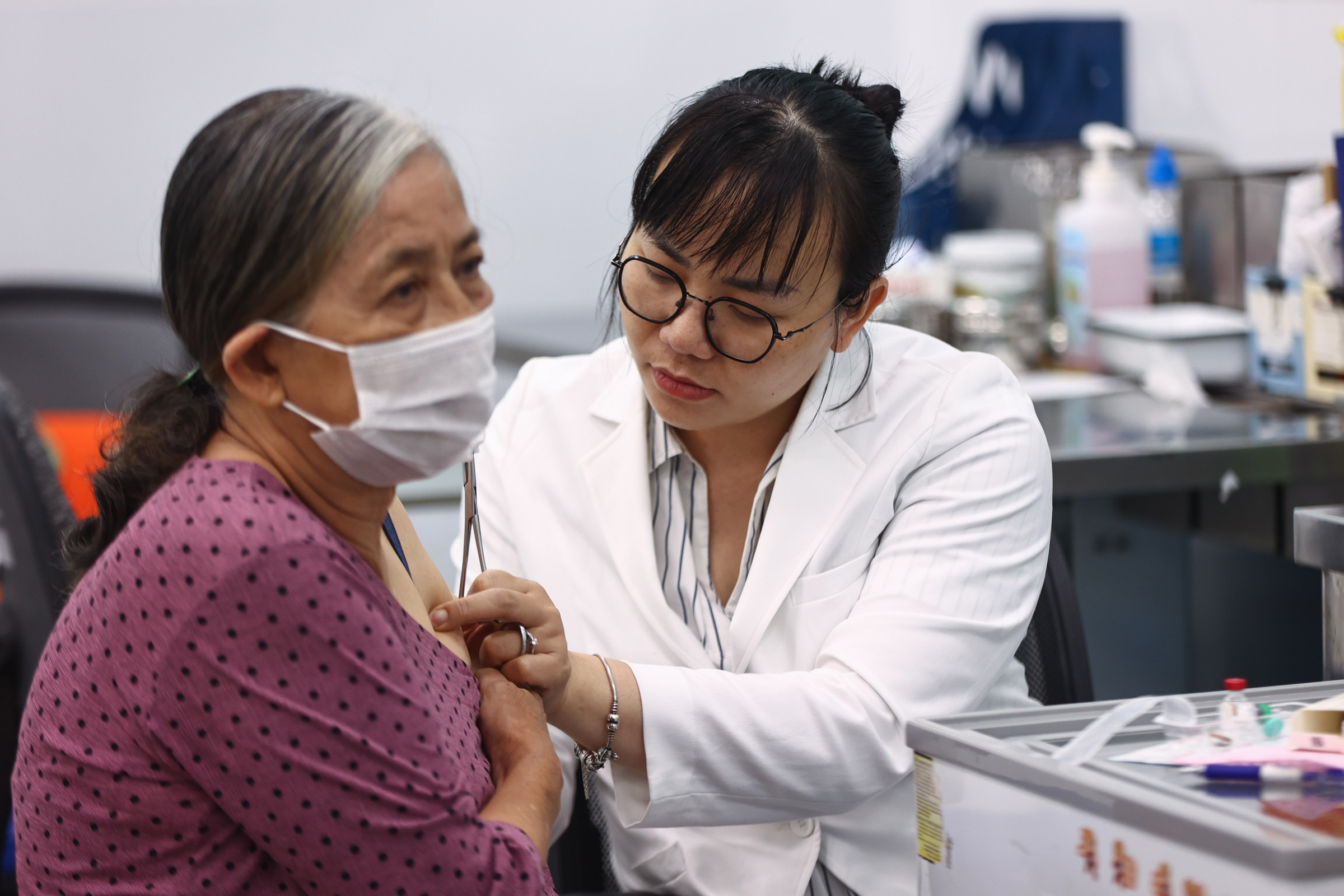 |
Elderly people receiving vaccinations at Pasteur Institute Ho Chi Minh City. *Photo: Quynh Tran* |
Experts recommend that people adopt healthy diets, supplement micronutrients, increase physical activity, and manage stress. Additionally, communication and education efforts are continuous to change community behavior.
Associate Professor Doctor Tran Thanh Duong, Director of the National Institute of Nutrition, announced that the newly launched Nutrition Information Portal will serve as a key digital tool for this objective. The platform integrates scientific research data, provides training materials for healthcare professionals, and offers tools for people to look up food nutritional values.
"We expect the portal to broaden access to official knowledge, support the connection between policy and practice, and thereby promote sustainable healthy lifestyles for the entire society," Duong said.
Le Nga


