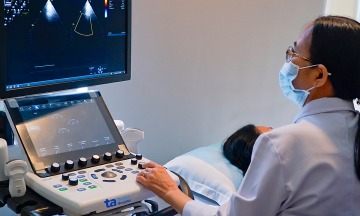
Blood test results for Ms. Chuyen at Tam Anh General Hospital Ho Chi Minh City revealed a thyroid stimulating hormone (TSH) level of 0,007 uIU/mL (normal range 0,34-5,6), and a free thyroid hormone (FT4) level of 68,26 pmol/L (normal range 7,59-9,82). An echocardiogram also showed reduced contractile function, dilated heart chambers, moderate heart valve regurgitation, and pulmonary hypertension.
Doctor Pham Huyen Thu, from the General Internal Medicine Department, diagnosed Ms. Chuyen with severe hyperthyroidism and heart failure, complicated by underlying hypertension, diabetes, and multinodular goiter (a condition where the thyroid gland is overactive, releasing a flood of hormones into the bloodstream).
 |
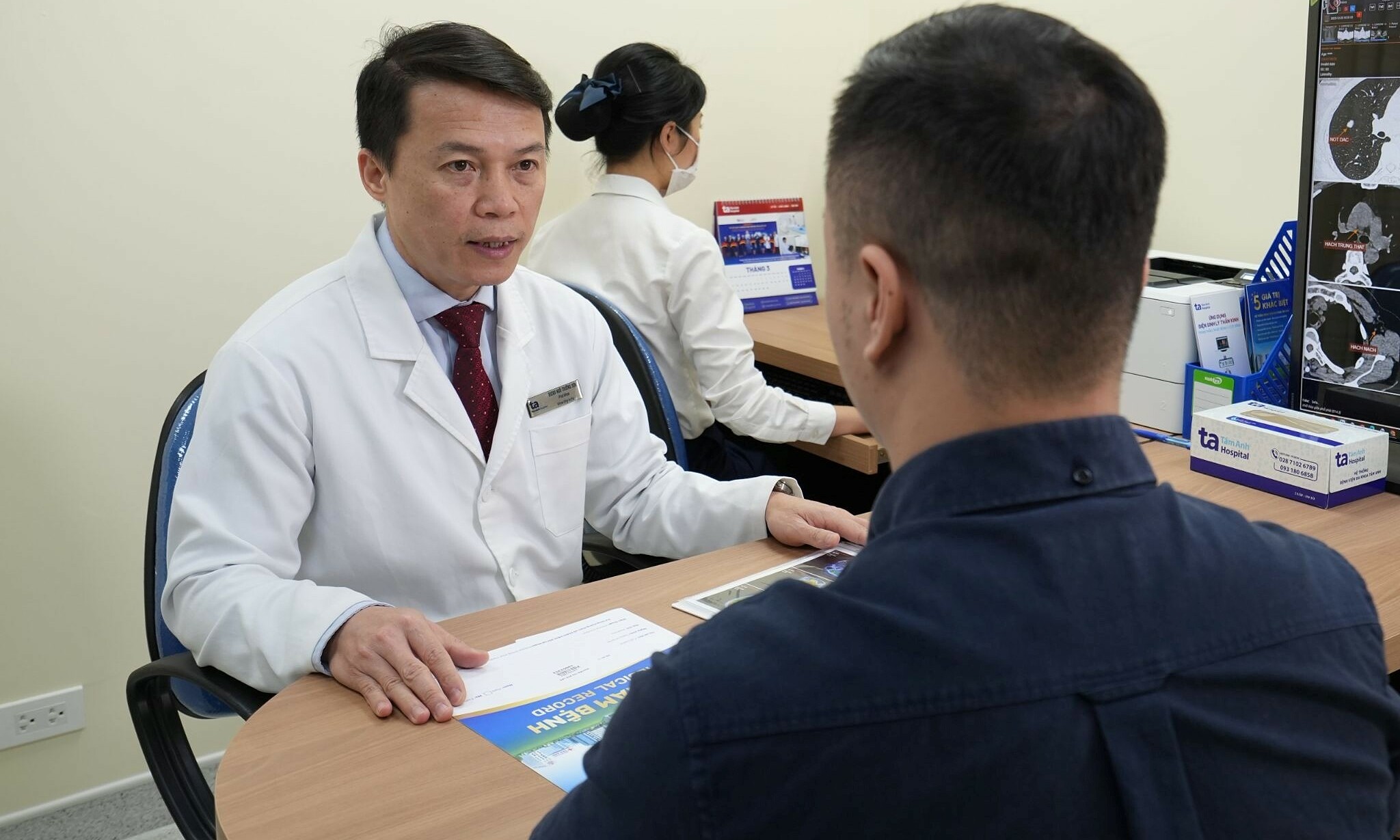
Doctor Thu explains blood test results to the patient. *Tam Anh General Hospital* |
"The disease went undetected and untreated early, silently progressing to cause cardiovascular complications," Doctor Thu explained. Specifically, the elevated thyroid hormones forced the patient's heart to beat rapidly at 126 beats per minute (normal is 60-100 beats per minute), causing constant heart palpitations and shortness of breath. This prolonged cardiac stimulation altered the heart muscle structure, leading to thickening of the left ventricle, heart valve regurgitation, pulmonary hypertension, and heart failure.
High doses of thyroid hormones also damaged liver cells, leading to elevated liver enzymes. Simultaneously, they disrupted metabolism, causing the patient's blood uric acid levels to rise, impacting kidney function, and increasing the risk of complications such as gout.
Ms. Chuyen's thyroid hormones were controlled with synthetic antithyroid drugs, combined with beta-blockers and blood pressure medication to manage heart rate and protect the heart muscle. She also received medication to support liver function and lower uric acid, alongside ongoing treatment for her underlying conditions.
After more than one month of treatment, the patient's heart rate decreased, liver function stabilized, and FT4 levels dropped to a safe range of 14,76 pmol/L. She no longer experienced breathlessness, shortness of breath, or hand tremors.
Doctor Thu noted that hyperthyroidism symptoms are often atypical and difficult to recognize. Signs of thyroid disease can be easily masked or obscured by existing underlying conditions. To detect the disease early, people should undergo regular health check-ups every 6-12 months. Patients currently undergoing treatment for thyroid disease should not discontinue their medication independently; they must follow up as directed to adjust doses appropriately.
Thao Vy
*Patient's name has been changed
| Readers can submit questions about endocrine diseases here for doctors to answer. |