Doctors at Tam Anh General Hospital Hanoi noted Ms. Toan's uterus measured 78x85x89 mm, significantly larger than the normal 8x5x3 cm, with a non-uniform uterine muscle. Adenomyosis was widespread within the uterine muscle, forming a mass of 64x68x71 mm, accompanied by several cysts.
Adenomyosis, a condition where endometrial cells grow and invade the uterine muscle layer, is affected by hormones during each menstrual cycle. This leads to chronic inflammation, swelling, and bleeding within the uterine muscle, causing abdominal pain, irregular bleeding, heavy menstrual bleeding, and prolonged anemia. If left untreated, the condition can impact quality of life and fertility.
 |
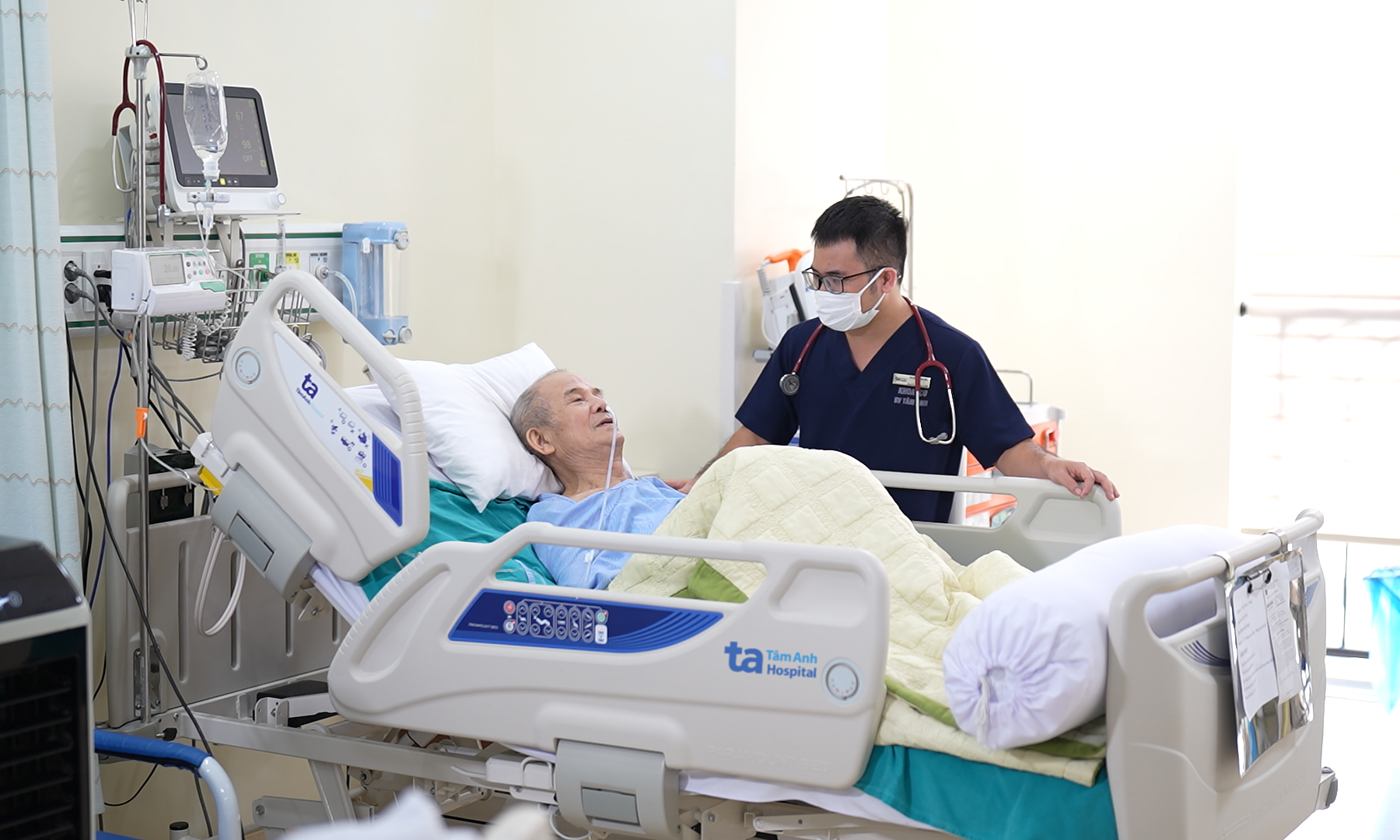
Associate Professor Hien consulting Ms. Toan. Photo: Tam Anh General Hospital |
Given the patient's desire to preserve her uterus, Associate Professor Doctor Nguyen Xuan Hien, Director of the Center for Diagnostic Imaging and Interventional Radiology, prescribed embolization. This method aims to cut off the blood supply nourishing the adenomyosis lesions.
The medical team performed local anesthesia and inserted a small catheter from the femoral artery to the two uterine arteries. This procedure was guided by a real-time digital subtraction angiography (DSA) system, allowing doctors to precisely identify the arterial branches supplying the lesions and effectively control the embolization. Embolic material was selectively delivered to the specific vessels feeding the adenomyosis, while healthy blood vessels were preserved. Following the intervention, the arterial branches supplying the adenomyosis were completely occluded, cutting off the blood supply and successfully preserving the patient's uterus.
According to Associate Professor Hien, embolization for adenomyosis is a minimally invasive endovascular procedure that does not require open surgery. By reducing the blood supply, the adenomyosis lesions gradually become deprived of oxygen and nutrients, leading to their shrinkage and a decrease in inflammatory reactions. This approach effectively improves symptoms such as menstrual pain, irregular bleeding, and heavy menstrual bleeding.
During her follow-up appointment, Ms. Toan reported a reduction in menstrual blood volume, with her cycle now lasting about 5 days instead of 7 days. A follow-up ultrasound revealed a significant reduction in the adenomyosis lesions: the anterior uterine wall lesion measured approximately 42x36x42 mm, and the posterior wall lesion measured 25x11 mm, both considerably smaller than before treatment. The patient no longer showed increased vascularity in the affected area, indicating a good response to the embolization.
Associate Professor Hien advises that not all cases of menstrual pain are physiological. If the pain is severe, requires painkillers, and is accompanied by irregular or heavy bleeding with many blood clots, patients should seek medical examination. Early detection of adenomyosis helps in selecting appropriate treatment and prevents the disease from progressing to cause chronic anemia.
Hoang Duong
| Readers can submit questions about obstetrics and gynecology here for doctors to answer |