Blood tests at Tam Anh General Hospital Hanoi revealed a significant drop in red blood cells (1,49 T/L) and reduced hemoglobin, indicating severe anemia, low blood pressure, and acute kidney failure. Phuc received intensive resuscitation and a transfusion of 1,400 ml of packed red blood cells to compensate for blood loss.
Endoscopy revealed multiple ulcers in the gastric antrum, the largest measuring about 1,2 cm, with blood clots adhering to the ulcerated surface. The endoscopy team used 4 clips to stop the bleeding and prevent recurrence.
Doctor Tran Van Khoa, from the Department of Intensive Care, Pain Management, and Palliative Care, stated that the patient's long-term use of old prescription painkillers led to serious complications.
"Some non-steroidal anti-inflammatory drugs (NSAIDs) provide pain relief, reduce inflammation, and lower fever, but they can decrease the synthesis of prostaglandin, which plays a role in protecting the stomach lining and maintaining the mucous layer against acid damage," explained the doctor. When this protective barrier weakens, the lining becomes susceptible to injury, leading to ulcers and gastrointestinal bleeding.
The natural aging process and co-existing conditions in older individuals, like Phuc, can increase the risk of gastrointestinal bleeding. Beyond damaging the digestive tract, painkillers can also impair kidney function, particularly in the elderly. When gastrointestinal bleeding leads to a reduction in circulating volume, the risk of kidney dysfunction further increases.
Common signs of mild stomach conditions and gastrointestinal bleeding in adults include fatigue, weakness, pale skin, dizziness, reduced mobility, or black stools. These symptoms can be difficult to recognize early and are often mistaken for underlying medical conditions.
 |
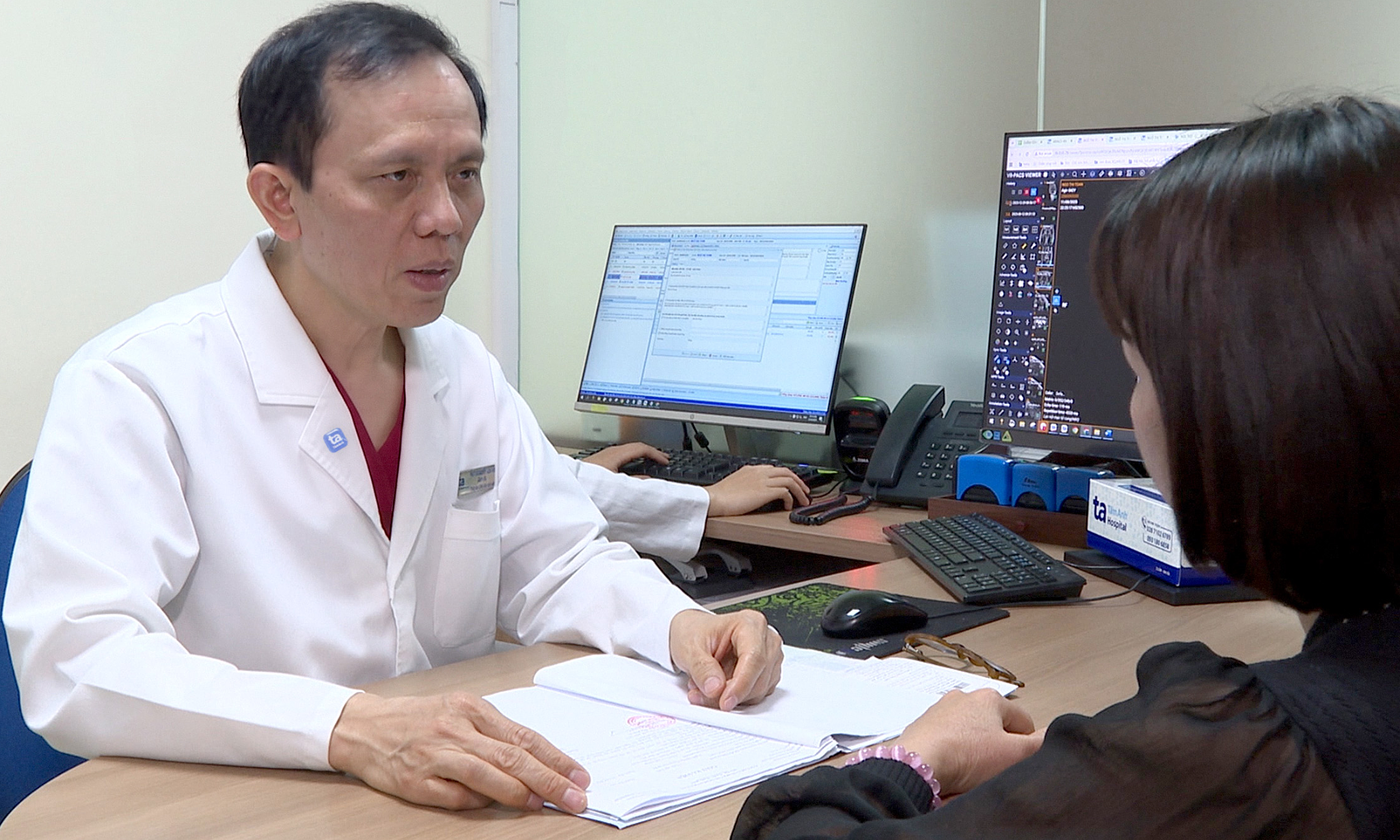
Doctor Khoa examines Phuc's health. Photo: Tam Anh General Hospital |
After 7 days of intensive care, Phuc's kidney function and hematological indices gradually improved, he resumed eating, and was discharged from the hospital.
Doctor Khoa advised patients and their relatives against self-medicating with painkillers for extended periods without a doctor's prescription. He cautioned against arbitrarily increasing doses, prolonging use, or reusing old painkiller prescriptions. Elderly individuals, those with underlying health conditions, or those taking multiple medications should consult a doctor for a health assessment before using painkillers.
If symptoms such as black stools, extreme fatigue, pale skin, dizziness, disorientation, slow reactions, or a rapid decline in health appear, families should take the patient to a medical facility for examination.
Khue Lam
| Readers can ask questions about digestive diseases here for doctors to answer. |