Quan was diagnosed with polycystic kidney disease 4 years ago. Doctors advised him to take medication regularly and attend follow-up appointments to slow the decline in kidney function. However, due to a lack of symptoms and work commitments, he stopped taking medication, missed appointments, and often stayed up late.
Early this year, he experienced fatigue, loss of appetite, weight loss, and limb weakness, prompting him to seek medical attention. He was diagnosed with renal failure and underwent surgery to create an arteriovenous fistula (AVF) for regular dialysis at a local hospital. After more than a month of dialysis, he remained constantly tired, itchy, and physically exhausted, unable to work. This led him to seek consultation at Tam Anh District 7 General Clinic.
Test results revealed his blood creatinine level had increased tenfold to 1,050 µmol/L, and his estimated glomerular filtration rate (eGFR) had decreased by more than 90% to 6 mL/min/1,73 m². Dr. Do Thi Hang, Head of the Nephrology - Dialysis Unit, diagnosed Quan with end-stage chronic kidney disease secondary to polycystic kidney disease. Toxins accumulated in his body, and his indicators for heart failure, potassium, and phosphorus were all elevated, causing significant fatigue and difficulty walking.
According to Dr. Hang, individuals with polycystic kidney disease who adhere to treatment and regular follow-up appointments can significantly slow the progression of kidney function decline. Quan's condition had advanced to end-stage chronic kidney disease, where the treatment goal is not only to prolong life but also to help patients maintain their quality of life and ability to work after treatment.
The doctor developed a personalized treatment regimen for Quan, including two sessions of periodic hemodialysis (HD) and two sessions of online hemodiafiltration (HDF Online) with fluid replacement each month. The HDF Online technique combines diffusion and convection mechanisms, effectively removing medium-molecular-weight toxins — a group of substances that conventional hemodialysis struggles to eliminate completely. As a result, patients experience less fatigue, improved appetite, and better physical recovery.
Alongside dialysis, Dr. Hang guided Quan in establishing a suitable diet, balancing nutritional needs with controlled intake of salt, potassium, phosphorus, and daily fluid intake to adjust dry weight and maintain stable blood pressure. After 6 months of treatment and lifestyle changes, his health significantly improved. Quan then transferred back to his local hospital to continue HD dialysis for work convenience.
"If only I hadn't been so complacent when the doctor advised me four years ago", Quan said.
 |
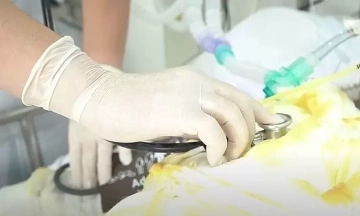
Dr. Hang examining Quan during HDF Online dialysis at Tam Anh District 7 General Clinic. Photo: Trung Vu. |
Polycystic kidney disease is an inherited condition where fluid-filled cysts develop in the kidneys, gradually increasing in size and number. These cysts compress the nephrons, leading to a decline in the kidney's filtering function and progressing to chronic kidney disease. The disease progresses silently for many years, making patients complacent when symptoms are not yet present. By the time symptoms like fatigue, loss of appetite, swelling, or high blood pressure appear, kidney function has often already significantly deteriorated.
Dr. Hang stated that the progression rate of polycystic kidney disease largely depends on lifestyle. Individuals who habitually stay up late, experience frequent stress, consume salty foods, regularly use alcoholic beverages, smoke, are sedentary, or are overweight or obese face an increased risk of high blood pressure, metabolic disorders, and renal vascular damage, accelerating the decline in kidney function.
Doctors advise patients with polycystic kidney disease or a family history of kidney disease not to arbitrarily stop medication or skip follow-up appointments. Patients should adopt a healthy lifestyle, get 7-8 hours of sleep daily, maintain a healthy weight, exercise regularly for 30 minutes each day, and follow a scientific diet. These habits can slow disease progression, preserve kidney function, and reduce the future risk of needing dialysis or kidney transplantation.
Dinh Lam
*Patient's name has been changed