Ms. Le had previously undergone surgery for uterine fibroids, an appendectomy, and treatment for an abdominal wall hernia. Recently, she experienced pain and discomfort in her right abdomen during physical activity. A computed tomography (CT) scan confirmed the recurrence of her hernia at the site of a previous surgical scar. Dr. Nguyen Quoc Thai, Specialist Level II, Head of the Department of Gastrointestinal Surgery, Endoscopy and Endoscopic Gastrointestinal Surgery Center, Tam Anh General Hospital, TP HCM, examined Ms. Le and noted a soft abdomen with a bulging mass along the old surgical scar.
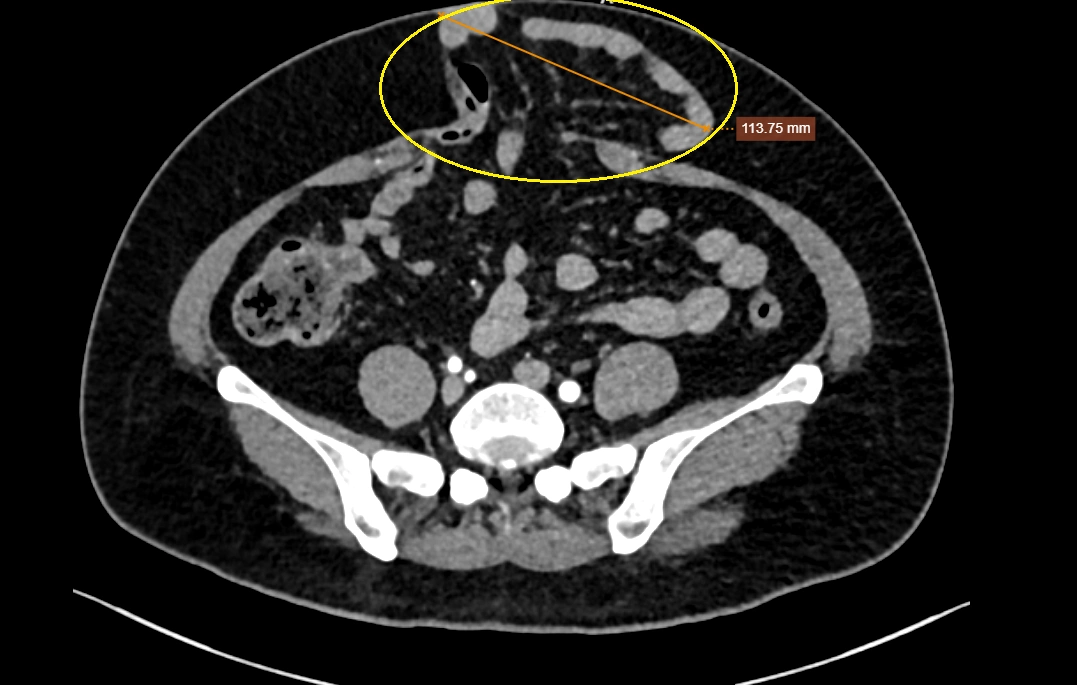 |
The CT image shows the hernia (yellow circle). Photo: Tam Anh General Hospital |
The CT image shows the hernia (yellow circle). Photo: Tam Anh General Hospital
Ms. Le suffers from hypertension and coronary artery disease, having had two stents placed, and is currently taking anticoagulants. Doctors conducted a multidisciplinary consultation before her surgery to ensure the best course of action.
After a comprehensive evaluation, the surgical team opted for the eTEP technique to access the hernia from the preperitoneal space, thus avoiding entry into the abdominal cavity. During the operation, doctors observed a hernia defect measuring approximately 5x6 cm at the midline of the abdomen. They dissected to create the preperitoneal space, then closed the hernia defect and placed a 15x22 cm artificial mesh to reinforce the abdominal wall.
Ms. Le recovered well, experienced minimal pain, and was able to walk and eat soon after surgery. She was discharged three days later.
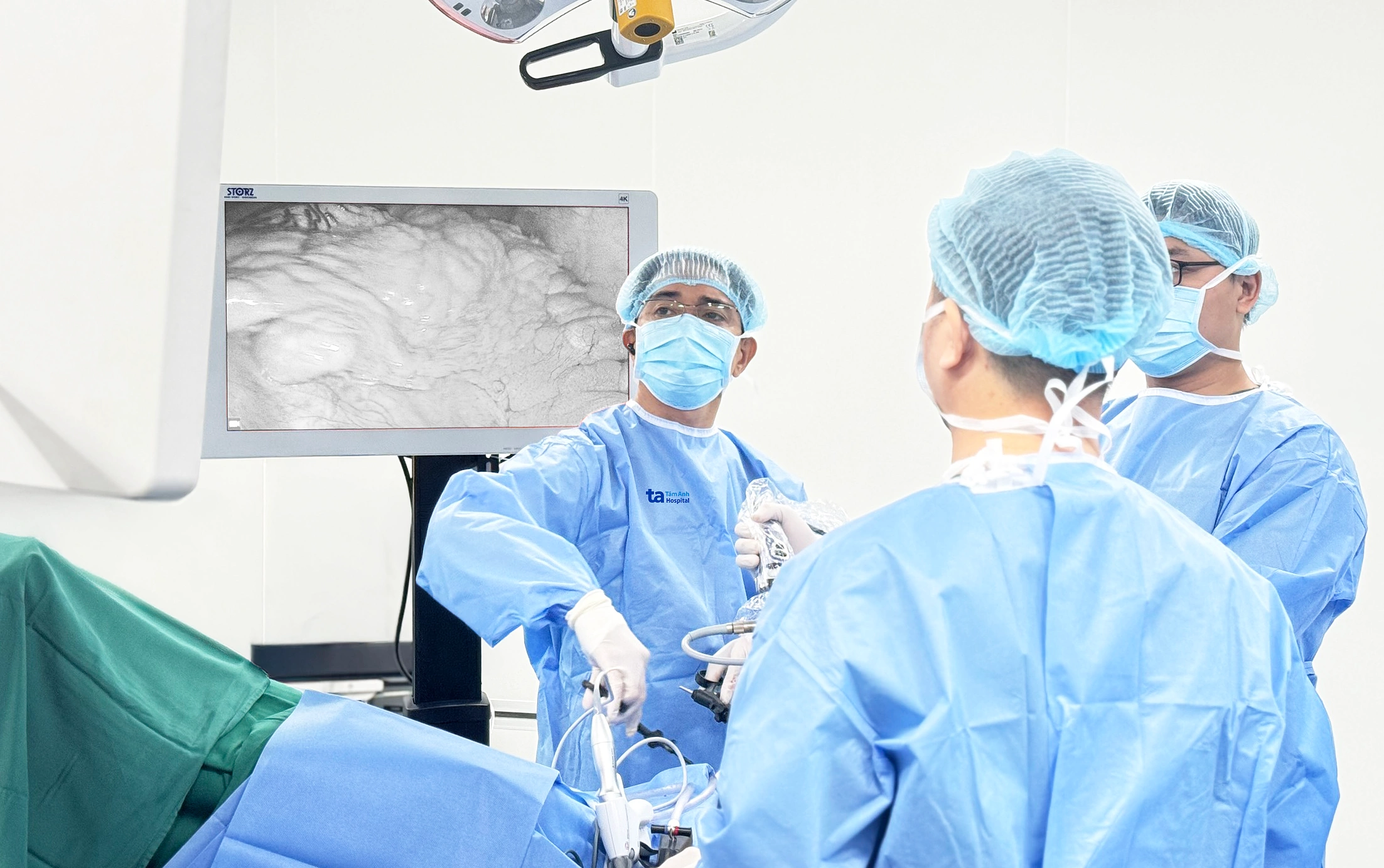 |
Dr. Thai (near the screen) performs surgery to place an artificial mesh for Ms. Le. Photo: Tam Anh General Hospital |
Dr. Thai (near the screen) performs surgery to place an artificial mesh for Ms. Le. Photo: Tam Anh General Hospital
An abdominal wall hernia occurs when a part of an abdominal organ, typically the intestine or omentum, protrudes through a weak spot or opening in the abdominal wall. This condition can manifest in various locations, including the groin, navel, or at old surgical incisions. The risk increases in individuals who have undergone abdominal surgery, are older, obese, have conditions that increase intra-abdominal pressure, or perform prolonged heavy labor.
If an unusual bulge is noticed in the abdominal wall, especially at the site of a previous surgical scar, patients should seek medical attention. Symptoms such as increasing pain, a bulge that does not reduce spontaneously, nausea, vomiting, or difficulty passing gas or stool could indicate a strangulated hernia, which requires emergency treatment to prevent dangerous complications.
Quyen Phan
*Patient's name has been changed
| Readers can ask questions about digestive diseases here for doctors to answer. |