The veteran sustained a knee injury during the war. Due to limited wartime medical care, the injury resulted in prolonged complications. For over 50 years, the affected area continuously discharged fluid, caused pain, and developed chronic fistula inflammation, severely hindering his mobility. Doctors at Viet Duc Friendship Hospital diagnosed him with a lost kneecap and chronic patellar tendon fistula inflammation caused by a weapon — a rare, long-standing, and challenging injury to treat.
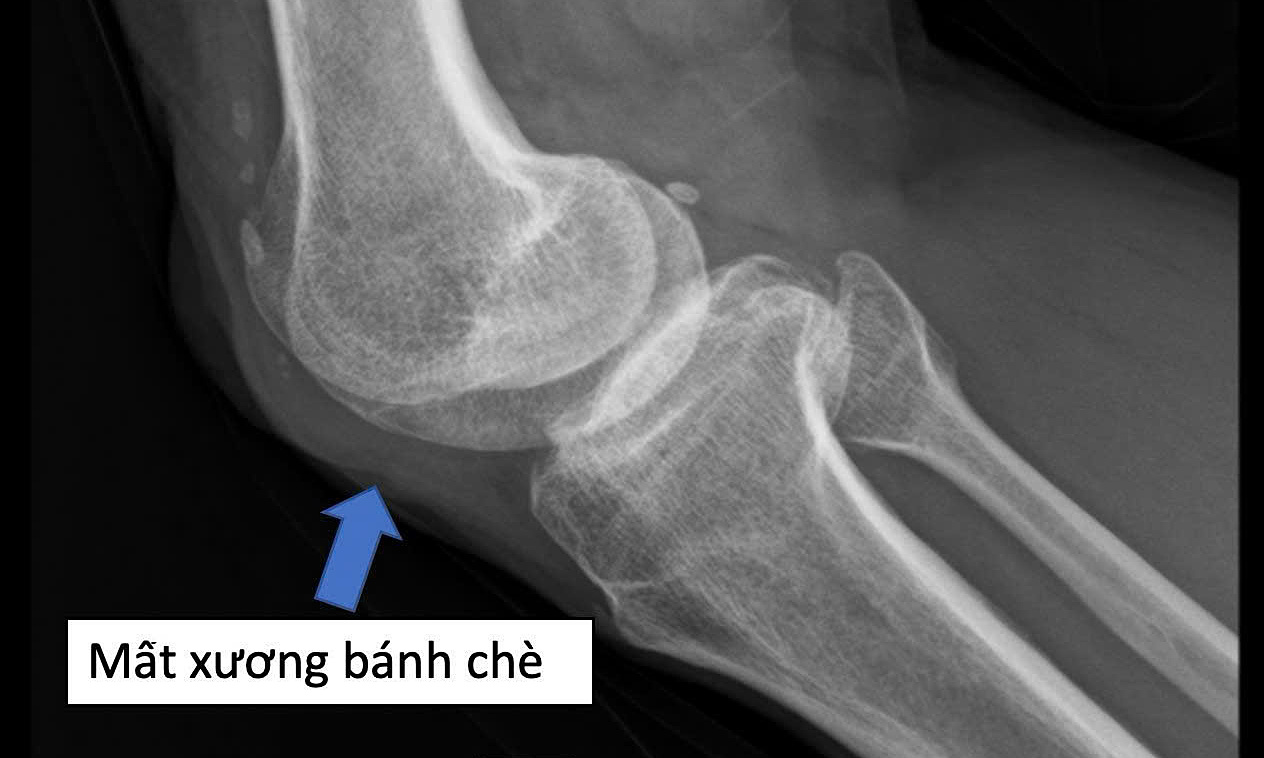 |
Knee X-ray images reveal the patient's missing kneecap. *Photo: Provided by the hospital.* |
Dr. Vu Trung Truc, Deputy Head of Maxillofacial, Plastic, and Aesthetic Surgery, explained that complete treatment required removing all infected tissue and reconstructing the deficient area with well-vascularized tissue. He noted that this was a complex and lengthy surgery, posing numerous risks, especially for an 85-year-old patient.
The surgical team initially planned to use a pedicled skin flap from the thigh to cover the wound. However, during the operation, surgeons discovered severe atherosclerosis and structural changes in the blood vessels surrounding the injury, rendering the initial plan unfeasible.
Consequently, the surgeons had to employ a more complex technique: a free flap transfer, involving the detachment and microscopic reconnection of small blood vessels. The primary challenge was the atherosclerotic vessel walls, which had split into two layers, making the anastomosis extremely difficult and increasing the risk of vascular occlusion. Failure to reconnect the vessels could lead to flap necrosis or even limb loss for the patient.
The surgery lasted approximately 8 hours, requiring the collaborative efforts of plastic surgery, orthopedic trauma, anesthesia, and resuscitation specialists. Post-operatively, the patient's flap circulation was closely monitored, alongside meticulous wound care and the initiation of rehabilitation therapy.
Surgeons confirmed successful blood flow restoration, completely resolving the chronic fistula inflammation that had persisted for over 50 years. Following a period of recovery, the veteran is expected to regain near-normal mobility.
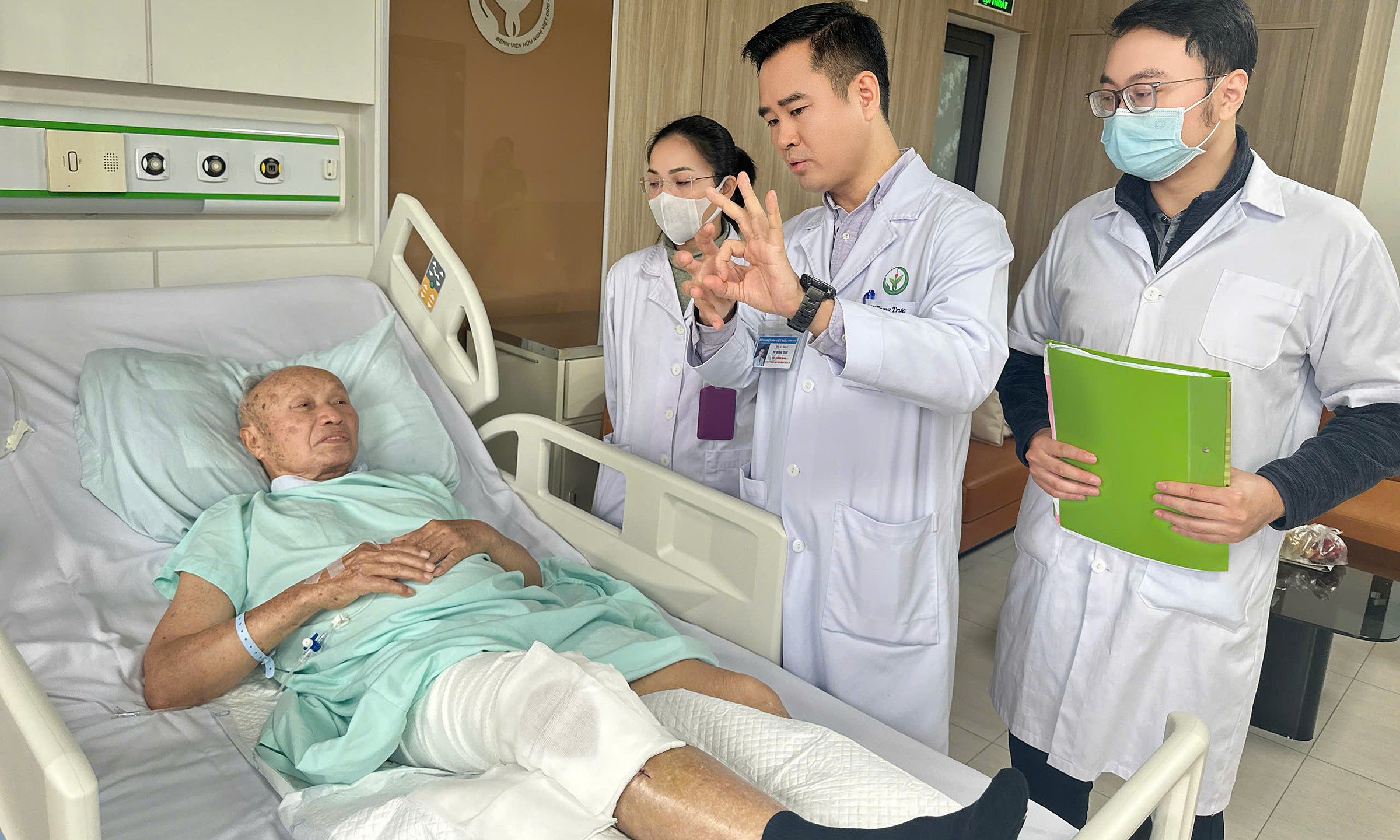 |
Doctors examine the patient after surgery. *Photo: Thai Ngoc.* |
Le Nga