Many parents arrange daily stretching routines, hoping for taller children. However, pediatric nutritionist To Nghien Than reveals this is a social media myth. Scientific evidence does not support this claim; stretching primarily enhances bone and joint flexibility.
According to To Nghien Than, if parents truly want their children to develop height, jumping exercises are the key to noticeable results.
Why do people feel taller after stretching?
On her personal page, To Nghien Than explains that many parents mistakenly believe their children grow taller after stretching. This is often a visual effect from improved posture. Exercises can expand the chest and relax leg muscles, helping children stand straighter. This creates an illusion of a taller, more slender physique, not actual bone growth.
Furthermore, a child's height naturally fluctuates throughout the day. Research indicates that children aged three to 15 can see an average height decrease of about 0,47 cm from morning to evening. Consequently, measuring height at different times can lead to the false belief that stretching increases stature.
The expert stresses that confusing posture improvement and flexibility with actual bone growth is common, but these aspects do not impact growth plates.
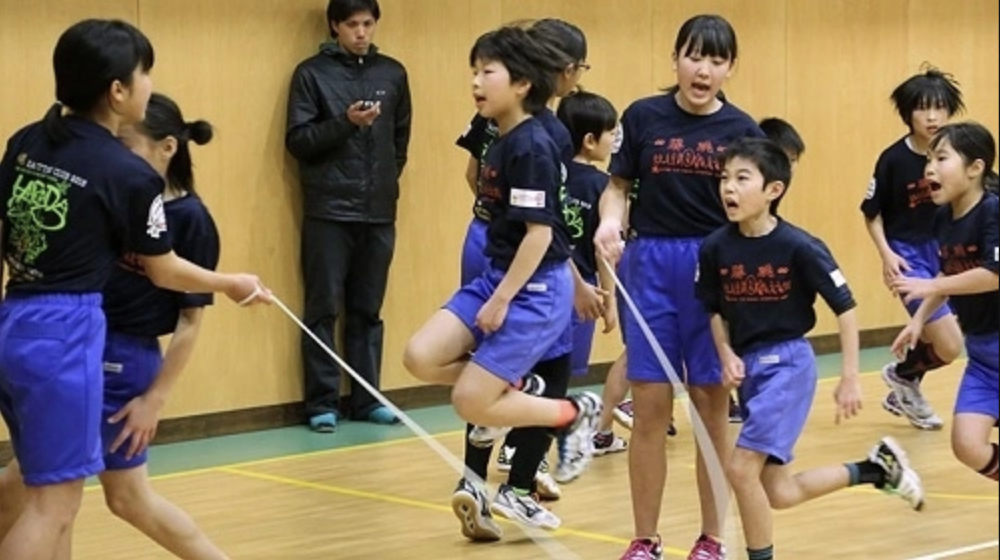 |
Activities like jump rope, single-leg hops, and jumping from a box help children increase height. Photo: Guinness World Record
Jumping exercises: A boost for height development
To help children surpass average height, To Nghien Than shares that high-intensity jumping exercises offer significantly more practical benefits.
A foreign study on 47 children with below-average height involved a 24-week exercise program. Participants completed three 50-minute sessions weekly, incorporating activities such as jump rope, single-leg hops, and jumping from a box.
After 24 weeks, the results were notable: The exercise group grew an average of 4,2 cm, while the control group only increased by 2,48 cm. This means the jumping group gained nearly 2 cm more in height than children without specialized training. Additionally, their femur and neck bone density saw significant improvement.
Advice for parents
To Nghien Than reminds parents that a child's height development relies on a combination of factors: genetics, bone age, puberty timing, nutrition, and sleep quality.
Parents should focus on three main pillars:
Balanced diet: Provide all necessary nutrients.
Adequate sleep: Ensures optimal growth hormone secretion.
Appropriate exercise: Prioritize activities that impact bones, such as jump rope and basketball, over just stretching.
"These are the golden keys to helping children achieve sustainable and scientific height breakthroughs," the expert states.
My Y (According to TVBS)