Hanoi University of Medicine Hospital has achieved a medical milestone, performing Vietnam's first total knee replacement surgery with a handheld robotic system. The procedure, conducted on 15/1, involved a 72-year-old man diagnosed with stage IV total knee osteoarthritis. The patient had previously undergone various conservative treatments, including platelet-rich plasma injections and arthroscopic joint debridement, without improvement. The one-hour surgery stabilized the patient's health, and he is currently under postoperative observation.
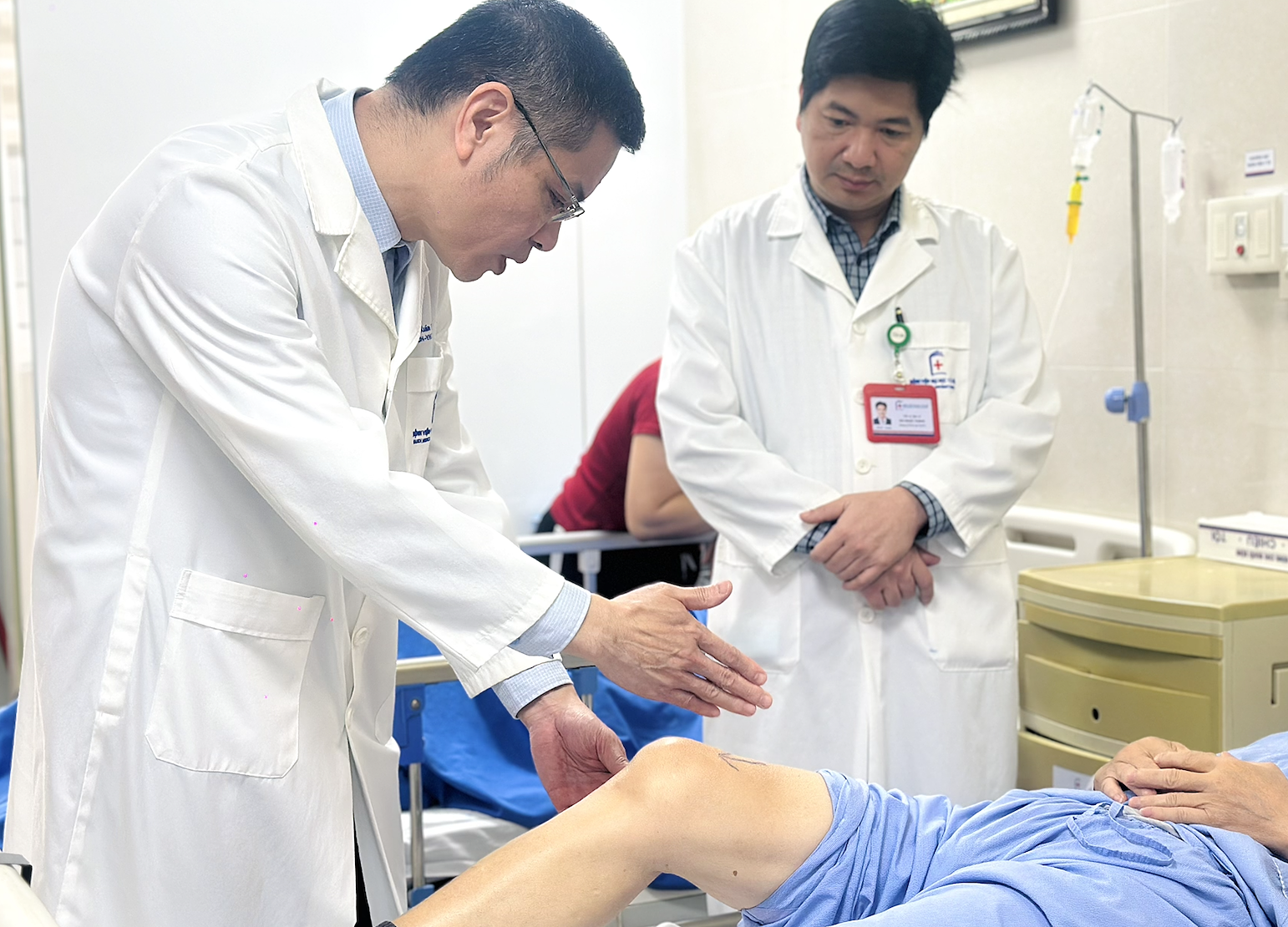 |
Doctor Thanh (left) and the team checking the patient's condition before surgery. *Photo: Thuy An* |
Associate Professor Doctor Dao Xuan Thanh, Deputy Director of Hanoi University of Medicine Hospital, highlighted the significance of this robotic application in total knee replacement surgery. The CORI system, an advanced orthopedic surgical robot, was utilized. It assists surgeons with planning, bone cutting, and artificial joint placement, leveraging each patient's unique anatomical and biomechanical data. Unlike previous robotic generations, CORI gathers anatomical data directly in the operating room, eliminating the need for preoperative CT or MRI scans. This saves time and costs while minimizing radiation exposure.
The device acts as the surgeon's "eyes and ears", ensuring precise identification and removal of damaged bone with accuracy under one millimeter. This technology enables real-time bone cutting control, optimizing limb alignment and soft tissue balance around the knee. Consequently, surgeons can preserve healthy tissue, reduce invasiveness, and avoid unnecessary bone removal. Patients experience significantly less pain, earlier mobilization, and shorter hospital stays. Furthermore, the procedure's cost in Vietnam is 4-5 times lower than in regional countries such as Thailand or Singapore.
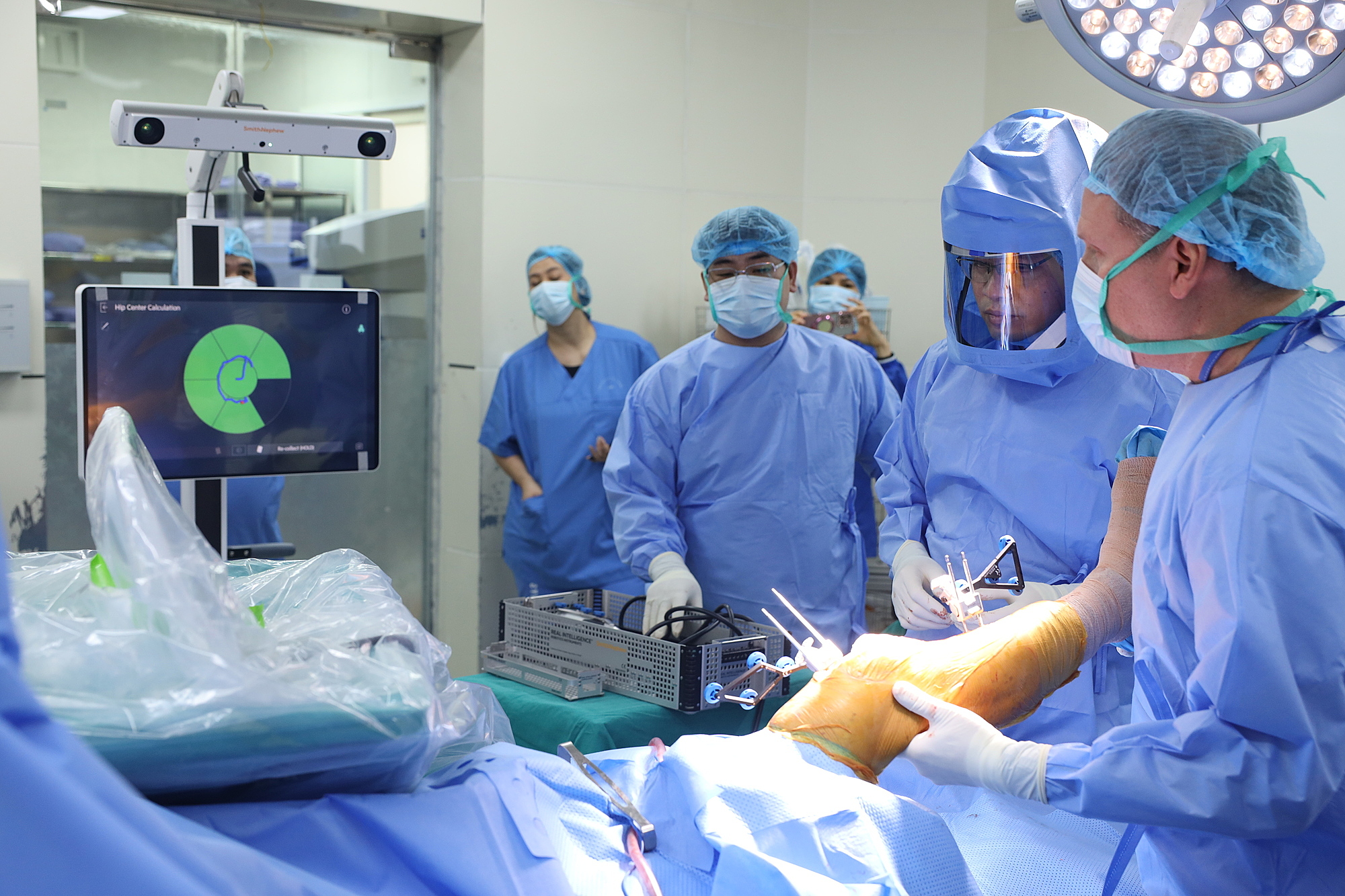 |
Doctor Thanh (wearing a surgical hood) and the surgical team using the CORI Robot for the patient's surgery. *Photo: Hospital provided* |
The increasing prevalence of osteoarthritis globally underscores the importance of such advanced treatments. According to the World Health Organization (WHO), 528 million people worldwide lived with osteoarthritis in 2019, with 73% of those over 55 years old. In Vietnam, an aging population, coupled with rising rates of obesity and injuries, contributes to the growing number of individuals affected by this condition.
Health experts caution that knee osteoarthritis often progresses silently, causing no pain at rest, making it easy to overlook. Many patients, fearing surgery, delay treatment, which can worsen the condition. It is crucial for individuals to maintain a balanced diet and regular exercise regimen. They should seek medical attention promptly if they experience unusual swelling, pain, or joint stiffness to ensure timely intervention.
Thuy An