An, an 8-year-old girl, was being treated for acute bronchitis and gastroesophageal reflux disease at Tam Anh General Hospital Hanoi. Beyond respiratory symptoms, doctors observed several unusual signs: generalized fat accumulation, a rounded "moon" face, intermittent headaches, facial flushing, and slightly elevated blood pressure. No abnormal cardiovascular issues were noted.
Endocrine and metabolic tests revealed insulin resistance, with both cortisol and ACTH levels below the normal threshold. These indicators showed that her adrenal glands were no longer producing sufficient hormones.
Her family reported that An had repeatedly used various corticosteroid products. In addition to triamcinolone-containing topical cream and corticosteroid nasal drops used intermittently, she had also taken oral medication with betamethasone for bronchitis for 6 days before her hospital admission.
Doctor Than Thi Thuy Linh, a Master of Science, diagnosed the child with drug-induced Cushing's syndrome leading to secondary adrenal insufficiency. Alongside treatment for bronchitis, An received medication to prevent acute adrenal crisis, and all unnecessary corticosteroid-containing drugs were discontinued. Following treatment, her respiratory condition improved, blood pressure stabilized, and she was discharged.
The doctor instructed the family on proper medication use and monitoring of adrenal gland function. The child will require regular follow-up appointments for clinical observation and endocrine tests.
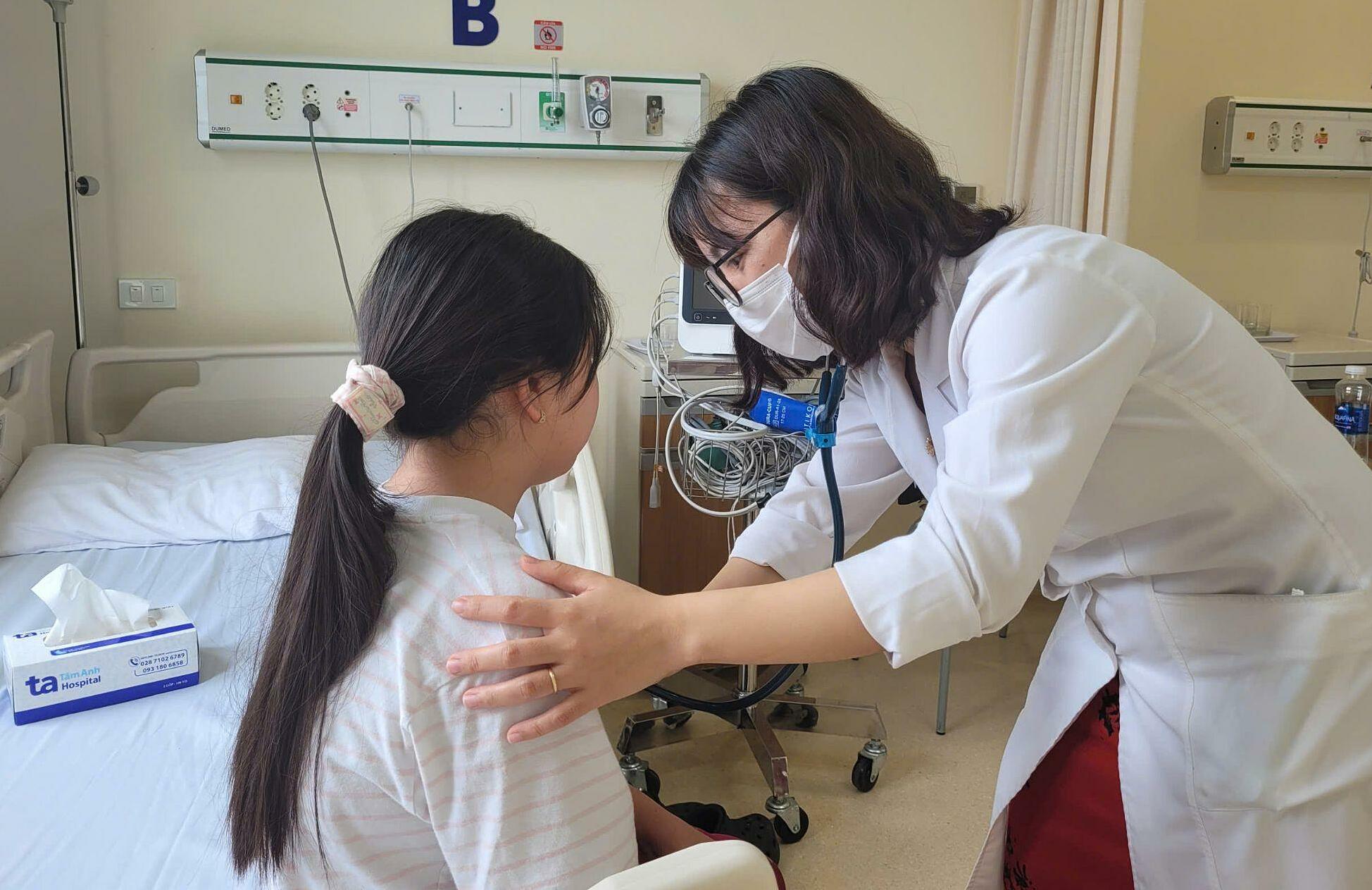 |
Doctor Thuy Linh examining An. Photo: Hai Au |
According to Doctor Thuy Linh, corticosteroids are a class of medications with anti-inflammatory, anti-allergic, and immunosuppressive effects, used to treat various conditions such as bronchial asthma, allergies, dermatological diseases, and autoimmune disorders. However, these drugs are only safe when used strictly according to indications, at the correct dosage, and under a doctor's supervision. Self-administering or abusing corticosteroids can lead to numerous serious endocrine complications.
When the body receives external corticosteroids for an extended period, the adrenal glands reduce natural cortisol production. This can lead to drug-induced Cushing's syndrome, characterized by rapid weight gain, a rounded face, fat accumulation around the neck, back, and trunk, elevated blood pressure, and increased blood sugar.
If prolonged, adrenal glands can become suppressed, resulting in secondary adrenal insufficiency. Children are at risk of an acute adrenal crisis if the medication is stopped suddenly or during an acute illness, which can cause severe fatigue, profuse vomiting, hypoglycemia, hypotension, and shock, threatening their life. Prolonged corticosteroid abuse can also slow height growth, lead to osteoporosis, muscle weakness, increase the risk of infections, and cause metabolic disorders.
"Beyond oral and injectable forms, corticosteroids in topical creams, nasal drops, eye drops, or inhalers can still cause side effects if used long-term or in excessive doses," Doctor Linh stated.
Doctor Linh advises parents never to self-purchase or administer corticosteroid-containing medications to children in any form. If a child exhibits unusual rapid weight gain, a rounded face, obesity concentrated in the trunk area, elevated blood pressure, prolonged fatigue, or muscle weakness, they should be taken to the hospital for examination.
Trinh Mai
| Readers can submit questions about children's diseases here to receive answers from doctors. |