Upon admission, Mr. Giap presented with a 39°C fever and an SpO2 of 87% (normally above 95%), indicating respiratory failure, and was immediately given oxygen support.
According to Dr. Nguyen Thanh Thuy, from the General Internal Medicine Department at Tam Anh General Hospital, TP HCM, fever, productive cough, and shortness of breath are common symptoms in many respiratory illnesses. However, when a patient does not respond to antibiotic treatment or has risk factors like a history of pulmonary tuberculosis, doctors must consider causes other than bacterial pneumonia. A high-resolution chest CT scan revealed numerous small nodules, 1-3 mm in size, spread throughout both lungs. The scan also showed "tree-in-bud" patterns, ground-glass opacities, and cavitary lesions.
These clinical signs, combined with his history of pulmonary tuberculosis, led Dr. Thuy to suspect miliary tuberculosis. This severe condition occurs when tuberculosis bacteria disseminate throughout the body via the bloodstream, reaching organs such as the liver, spleen, bone marrow, meninges, and lungs, creating small lesions 1-3 mm in size that resemble millet seeds.
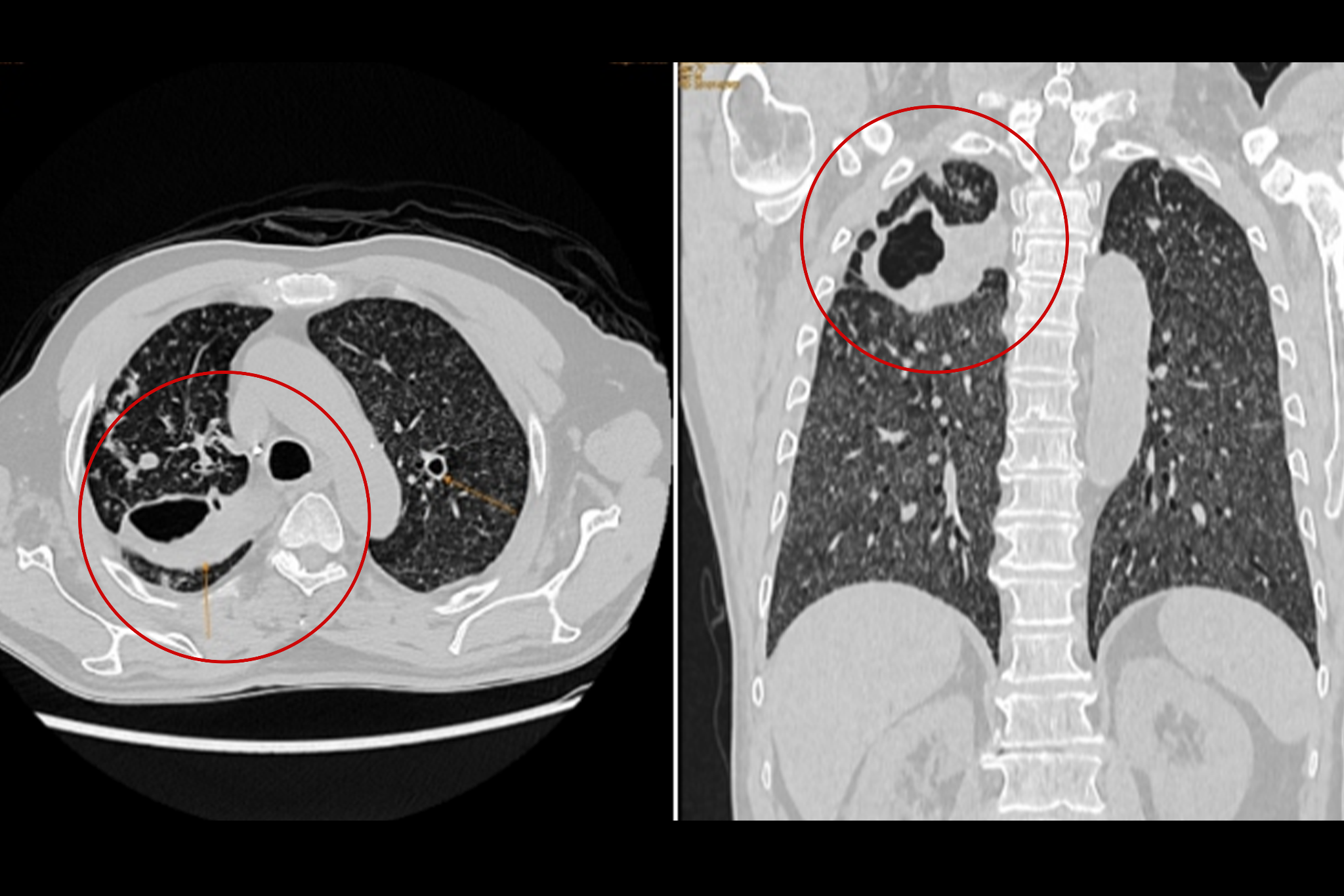 |
Cavitary lesions (red circle) on the patient's lung CT scan, accompanied by numerous small, millet-seed-like lesions in both lungs. *Photo: Tam Anh General Hospital*
Mr. Giap was transferred to an isolation room for microbiological testing. The subsequent acid-fast bacilli (AFB) smear test, which detects tuberculosis bacteria in sputum, returned positive, confirming the presence of mycobacterium tuberculosis. Doctors then diagnosed him with miliary tuberculosis accompanied by respiratory failure.
Dr. Thuy noted that CT scans are superior to chest X-rays in detecting very small lesions in the lung parenchyma, such as millet-sized nodules a few millimeters in diameter, especially when uniformly distributed across both lungs. Associated findings like the "tree-in-bud" pattern and cavitary lesions on CT are crucial for diagnosing miliary tuberculosis.
Mr. Giap received anti-tuberculosis medication and respiratory support, with close monitoring for complications. Following treatment, his fever gradually subsided, and respiratory function improved, leading to his discharge from the hospital.
While tuberculosis localized to the lungs generally has a good prognosis with proper treatment, miliary tuberculosis carries a higher risk. Dr. Thuy cautioned that delayed diagnosis can lead to respiratory failure or damage to multiple organs, including tuberculous meningitis – a severe and potentially fatal complication.
 |
Dr. Thuy advises the patient before discharge. *Photo: Tam Anh General Hospital*
Miliary tuberculosis is more common in immunocompromised individuals, such as those with HIV infection, prolonged use of immunosuppressants, organ transplant recipients, or people with certain immune-compromising medical conditions. However, the disease can still occur in individuals without these risk factors.
Individuals experiencing symptoms like fever, persistent cough, productive cough, weight loss, fatigue, or shortness of breath that do not improve with conventional treatment should seek medical attention. Those with a history of tuberculosis, contact with an infected person, or compromised immune systems should consult a doctor early if they develop any suspicious symptoms.
Nhat Thanh
*Patient's name has been changed
| Readers can submit questions about respiratory illnesses here for doctors to answer |