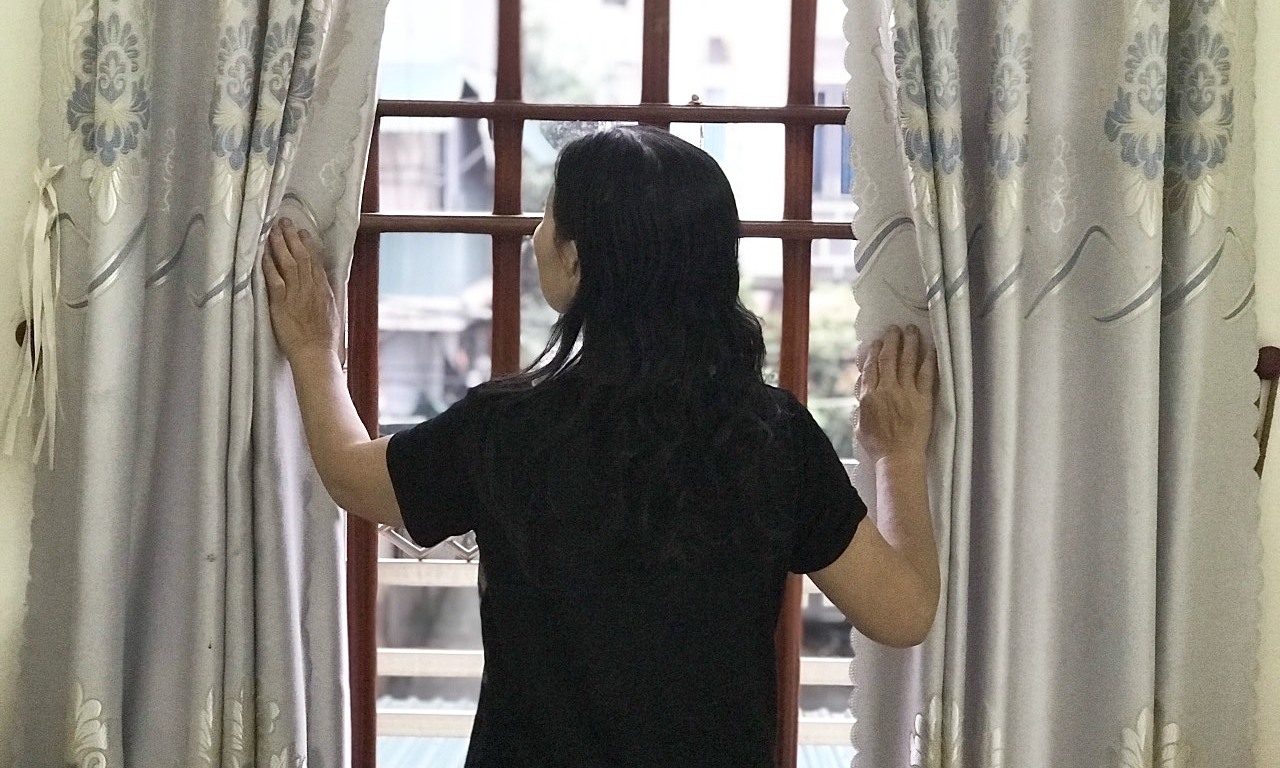
Doctors at Children's Hospital of Ho Chi Minh City reported that on the fourth day of her illness, Chau became lethargic, her lips turned blue, she breathed rapidly, her blood pressure dropped, and her limbs were cold. She was diagnosed with severe pneumonia, shock, sepsis, and heart damage.
To save the child, the treatment team employed multiple intensive care techniques. She received mechanical ventilation, vasopressors, antibiotics, blood and platelet transfusions, continuous blood filtration, and ecmo (extracorporeal membrane oxygenation) to support circulation and respiration.
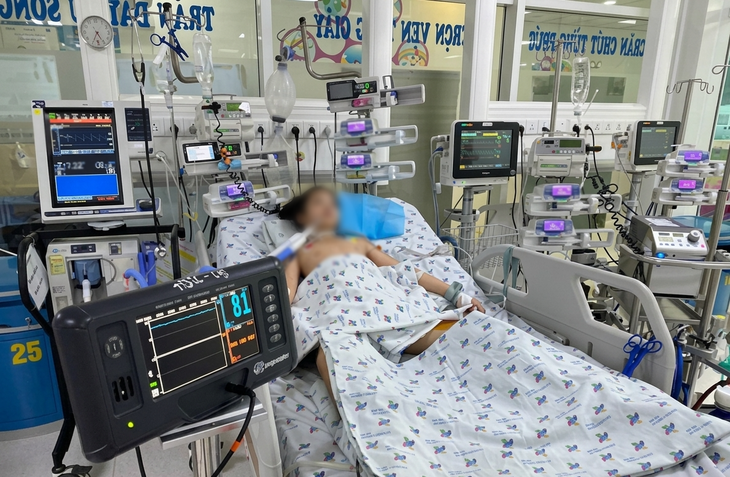 |
Phuong Chau during her treatment at Children's Hospital of Ho Chi Minh City. Photo: Hospital provided |
After two weeks, her heart function gradually recovered. However, she developed reduced blood flow to her left leg and blood clots in her vertebral and external iliac arteries. Doctors had to perform thrombectomy and administer anticoagulant therapy.
She underwent four rounds of continuous blood filtration, four weeks of ecmo, and nearly one month of intensive treatment, costing close to one billion dong. Intensive care is costly due to high-priced techniques, especially ecmo. Patients also require mechanical ventilation, blood filtration, and expensive antibiotics to control infections.
Pneumococcus is a bacterium residing in the nasopharynx of healthy individuals, typically causing no symptoms. When immunity is compromised or respiratory illnesses like influenza, measles, RSV, or Covid-19 occur, the bacteria can invade deeper into the body, leading to pneumonia, meningitis, sepsis, otitis media, or sinusitis.
According to Doctor of First-Degree Specialization Le Thi Truc Phuong, a medical specialist at VNVC Vaccination System, Chau's case illustrates how pneumococcal disease can rapidly progress to severe stages. When the bacteria cause pneumonia, sepsis, or septic shock, children may require intensive care to maintain respiration, circulation, and organ function. Furthermore, pneumococcal disease can leave many sequelae. After prolonged intensive care, children face risks of impaired function in multiple organs like the lungs, liver, and kidneys, or may experience neurological sequelae.
Pneumococcal disease often presents with non-typical symptoms, causing only fever, cough, or sore throat, similar to a common cold or respiratory infection. Consequently, many families are complacent and do not closely monitor for worsening signs.
Doctors advise parents to seek medical attention if children show signs of high fever, persistent cough, rapid breathing, difficulty breathing, lethargy, refusal to feed, seizures, or any unusual progression. Children should wash hands frequently, cover their mouths when coughing, eat a balanced diet, get enough sleep, avoid tobacco smoke, and limit close contact with individuals experiencing respiratory symptoms.
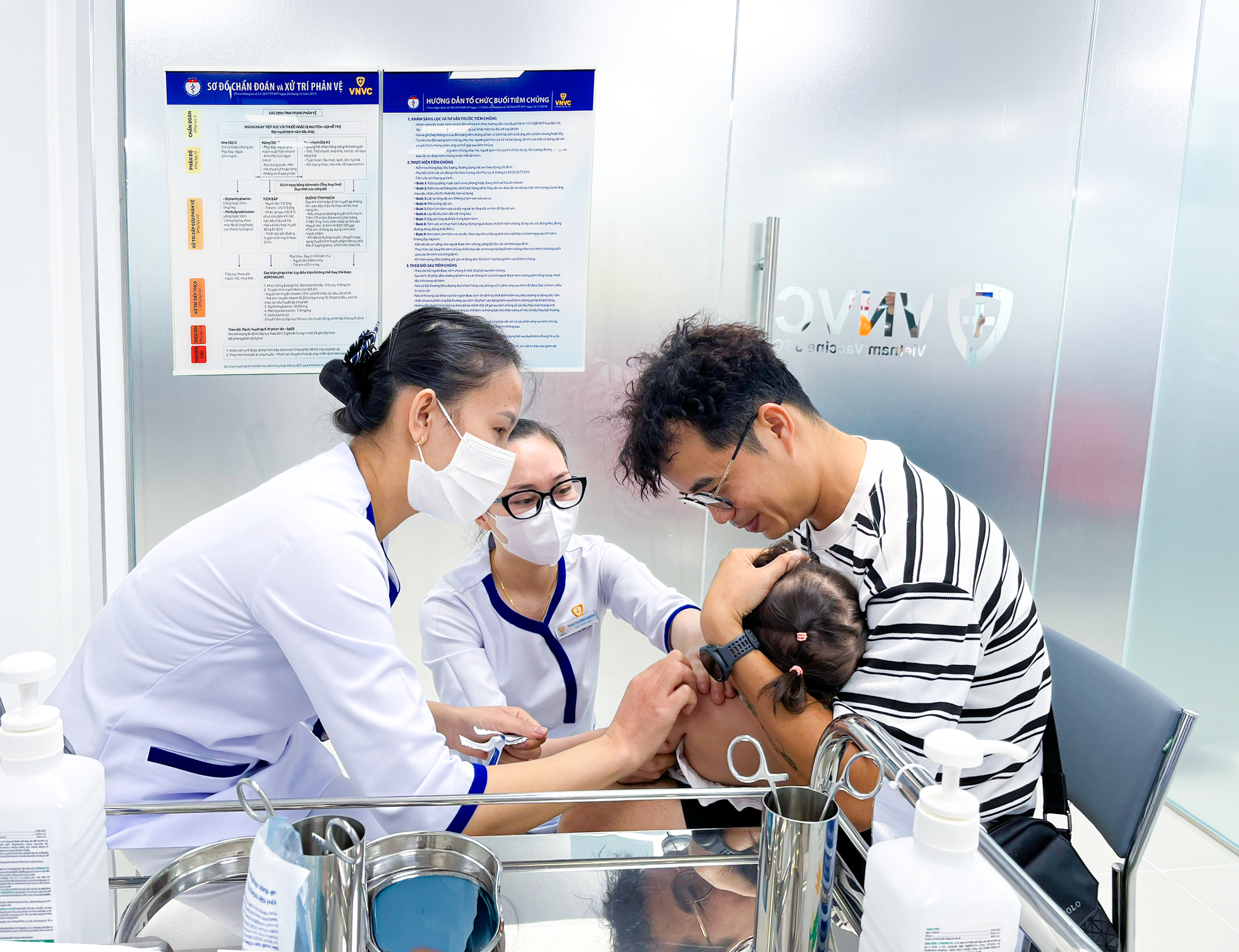 |
A girl over two years old was brought by her parents to VNVC Do Xuan Hop, TP HCM, for pneumococcal 20 vaccine before starting kindergarten for the 2026-2027 school year. Photo: Dieu Thuan |
Vietnam currently offers pneumococcal vaccines 13, 15, 20, and 23, preventing diseases such as pneumonia, meningitis, sepsis, otitis media, and sinusitis. Doctors will advise on the appropriate vaccine type and schedule based on age, health status, and vaccination history.
Pneumococcal vaccines 13, 15, and 20 are indicated for children from 6 weeks old to adults. Pneumococcal vaccine 23 is for children two years and older and adults at risk. Besides reducing disease risk for vaccinated individuals, vaccines can also decrease asymptomatic carriage, thereby limiting spread within families and communities. A 2019 global study by The Lancet indicated that introducing pneumococcal vaccination for children could save approximately 3.2 billion USD annually by reducing doctor visits and hospital care, and about 2.6 billion USD in social costs.
Dieu Thuan
*The patient's name has been changed.