The woman conceived through in vitro fertilization (IVF) and was admitted to the hospital at 38 weeks of pregnancy. Her medical history presented multiple risk factors, including chronic hypertension, gestational diabetes controlled daily with insulin, and two previous gynecological surgeries: open surgery for an ectopic pregnancy and hysteroscopic adhesiolysis.
Professor Doctor Nguyen Duy Anh, Director of the National Hospital of Obstetrics and Gynecology, highlighted the significant challenges of pregnancy at 60. He explained that at this age, carrying a pregnancy and giving birth is no longer a natural bodily process, but rather a severe test for the cardiovascular and endocrine systems, as well as for the body's natural recovery capacity, which declines over time.
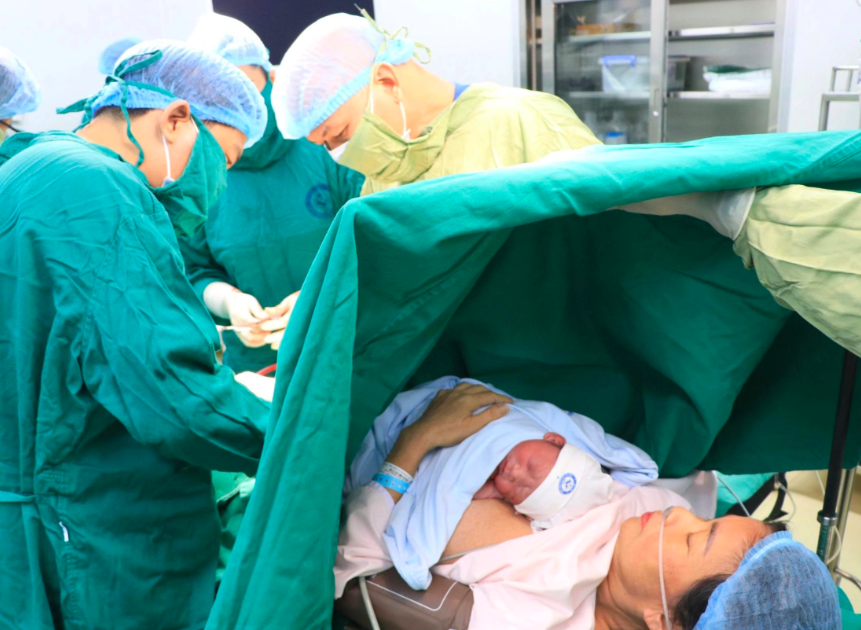 |
The newborn baby received skin-to-skin contact with its mother. *Photo: Hospital provided* |
Throughout her pregnancy and childbirth, the patient faced risks such as cardiovascular complications, stroke due to hypertension, blood sugar disorders during and after surgery, postpartum hemorrhage caused by poor uterine contraction, infection, and slow recovery. Her history of two prior surgeries further heightened the risk of adhesions, tissue damage, and intraoperative bleeding.
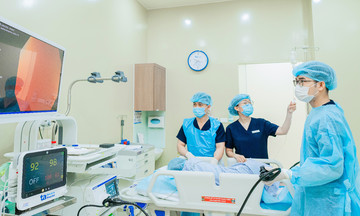
Before the surgery on 20/3, the pregnant woman's vital signs remained relatively stable, with blood pressure at 125/80 mmHg, a pulse of 85 beats per minute, and blood sugar maintained with insulin. During the operation, Doctor Anh continuously conversed with and encouraged the mother, helping to alleviate her stress. The 2.8 kg baby was born crying loudly and displayed good reflexes.
Doctors emphasized that the success of the operation extended beyond delivering a healthy baby; the ongoing challenge involved continued monitoring and postoperative recovery for the mother. Therefore, individuals undergoing pregnancy at an advanced maternal age require management at specialized medical facilities.
Le Nga