Answer:
Crackling or popping sounds from the knees, hips, wrists, or spine during movement can be a normal physiological phenomenon. However, if joints frequently make crackling sounds with movement, or if these sounds are accompanied by unusual symptoms such as pain, joint swelling, or restricted movement, it indicates that the joint tissue may be degenerated, inflamed, or damaged.
Articular cartilage acts as a cushion, enveloping bone ends to reduce friction and minimize impact when bones directly contact each other, allowing for smooth joint movement. The subchondral bone, located directly beneath the articular cartilage, works with synovial fluid to provide nutrients to the cartilage and help it absorb impact forces.
When cartilage and subchondral bone are damaged or degenerated, the bone ends no longer move smoothly and begin to rub against each other, producing crackling or popping sounds. Simultaneous damage to both cartilage and subchondral bone intensifies both pain and joint crackling during movement.
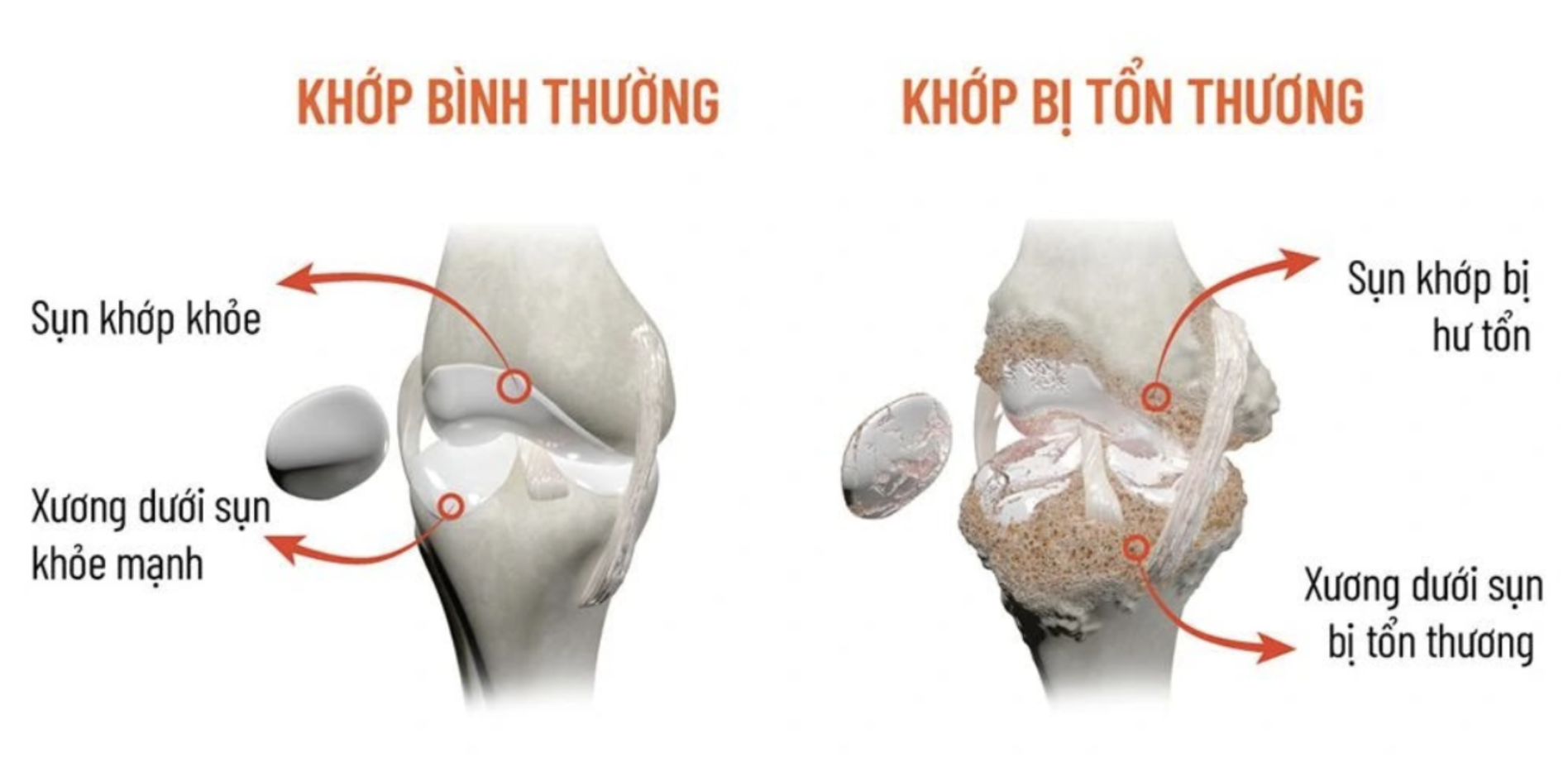 |
Changes in the structure of cartilage and subchondral bone cause joints to make crackling sounds during movement. *Photo: Eco Pharmaceutical Joint Stock Company*
Osteoarthritis is a condition closely linked to crackling joint sounds. It involves damage to the cartilage, subchondral bone, and surrounding joint tissues, resulting from aging or injury. Osteoarthritis commonly affects older individuals, those who are overweight, engage in heavy labor, or over-exercise.
Dry joints are another cause of unusual joint sounds. When the quantity or quality of synovial fluid decreases, joint surfaces are not adequately lubricated, increasing friction within the joint and causing sounds during movement. Over time, these crackling sounds become more pronounced and may be accompanied by pain, stiffness, or difficulty moving.
Crackling joint sounds can signal various underlying joint conditions. Without timely treatment, these conditions can lead to joint deformity and even disability. If this condition persists, it is advisable to consult a musculoskeletal specialist for prompt diagnosis and effective treatment.
To protect your joints and maintain mobility, you should maintain a healthy weight and exercise regularly. When joints feel stiff or tired, resting, gentle massage, or applying compresses can alleviate discomfort. Additionally, maintaining a suitable diet is important. You may consider supplementing with nutrients that support articular cartilage, such as collagen type II, collagen peptide, eggshell membrane, turmeric extract, and chondroitin sulfate, which can help reduce inflammation and pain, and slow the degeneration process.
Doctor Hoang Quyet Tien
Medical Information Center
Tam Anh General Hospital TP HCM
| Readers can submit questions about musculoskeletal conditions here for doctors to answer. |