Mr. Ky, 67, presented with hypertension, dyslipidemia, and stage 3 chronic kidney failure. Master of Science, Doctor, Specialist Level I Pham Ngoc Minh Thuy, from the Cardiovascular Surgery Department, Cardiovascular Center, Tam Anh General Hospital TP HCM, reported Mr. Ky's right thyroid lobe measured 68x68x121 mm. This goiter extended into the sternal notch, displacing the trachea and esophagus to the left and narrowing the tracheal lumen to 9 mm, far less than the normal 20 mm diameter.
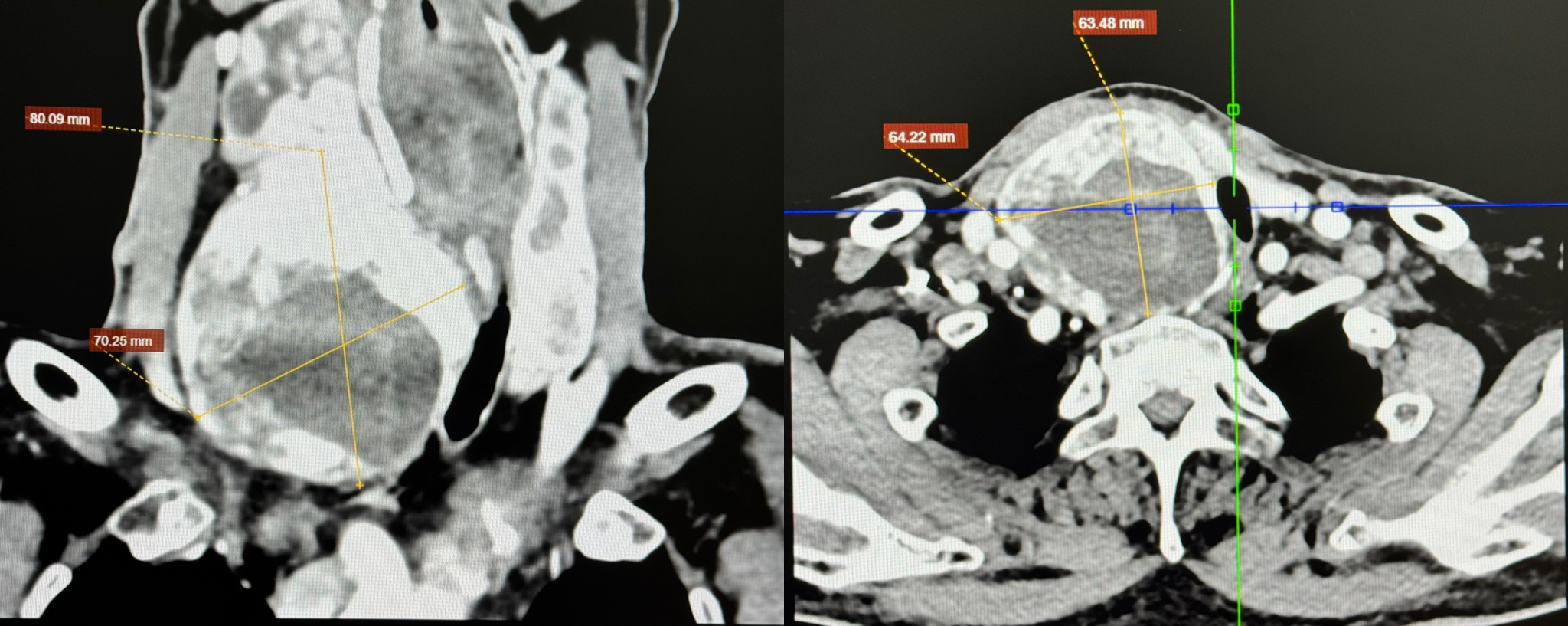 |
CT scan shows a large goiter compressing the trachea. *Photo: Tam Anh General Hospital* |
Master of Science, Doctor Tran Thuc Khang, Deputy Head of the Cardiovascular Surgery Department, Cardiovascular Center, explained that an airway narrowed by more than 55% indicates severe compression. The esophagus, located directly behind the trachea, was also displaced, obstructing food passage to the stomach. Patients are at risk of chronic hoarseness, acute dyspnea, tracheomalacia (weakening of the tracheal cartilage rings and loss of elasticity), sleep apnea, and aspiration of food into the airway if not treated promptly.
Prior to surgery, doctors provided medical treatment to stabilize blood pressure, control kidney function, and minimize cardiovascular and renal risks. Because the goiter compressed the airway, the surgical team used specialized instruments for endotracheal intubation.
Doctor Khang performed a right thyroid lobectomy on the patient via a cervical incision. This approach avoided the need to saw the sternum and open the chest, thereby reducing complication rates. The team completely dissected the vascular goiter, located in a challenging position with bleeding risks, while preserving adjacent structures. Post-operative biopsy results confirmed the growth was benign.
Post-surgery, Mr. Ky no longer experienced difficulty breathing, his eating improved, the incision was dry, and his laryngeal nerves were unaffected. He was discharged from the hospital.
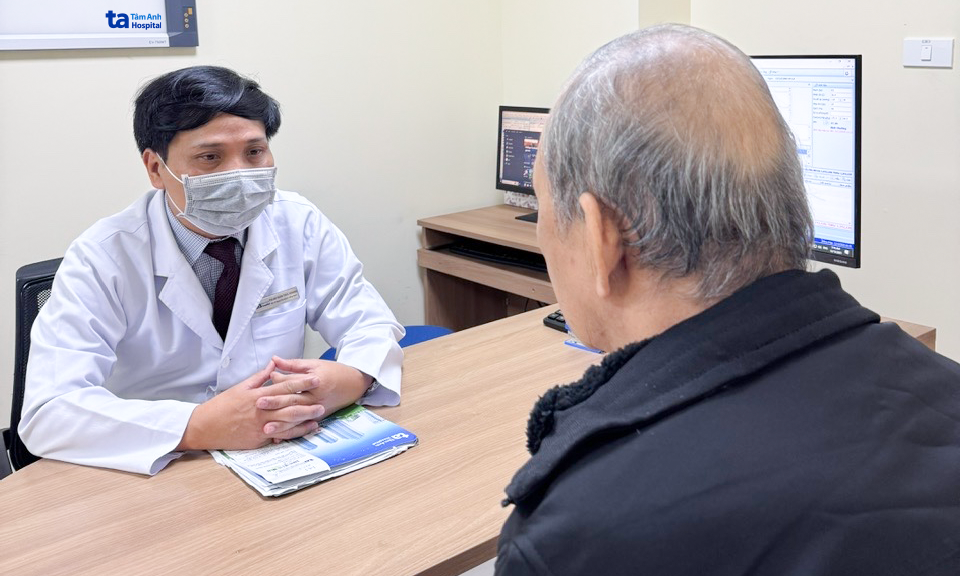 |
Mr. Ky had a follow-up appointment with Doctor Khang one week after surgery and was recovering well. *Photo: Tam Anh General Hospital* |
The thyroid gland consists of two lobes, left and right, connected by the isthmus, and produces hormones. Thyroid hormones control the body's metabolism and other functions such as: digestion and cardiovascular activity. A goiter is an abnormal growth of thyroid cells, forming one or more nodules. Thyroid nodules vary in size, appearing as solid or cystic, and can be benign or malignant. Some goiters are palpable, while others are detected during a thyroid ultrasound.
Small goiters typically do not compress surrounding structures. However, if the tumor grows larger, it can lead to symptoms such as: neck swelling, hoarseness, frequent coughing, difficulty breathing, difficulty swallowing, dizziness, fatigue, and weight loss.
To prevent the condition, Doctor Khang recommends that everyone self-examine their neck. Stand in front of a mirror, tilt your head back, and gently feel your neck for any abnormalities. Maintain a diet rich in fruits and green vegetables, low in fat, limit fast food and processed foods, and use iodized salt. Individuals with a family history of this disease should undergo regular health check-ups for early detection and timely treatment.
Ngoc Chau
*Patient's name has been changed