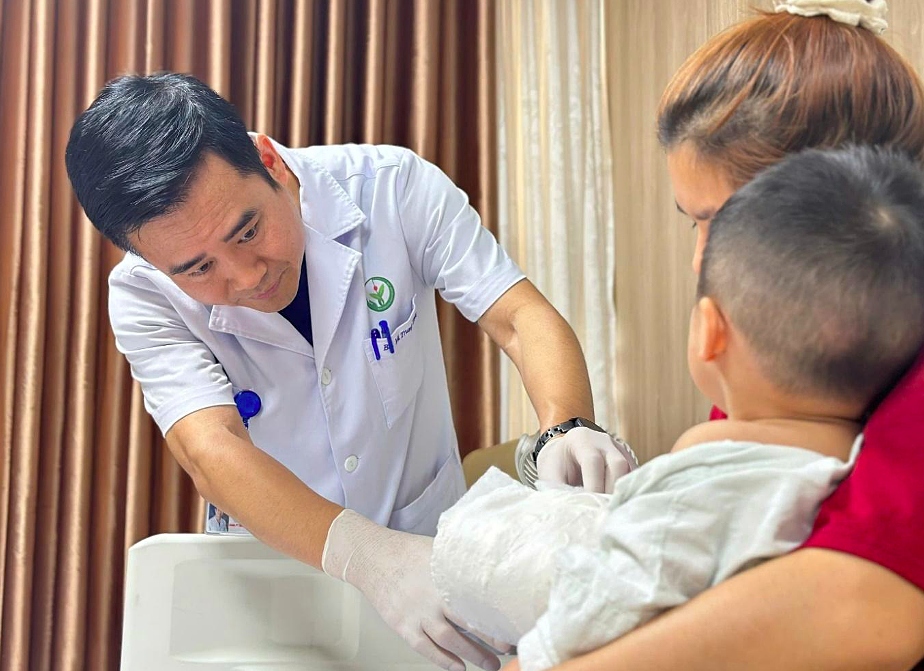
The entire country is experiencing a prolonged period of intense heat. In Ho Chi Minh City, the number of children admitted to hospitals has significantly increased, primarily due to respiratory illnesses, digestive issues, and hand, foot, and mouth disease. The outpatient department at Children's Hospital 2 sees approximately 3,000 to 4,000 children daily, mostly under 5 years old, with acute respiratory infections accounting for more than one-half of the total cases.
Doctor Phan Nguyen Truong Giang, Medical Manager at VNVC Vaccination System, points out that the following inappropriate daily habits can make children more susceptible to illness.
**Frequent transitions between air-conditioned rooms and outdoors**
Many families keep children in air-conditioned rooms for extended periods before taking them outside into the hot sun, or allow children to move constantly between two environments with significant temperature differences. This sudden change in temperature makes it difficult for the body to adapt.
The human body constantly strives to maintain a stable core temperature through its thermoregulation mechanism. When the environment shifts rapidly between hot and cold, this system must work harder, often leading to fatigue, dizziness, and discomfort. Additionally, the heart and blood vessels must adapt quickly, dilating when exposed to heat to dissipate warmth and constricting to retain heat when entering a cold environment, which adds stress to the body.
 |
Large temperature differences can easily make children sick. Illustration: Vecteezy |
Large temperature differences can easily make children sick. Illustration: Vecteezy
For young children, nasal and throat mucous membranes are still sensitive, making them more prone to irritation from continuous temperature changes. Children often experience sneezing, runny noses, frequent coughing, and a weakened natural protective barrier of the respiratory tract, creating an opportunity for viruses and bacteria to attack.
Parents should maintain the air conditioner at a moderate temperature, avoiding excessively cold settings, and allow children a few minutes to acclimatize when transitioning from indoors to outdoors or vice versa.
**Improper food storage and consuming old leftovers**
Hot and humid weather causes food to spoil and become contaminated easily if left at room temperature for too long or stored at incorrect temperatures. Children face a higher risk of digestive illnesses if families habitually leave porridge, milk, or other cooked food on the table for hours before reheating it for consumption.
This is a common cause of abdominal pain, diarrhea, and vomiting in young children during the summer. Children under 5 years old are especially vulnerable due to their immature digestive systems, making their risk more severe than adults. Therefore, cooked food should be consumed promptly, stored properly in the refrigerator, and thoroughly reheated before serving.
**Insufficient water intake and overuse of ice and cold drinks**
Many children, engrossed in play, do not proactively drink water, and parents often only offer drinks when their child complains of thirst. However, the hot season causes the body to lose more water through sweat than usual, so parents must ensure their children stay adequately hydrated.
The amount of water needed depends on age, weight, activity level, and weather. A child may need approximately 50-60 ml of water per kilogram of body weight daily and will require more if playing outdoors, experiencing a fever, or sweating heavily.
Furthermore, many families give their children ice water, ice cream, and cold soft drinks on sultry days. Excessive consumption of cold items can irritate the throat, leading to a sore throat, coughing, or digestive discomfort. Bottled soft drinks also contain high amounts of sugar; frequent consumption can cause bloating, loss of appetite, and increase the risk of overweight.
Doctor Giang advises prioritizing plain water, moderately cool water, or fresh fruit juices with low sugar content. He recommends limiting ice water, carbonated soft drinks, and overly cold foods to protect children's health during the hot season. Parents can supplement children's water intake with milk, soups, vegetables, and fresh fruits like oranges, watermelons, and grapefruits to provide additional vitamins and minerals.
**Complacency regarding mild symptoms**
Many parents assume that a child's occasional cough, mild nasal congestion, or one or two instances of diarrhea are merely weather-related and choose to monitor them at home. However, in young children, many illnesses can progress rapidly within just a few hours.
For example, a child initially experiencing only a runny nose and mild cough could later develop bronchiolitis or pneumonia, characterized by rapid breathing, chest indrawing, and high fever. Some cases, initially thought to be a common cold, turn out to be influenza or respiratory syncytial virus (RSV) infection.
Regarding digestive issues, a child may have diarrhea a few times, but if accompanied by vomiting, rapid dehydration can occur due to rotavirus, cholera, typhoid, or acute gastroenteritis. Similarly, a mild fever, poor appetite, and a few spots in the mouth or on the palms can sometimes be early signs of hand, foot, and mouth disease.
Therefore, if a child's symptoms persist, or if they experience fever, refuse to feed, fussiness, rapid breathing, lethargy, frequent vomiting, or multiple episodes of diarrhea, parents should seek medical attention promptly to prevent severe complications.
 |
Young children receive vaccines to prevent respiratory diseases at VNVC Vaccination System. Photo: Moc Thao |
Young children receive vaccines to prevent respiratory diseases at VNVC Vaccination System. Photo: Moc Thao
Several common respiratory illnesses in children during hot weather now have preventive vaccines, including seasonal flu, pneumococcal, meningococcal, measles, whooping cough, chickenpox, and respiratory syncytial virus. These are highly contagious diseases that can cause complications such as pneumonia, respiratory failure, or require hospitalization if a child has a weak immune system.
Dangerous digestive diseases also have vaccines, such as acute rotavirus diarrhea, cholera, and typhoid. Parents should ensure their children are vaccinated on schedule to reduce the risk of illness, limit severe dehydration, avoid hospitalization, and prevent disruptions to daily activities during the hot season.
Binh An