The World Health Organization (WHO) recently reported eight cases related to Hantavirus on the MV Hondius cruise ship, including three deaths. Test results confirmed five Hantavirus infections. The associated virus strain was identified as Andes virus, the only type known to be capable of human-to-human transmission, with a mortality rate potentially as high as 50%.
This human-to-human transmission capability of the Andes virus strain is a significant concern for experts, a rare characteristic previously recorded in South America.
Dr. Nguyen Quoc Thai, Bach Mai Hospital, explained that Hantavirus is a group of RNA viruses belonging to the Hantaviridae family. These viruses naturally exist primarily in rodents such as rats, field mice, and house mice. While the virus can persist long-term in its host without causing illness to the animals, it becomes particularly dangerous when transmitted to humans.
Hantavirus is divided into two main groups. The "Old World" group, circulating mainly in Asia and Europe, typically causes hemorrhagic fever with renal syndrome. In contrast, the "New World" group, found in the Americas, causes Hantavirus cardiopulmonary syndrome, a form of the disease with a mortality rate reaching 40-50%.
"The most dangerous aspect of the disease is its rapid progression. Patients may only have a mild fever and muscle aches like the flu, but then quickly fall into acute respiratory failure, pulmonary edema, hypotension, and cardiogenic shock," Dr. Thai said.
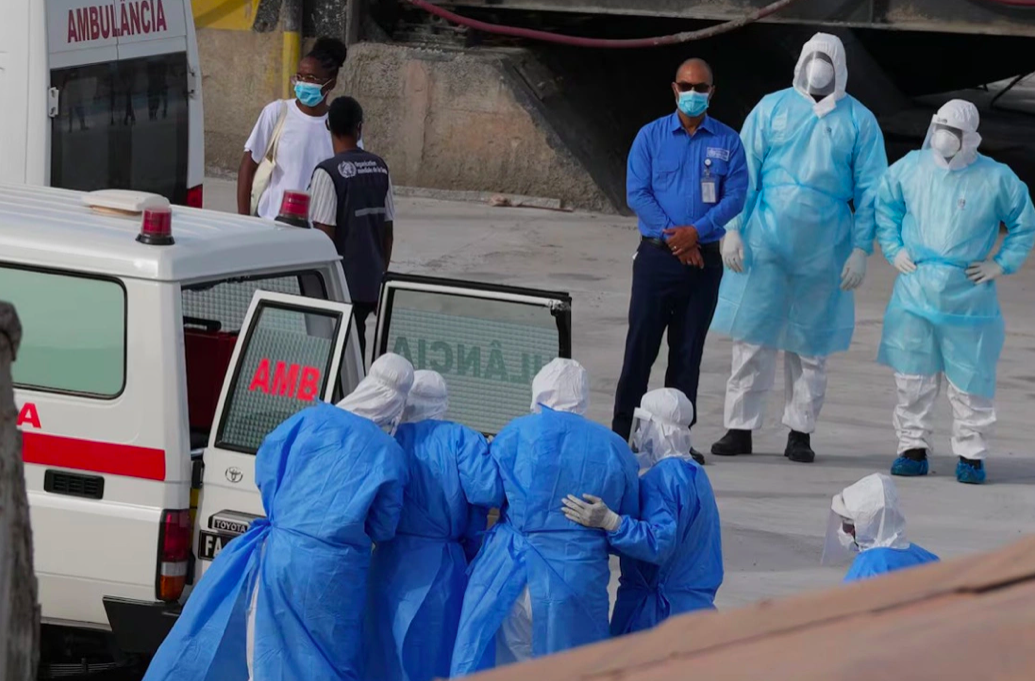 |
Medical staff in protective gear transfer a patient from the MV Hondius cruise ship to an ambulance at Praia port, Cape Verde, on 6/5. *Photo: AP*
Unlike many other infectious diseases transmitted by mosquitoes or insects, Hantavirus primarily spreads to humans through the inhalation of aerosols containing urine, feces, or saliva from infected rodents. The risk often arises when people clean old warehouses, attics, barns, granaries, or other areas with abundant rodent droppings, especially when dry sweeping or vacuuming disperses the virus into the air. The virus can also spread through rodent bites or when open wounds come into direct contact with the waste of infected animals.
Dr. Doan Thu Tra, National Institute of Tropical Diseases, Bach Mai Hospital, stated that there are currently no specific antiviral drugs or vaccines available for Hantavirus. Treatment primarily relies on intensive care and supportive measures. In severe cases, patients may require mechanical ventilation, dialysis, or ECMO intervention to sustain life.
"Without a definitive cure, late detection significantly increases the risk of death," Dr. Tra said.
According to experts, Vietnam has not yet recorded new cases related to the current warning. However, the risk of cases appearing is entirely possible because rodent populations in Vietnam are common and live near residential areas. Some epidemiological studies have also found a small percentage of the population with Hantavirus antibodies, indicating past exposure to the pathogen in nature.
The Ministry of Health and experts recommend that people remain vigilant and proactively control rodents. Maintaining environmental hygiene, sealing gaps in homes, and particularly using moisture spray, gloves, and masks when cleaning areas suspected of having rodent droppings instead of dry sweeping are crucial preventative measures.
Vietnam's healthcare system currently has sufficient capacity to test and diagnose Hantavirus using techniques such as RT-PCR and serological tests at specialized institutes and many leading hospitals. Doctors also emphasize that if high fever, muscle aches, or shortness of breath occur after working in warehouses, fields, or environments with many rodents, people should seek medical attention early to avoid complacency, as the disease can progress very quickly.
Le Nga