Based on your symptoms, you likely have an inguinal hernia. This condition occurs when an abdominal organ, such as the intestine or omentum, protrudes from its normal position through a weak spot or opening in the abdominal wall near the groin. The condition often appears as a bulge in the groin, visible when standing, coughing, or straining, and disappears when lying down. In men, this is a common surgical issue because the shallow and deep inguinal rings provide a natural pathway for the spermatic cord during fetal development.
For individuals regularly performing manual labor, like yourself, abdominal wall muscles contract forcefully to generate power and maintain balance. This inadvertently raises intra-abdominal pressure significantly. Over time, sustained pressure can stretch or tear the muscle layers and connective tissues that hold organs in place. This allows organs to descend into the inguinal canal, forming a hernia sac. Additional factors that increase intra-abdominal pressure, such as chronic constipation, persistent coughing, or prostate enlargement, further elevate the risk.
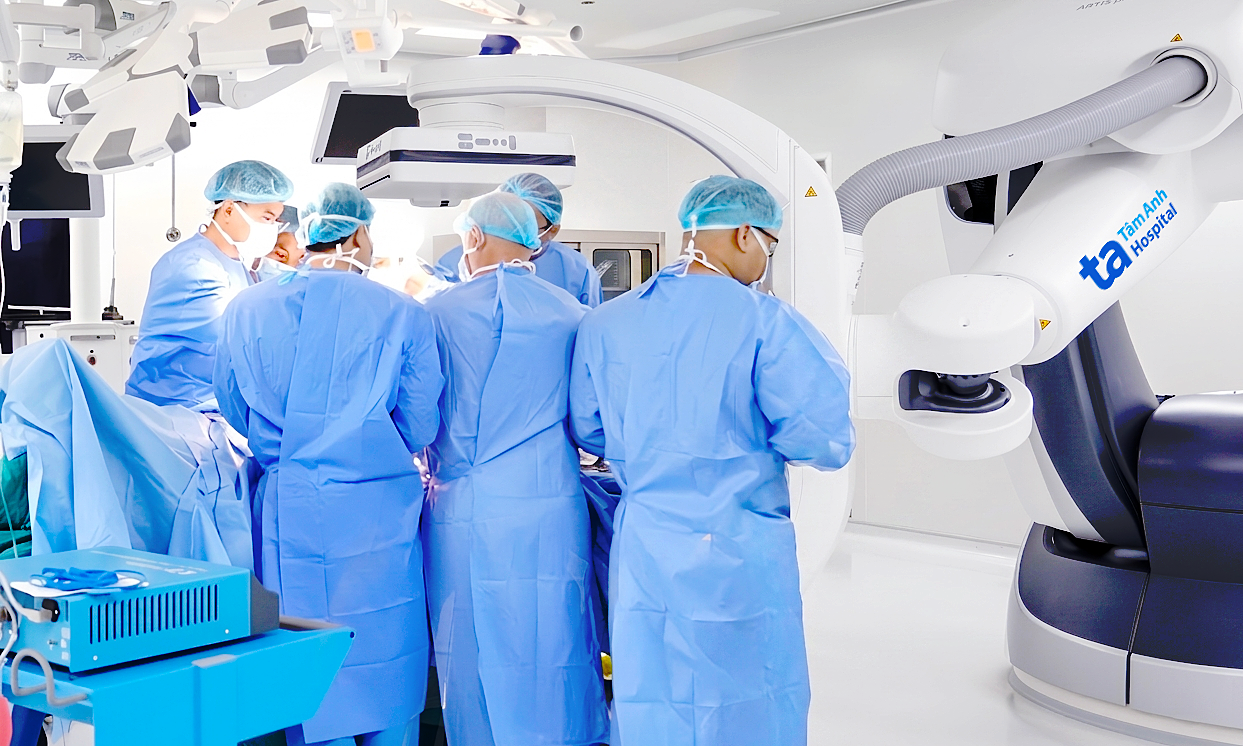
Laparoscopic surgery, involving the placement of a synthetic mesh to reconstruct and reinforce the abdominal wall, is currently the optimal treatment for inguinal hernia. This minimally invasive procedure allows doctors to insert a specialized mesh, covering the defect. The mesh strengthens the weak abdominal wall area, significantly reducing recurrence risk and promoting rapid patient recovery for normal activities.
 |
Doctor Truc (right) performs laparoscopic surgery to treat inguinal hernia for a patient. Illustration: Tam Anh General Hospital |
You should visit a reputable hospital with a Urology department for an examination. At Tam Anh General Hospital, doctors utilize inguinal ultrasound or CT scans to accurately determine hernia size and assess internal organ condition, creating a suitable treatment plan.
Early diagnosis and treatment prevent complications, especially strangulated inguinal hernia. This occurs when a segment of the intestine, trapped within the hernia sac, cannot return to the abdominal cavity. Compressed blood vessels supplying that intestinal segment lead to ischemia and necrosis if not promptly treated. This risks generalized peritonitis, septic shock, and death.
Should a patient survive, they often undergo complex major surgery to remove necrotic intestine, severely impacting their digestive system and long-term health. For men, this condition also risks compressing testicular blood vessels, leading to testicular atrophy or necrosis, and affecting fertility.
Master, Doctor, Second Degree Specialist Pham Thanh Truc
Center for Urology, Nephrology, and Andrology
Tam Anh General Hospital TP HCM
| Readers can submit questions about kidney and urological diseases here for doctors to answer |