This content is detailed in the draft Circular regulating health insurance payments for family medicine examinations and treatments, home-based and remote healthcare, for which the Ministry of Health is currently seeking feedback. If issued, the circular is expected to take effect from 1/1/2027.
According to the draft, the list of technical services that can be performed at home includes over 200 techniques, depending on the professional scope and conditions of each healthcare facility. Beyond clinical examinations, patients can receive electrocardiograms, abdominal ultrasounds, cardiac ultrasounds, vascular ultrasounds, thyroid ultrasounds, pleural fluid aspiration, and endotracheal intubation, along with many other diagnostic techniques directly at home. Tests such as blood, urine, and other specimen collection can also be performed to aid diagnosis and treatment monitoring.
The list also encompasses many treatment and care techniques typically only available at medical facilities, such as injections, intravenous fluids, wound care, sonde insertion, catheter placement, oxygen therapy, diabetes patient care, airway foreign body management, cardiac arrest resuscitation, anti-shock resuscitation, and routine childbirth assistance, all within the permitted professional scope.
Notably, many rehabilitation and long-term care services are also included in the proposed list for BHYT coverage. Patients can receive gait training, breathing exercises, swallowing exercises, post-stroke rehabilitation, memory recovery, and Parkinson's treatment. They can also receive nutritional counseling, nutritional status assessment, and diet planning as prescribed by a doctor.
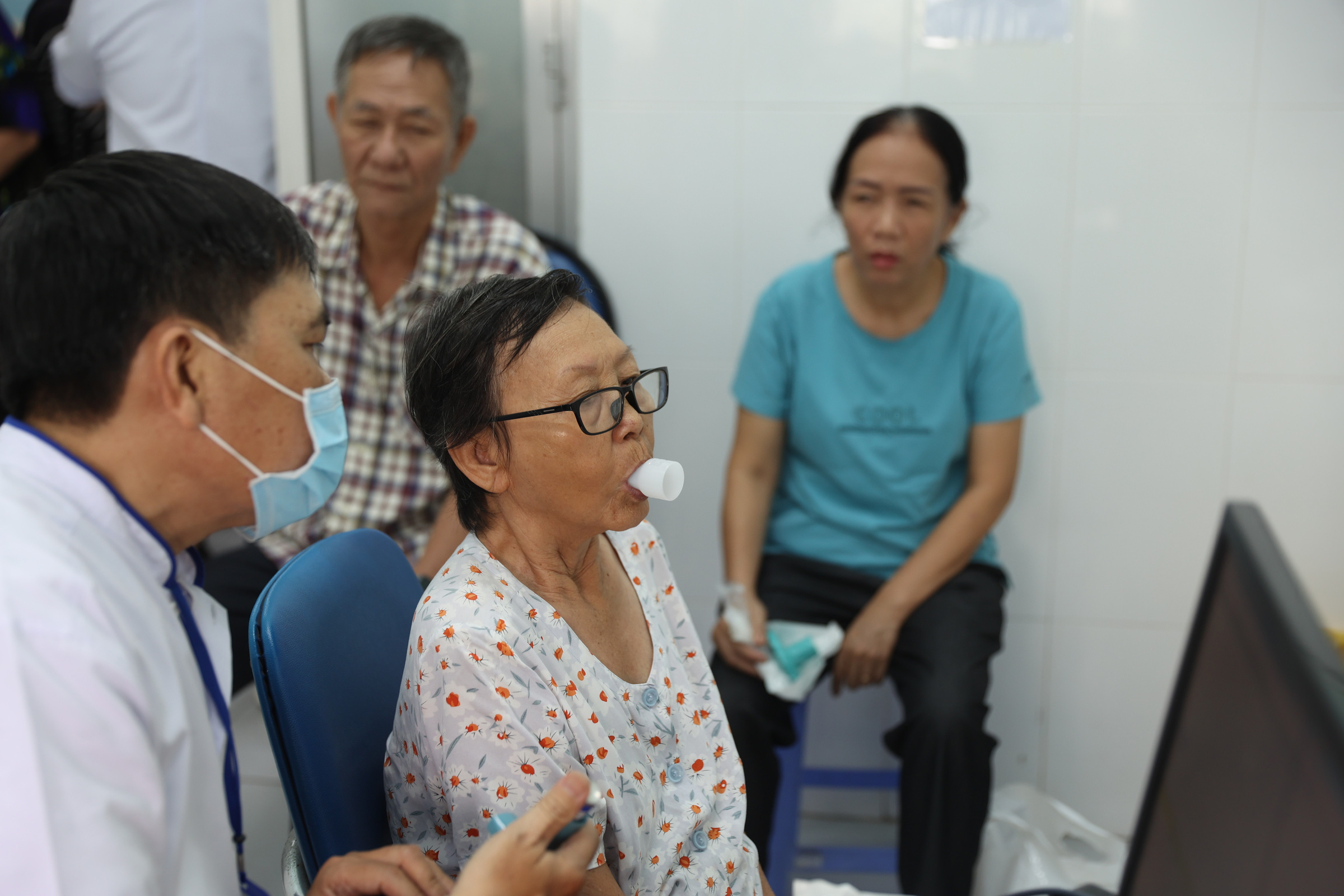 |
Residents receive medical examinations at Tan Nhon Phu ward health station, Ho Chi Minh City. *Photo: Quynh Tran* |
The draft stipulates that home healthcare applies to seven groups of people who cannot or face significant difficulty reaching a medical facility. These include individuals with severe disabilities, elderly individuals with limited mobility, those with chronic illnesses restricting movement, and patients requiring palliative care in their end-of-life stage, as well as some other cases as regulated.
Regarding payment, the Ministry of Health proposes that the price of home healthcare services be based on current prices for services at medical facilities. However, it will exclude costs incurred only when patients visit a facility directly, such as electricity, water, and reception staff. Instead, the service price will include travel and labor costs for healthcare professionals who must travel to provide services at the patient's residence.
Under the proposed mechanism, if the price of home healthcare is not higher than the price of services at a medical facility, BHYT will cover the full amount at that price. If the home service price is higher, BHYT will cover 50% of the difference between the two price levels, with the patient paying the remaining 50% of the difference according to their BHYT benefits.
If approved, this will mark the first time Vietnam has a relatively comprehensive BHYT payment mechanism for home healthcare. This initiative will expand access to healthcare services for the elderly, chronically ill patients, and vulnerable groups, while also reducing pressure on healthcare facilities.
Le Nga