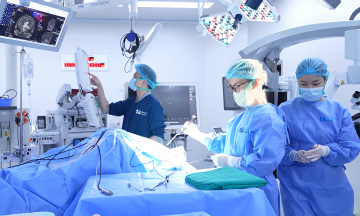
Ms. Hien contracted shingles on 26/6, experiencing aching, burning, numbness, and itching in her intercostal area. Initially, doctors misdiagnosed the condition as lumbar spinal spurs, prescribing medication for home monitoring.
Two days later, she developed a fever, her skin became painful and burning, and clusters of blisters appeared. "Wherever my skin burned, blisters erupted there," she recounted. The pain caused her insomnia.
Ms. Hien's daughter shared her mother's condition in an online group with several doctors. Following their advice, she took her mother to TP HCM Dermatology Hospital. Doctors diagnosed her with left intercostal shingles on the third day. Thanks to early treatment with antiviral medication and topical creams, the blisters dried quickly, controlling the risk of complications. Doctors noted that the varicella zoster virus (VZV) remains in nerve ganglia, and the disease can recur when immunity is compromised.
After these painful episodes, Ms. Hien worried intensely about recurrence, fearing complications like nerve pain, encephalitis, or pneumonia. She also dreaded expensive treatment and burdening her children. This persistent anxiety led to insomnia, poor appetite, exhaustion, and a 5 kg weight loss in one month.
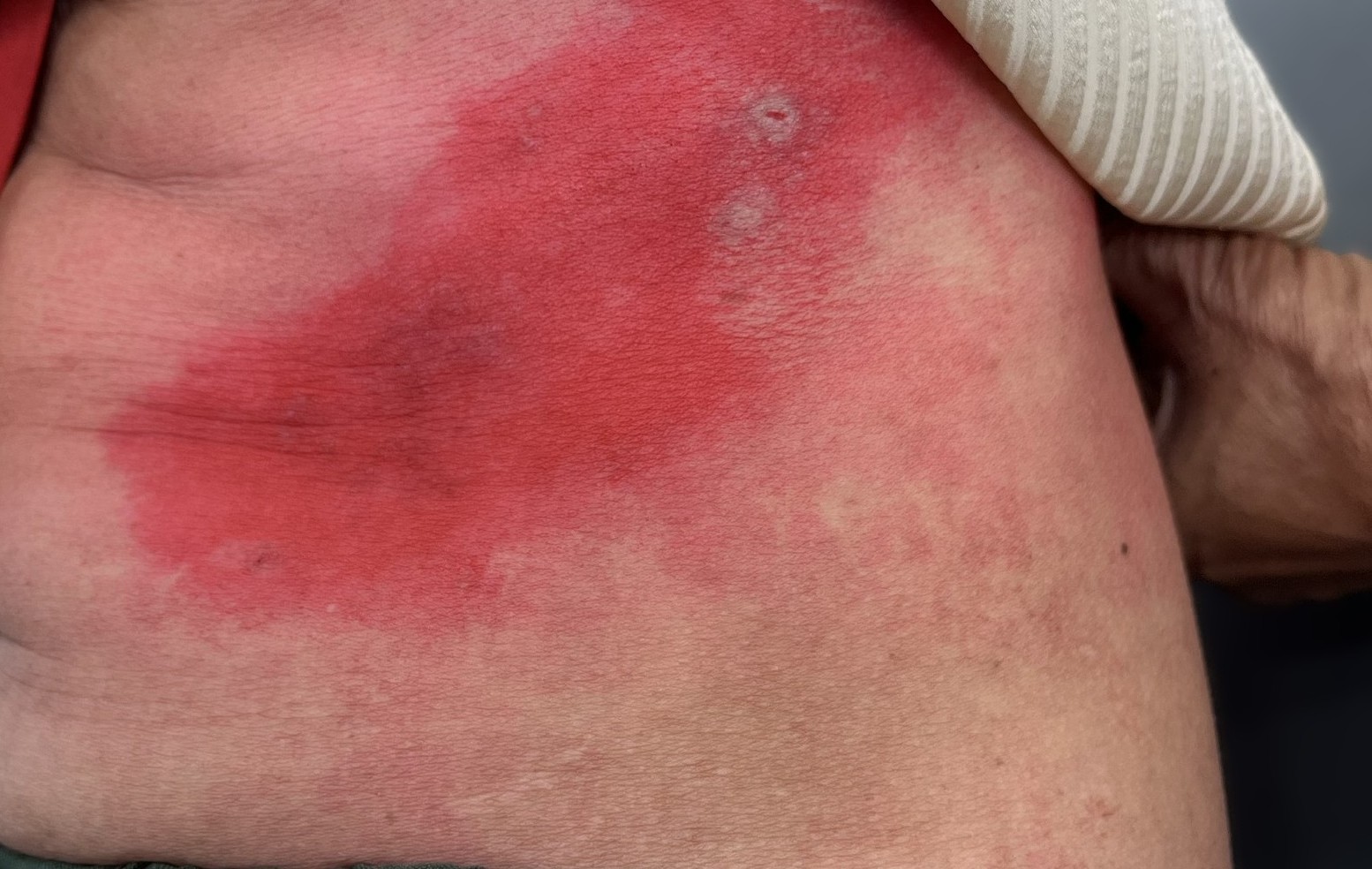 |
Shingles blisters appearing in clusters of three to five on Ms. Hien's left intercostal area. *Photo: Dieu Thuan* |
Vu Van Cuong, 54, from Ha Tinh, also worried about shingles recurrence. His initial episode caused severe eye complications, nearly leading to vision loss. The illness began with a headache. Attributing it to the heat, he bought painkillers himself. When blisters appeared around his eyes, he thought it was an insect bite and continued applying topical medication. Only when the lesions spread across his face, his left eye swelled red, and his vision decreased, did he seek medical attention. Doctors diagnosed ocular shingles, which had damaged his optic nerve.
Mr. Cuong was hospitalized for nearly one month, incurring tens of millions of dong in costs. After treatment, his vision remained blurry. Persistent nerve pain also caused insomnia and difficulty eating and drinking. Exhausted, he required intravenous fluids.
Doctor Danh Thi My Hong, Medical Manager at VNVC Vaccination System, explained that shingles is an infection caused by the varicella zoster virus (VZV) reactivating in sensory ganglia. The disease typically causes blisters and burning pain along the affected nerve.
After the first episode, shingles can recur when immunity is compromised. The recurrence rate in the general population is about 2-18%, potentially rising to 30% in individuals with underlying conditions such as cancer, kidney disease, diabetes, hypertension, or HIV. A study showed that cell-mediated immunity peaks three to six weeks after infection, then gradually declines after one year. The VZV virus persists in nerve ganglia even after recovery. When immunity is weakened due to illness or prolonged stress, the virus can reactivate.
 |
Ms. Hien receiving a shingles vaccine at VNVC Xuan Thoi Thuong to prevent recurrence. *Photo: Dieu Thuan* |
Shingles can recur at the original site or appear elsewhere on the body. A study of 1,076 recurrent patients in Japan noted that most lesions appeared at the initial site. Patients still face significant risks of complications including nerve pain, facial paralysis, eye damage, hearing loss, pneumonia, or encephalitis.
Vietnam currently has a shingles vaccine available for individuals aged 50 and older, and for those aged 18 and older with weakened immunity due to underlying conditions. The vaccination schedule consists of two doses, administered one to two months apart depending on age. Individuals who have had shingles also need to manage underlying conditions, get adequate sleep, eat nutritious food, exercise regularly, and reduce stress to prevent recurrence.
According to Doctor Hong, the shingles vaccine is formulated with a special adjuvant that strongly activates the immune system, providing high protective efficacy for older adults or immunocompromised individuals. The vaccine has been proven to reduce the risk of contracting the disease by up to 97,2%, while also preventing postherpetic neuralgia and other complications by over 90%.
Dieu Thuan