After four years of unsuccessful attempts to conceive naturally, Ms. Thanh and her husband sought medical help at the Reproductive Support Center, Tam Anh General Hospital - District 8 (IVF Tam Anh - District 8). Examinations revealed that Ms. Thanh had blocked fallopian tubes, while her husband was in normal health. Doctors recommended in vitro fertilization (IVF) as a path to parenthood.
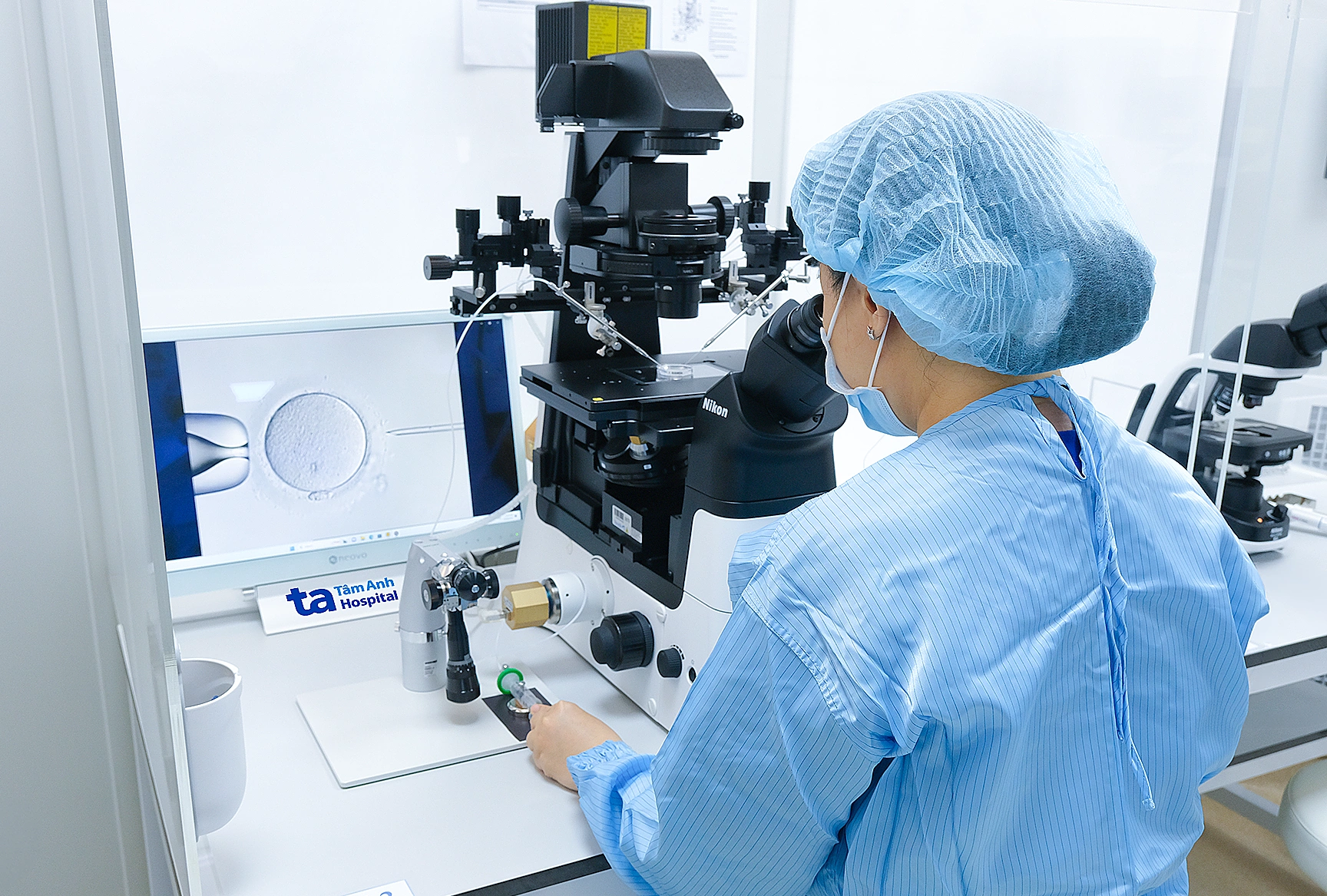 |
An embryologist injects sperm into the oocyte cytoplasm (ICSI) to create an embryo. *Photo: IVF Tam Anh* |
In her first IVF cycle, Ms. Thanh retrieved 25 eggs, which resulted in 18 day-3 embryos. However, only two embryos developed further to day 5, reaching the blastocyst stage. She conceived twins but experienced an early miscarriage. Master of Science, Doctor Phan Ha Minh Hanh, from IVF Tam Anh - District 8, suspected that chromosomal abnormalities (CA) in the embryos were the cause. She advised the patient to undergo preimplantation genetic testing for aneuploidy (PGT-A) in the subsequent cycle to select healthy embryos.
Despite this recommendation, Ms. Thanh's second egg retrieval yielded only one day-5 embryo, an insufficient number for genetic screening. This embryo was successfully implanted in the uterus but unfortunately led to another early miscarriage.
In the third cycle, Ms. Thanh produced three day-5 embryos. The preimplantation genetic testing results indicated that all three embryos had chromosomal abnormalities, specifically mosaicism, with rates of 70%, 55%, and 35% respectively. Doctor Hanh explained that a mosaic embryo contains both normal and chromosomally abnormal cells due to errors during cell division. Embryos with mosaicism below 50% are categorized as low-level mosaics and have the potential to implant, develop, and result in a healthy live birth when transferred. However, the risk of miscarriage or pregnancy failure remains higher compared to embryos without chromosomal abnormalities.
After multiple failures and prolonged emotional stress, Ms. Thanh and her husband made the difficult decision to proceed with the 35% mosaic embryo, opting against another IVF cycle. Before the embryo transfer, Doctor Hanh performed a hysteroscopy to examine the uterine cavity. She noted mild endometritis and prescribed anti-inflammatory treatment. Once the endometrium reached an appropriate thickness for implantation, the doctor transferred the mosaic embryo into the uterus.
This time, Ms. Thanh conceived, and her pregnancy progressed smoothly. After eight years of waiting, her son, weighing 3,3 kg, was born healthy. The couple also has one 55% mosaic embryo cryopreserved, holding onto hope for another child in the future.
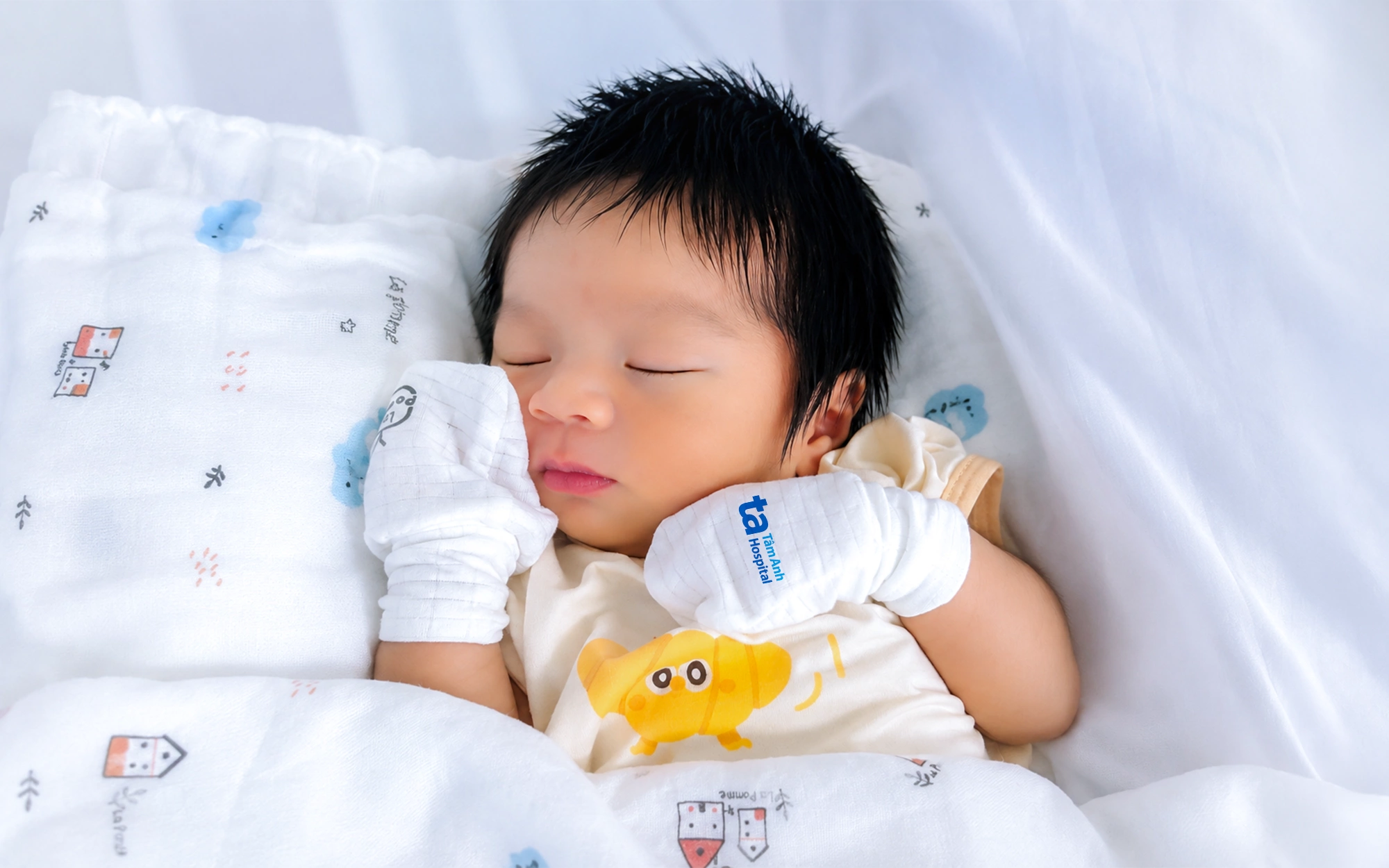 |
Ms. Thanh’s son was born through in vitro fertilization at Tam Anh General Hospital - District 8. *Photo: Nguyet Nhi* |
Doctor Hanh emphasized the importance of early consultation for young couples who have been trying to conceive for one year with regular unprotected intercourse without success. For women over 35, this timeframe is shortened to six months. This adjustment is crucial because increasing age leads to diminished ovarian reserve, poorer egg quality, and a higher risk of creating embryos with chromosomal abnormalities.
At IVF Tam Anh, patients with a history of recurrent embryo implantation failure, repeated miscarriages, or advanced maternal age are typically advised to undergo preimplantation genetic testing for aneuploidy (PGT-A) to detect chromosomal number abnormalities. Additionally, PGT-M screening is available for couples carrying inherited disease genes, while PGT-SR is recommended for cases with structural chromosomal abnormalities or recurrent miscarriages of unknown cause.
The Time-lapse embryo culture system, integrated with artificial intelligence (AI), continuously monitors embryo development. This advanced technology allows doctors and embryologists to more accurately assess an embryo's developmental potential, thereby increasing pregnancy success rates for patients.
Nguyet Nhi
*Character's name has been changed