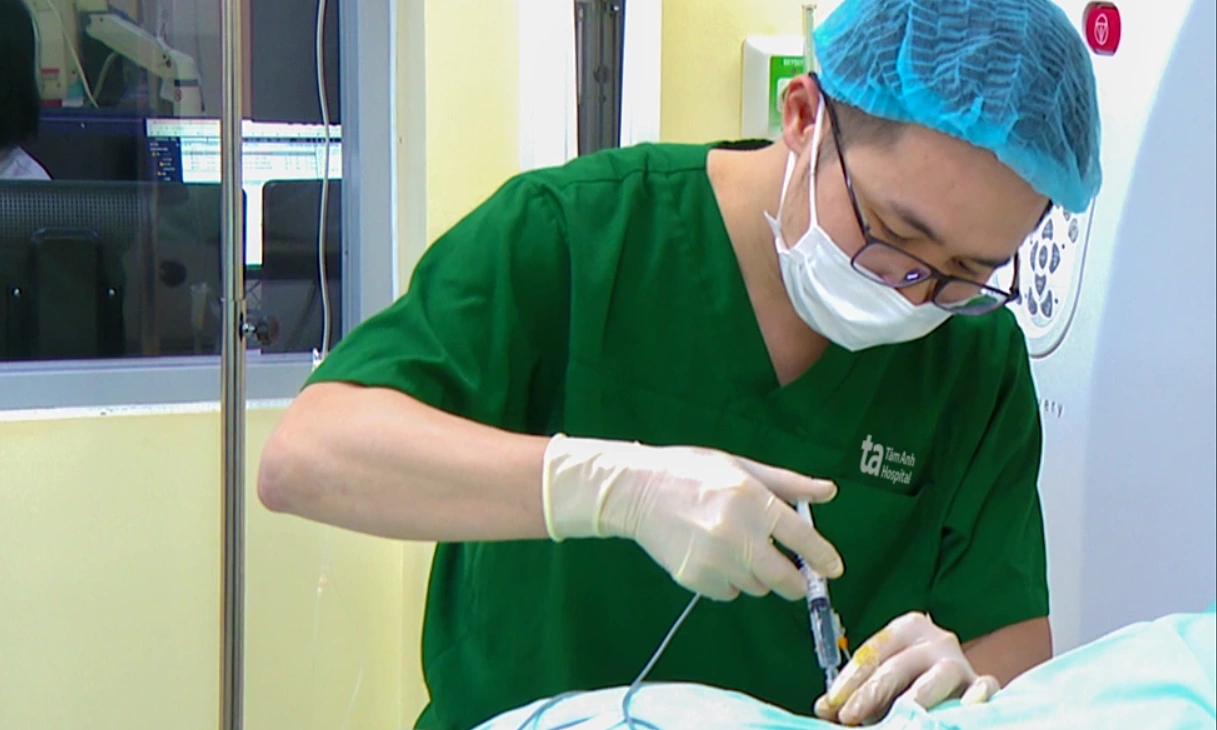
Dr. Nguyen Thi Ngoc, a cardiologist at the Cardiovascular Center, Tam Anh General Hospital TP HCM, stated that Mr. Phat had mitral and tricuspid valve regurgitation, dilation of all four heart chambers, heart failure, pulmonary hypertension, and atrial fibrillation. Delaying treatment can lead to progressive heart failure and complications such as arrhythmias, or damage to the liver and kidneys.
The heart has four valves that direct blood flow. When a valve leaks, blood flows backward, forcing the heart to work harder to pump blood to the body. This prolonged condition leads to dilated heart chambers, heart failure, arrhythmias, and an increased risk of stroke.
Heart valve regurgitation can be congenital or acquired due to rheumatic heart disease, valve degeneration, endocarditis, coronary artery disease, myocardial infarction, or cardiomyopathy. Dr. Tran Thuc Khang, Deputy Head of Cardiovascular Surgery at the Cardiovascular Center, Tam Anh General Hospital TP HCM, assessed that patients with severe mitral valve regurgitation, complicated by heart failure and arrhythmia (atrial fibrillation), require surgery to improve progressive heart failure.
According to Dr. Khang, heart valve repair is the preferred method for treating mitral valve regurgitation as it preserves the natural heart valve. Surgeons adjust the leaflets and valve ring to ensure the valve closes properly. The feasibility of repair depends on the extent of damage and the surgeon's experience. If the valve is too severely damaged or irreparable, doctors will replace it with an artificial heart valve. Compared to artificial valve replacement, valve repair helps patients maintain better heart function, reduces mortality risk, limits the need for long-term anticoagulants, and improves the long-term prognosis.
In Mr. Phat's case, despite severe heart valve damage, accompanied by heart failure, atrial fibrillation, and dilation of all four heart chambers, doctors decided to repair the valve instead of replacing it with an artificial one to preserve maximum heart function. For over four hours, the surgical team resected the prolapsed portion of the mitral valve, reconstructed the valve leaflet, shortened the elongated chordae tendineae, and implanted an annuloplasty ring to restore the valve's closing ability. Simultaneously, doctors sutured the left atrial appendage to prevent blood clot formation due to atrial fibrillation and reduced the excessively dilated atrial chamber.
 |
Dr. Ngoc checks the patient's health before discharge. *Tam Anh General Hospital* |
The postoperative course was favorable, with no complications recorded. Heart failure symptoms significantly improved, and Mr. Phat was discharged after one week.
According to Dr. Khang, if detected and treated at the right time, patients with heart valve regurgitation can undergo valve repair, preserving the natural heart valve and preventing progressive heart failure. It is important for patients to undergo early screening, rather than waiting until shortness of breath or heart failure indicates advanced disease.
After surgery, patients need to take medication as directed and attend follow-up appointments to assess the heart valve's condition, detect any abnormalities early, and intervene promptly.
To prevent progressive heart valve regurgitation from causing complications, patients should stop smoking, limit alcohol and stimulants, and maintain a healthy diet. They should also maintain a stable weight, avoid stress, get adequate sleep and rest, exercise for 30 minutes daily, and adhere to their doctor's treatment plan.
Thu Ha
*Patient's name has been changed
| Readers can submit questions about cardiovascular diseases here for doctors to answer |