Hung's hair loss began in 11th grade. Initially, he attributed it to academic stress and lack of sleep, so he didn't seek medical attention, opting for rest and hair care. However, the hair loss worsened over time.
Dr. Nguyen Ngoc Tran, a specialist in dermatology and aesthetic dermatology at Tam Anh General Hospital, Ho Chi Minh City, observed that Hung's hair thinning was primarily on his forehead and temples. Other areas remained relatively dense, consistent with male-pattern hair loss. His father and maternal grandfather also experienced hair loss and baldness, leading the doctor to suspect a genetic cause.
After further blood tests ruled out other potential causes of hair loss, such as anemia, iron deficiency, thyroid disorders, or nutritional deficiencies, doctors confirmed Hung had male-pattern hair loss with a genetic component.
Dr. Tran explained that male-pattern hair loss can emerge during adolescence or early adulthood, primarily linked to genetic factors and the sensitivity of hair follicles to androgens. Hung's early onset and prolonged progression necessitated identifying the cause, assessing its severity, and implementing appropriate intervention while his hair follicles still retained growth potential.
Androgens are a group of hormones present in both males and females, with dihydrotestosterone (dht) being a potent form. In individuals with dht-sensitive hair follicles, this hormone affects the follicles over multiple growth cycles, causing them to gradually shrink. New hair strands grow progressively thinner, shorter, and weaker, and their growth phase shortens, leading to a gradual decrease in hair density. This typically appears first on the forehead, temples, or crown.
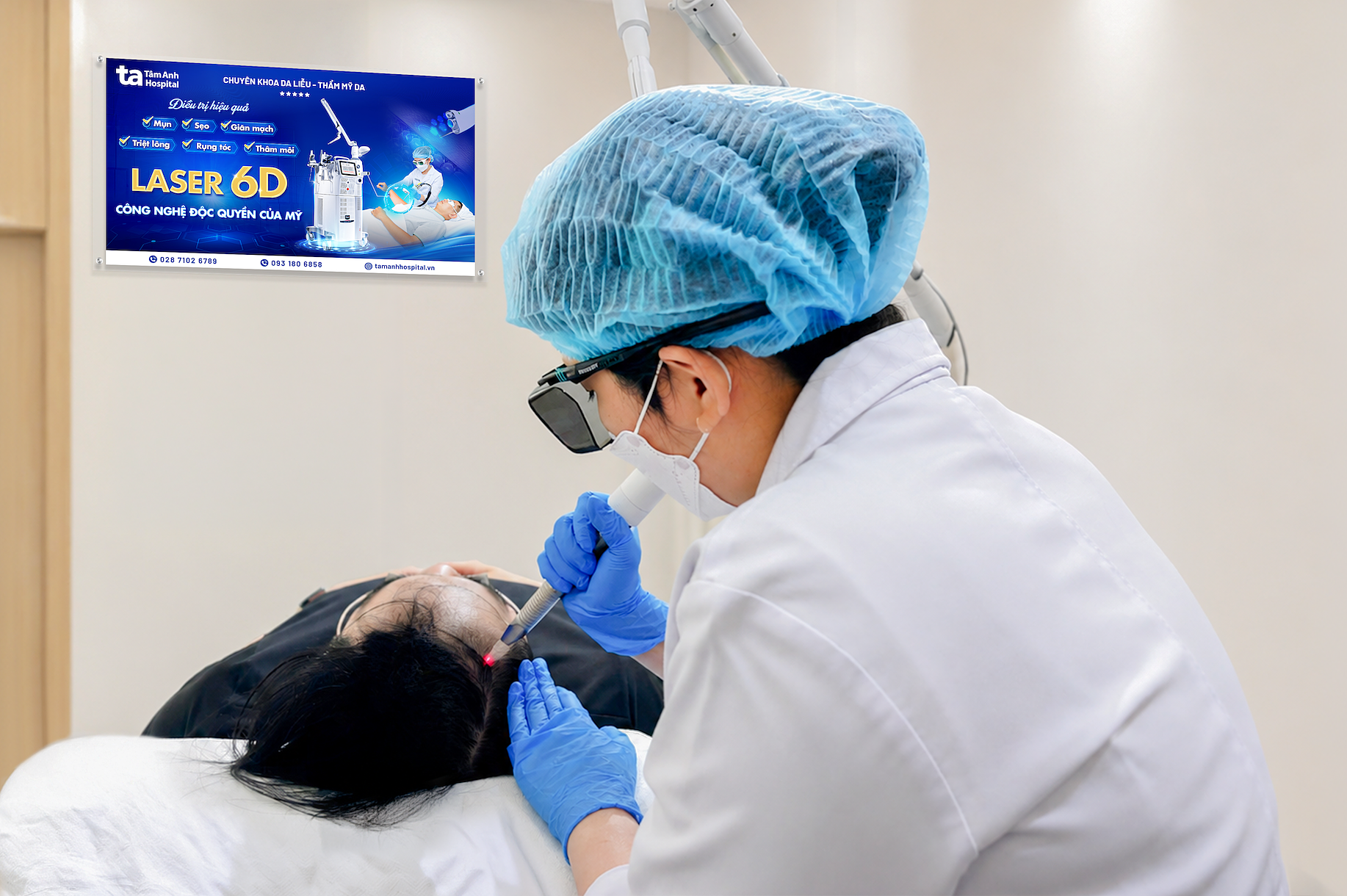 |
Doctors use 6d laser to treat Hung's hair loss. *Photo: Tam Anh General Hospital* |
According to Dr. Tran, genetic factors cannot be treated or eliminated with medication. The goal of treatment is to control androgen's effect on hair follicles, slowing their miniaturization and preserving those still capable of growth. Therefore, patients should not wait until extensive scalp thinning occurs before seeking intervention. Early treatment, while many follicles have not severely miniaturized, is often more beneficial.
Hung was prescribed a combined treatment protocol of platelet-rich plasma (prp) injections and 6d laser, administered approximately 4-6 times, once a month. Prp involves using plasma separated from the patient's own blood, which is then injected into the treatment area of the scalp. This delivers growth factors from platelets, supporting the environment around hair follicles and hair growth.
Meanwhile, the 6d laser acts on the scalp, helping to improve microcirculation in the treated area and create a favorable environment for hair follicles. The laser energy is adjusted by doctors based on the individual's scalp condition and the extent of hair loss.
After three prp and 6d laser treatments, Hung experienced a noticeable reduction in hair loss, with some areas showing new hair growth. However, doctors noted that this was just the initial stage. Hung needs to continue the regimen and undergo regular follow-ups to assess changes in hair density and quality.
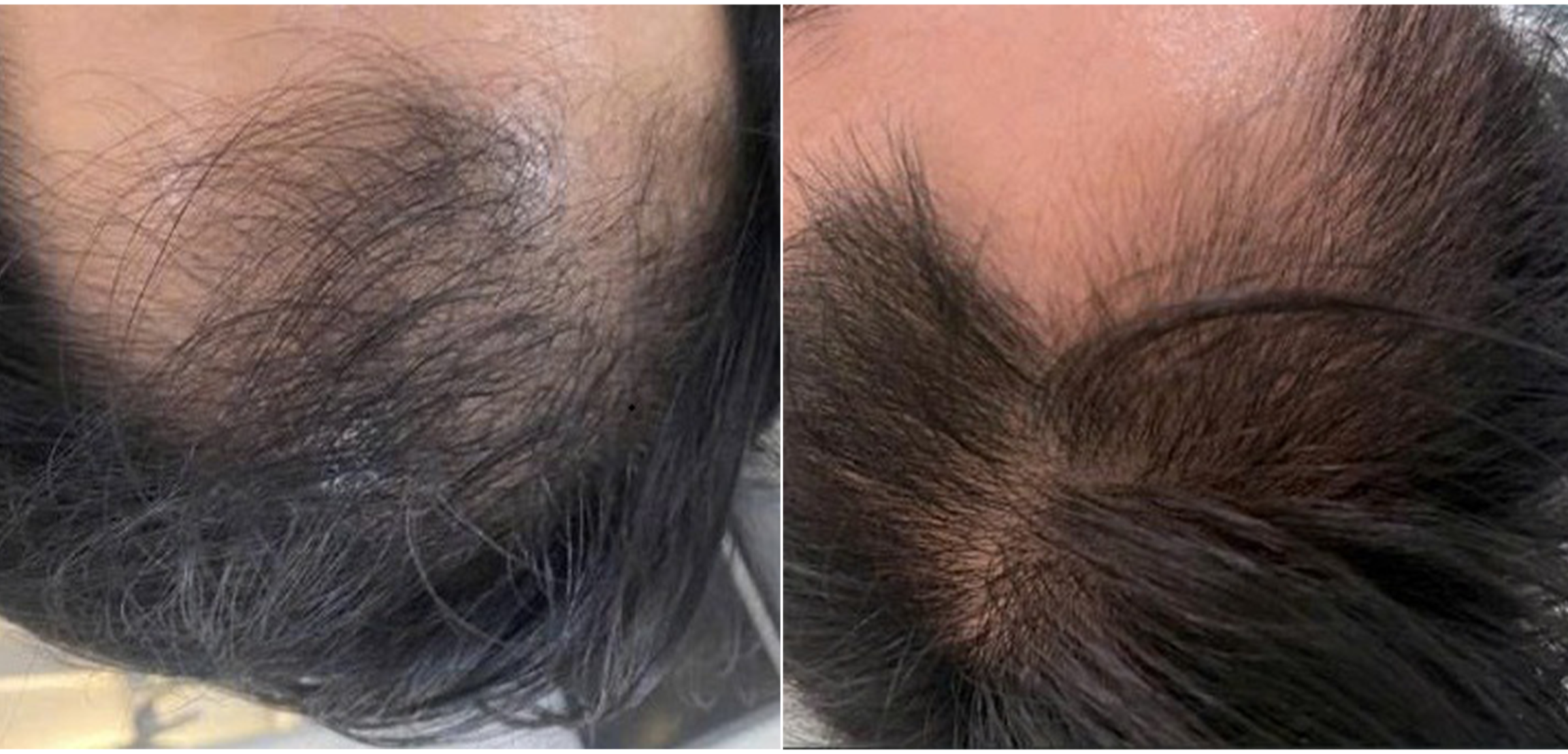 |
Hung's hair has regrown significantly after three combined prp injections and laser treatments. *Photo: Tam Anh General Hospital* |
Hung was advised to keep his scalp clean, avoid strong impact on the recently treated area, and follow prescribed care steps. Doctors cautioned him against using additional medications or hair growth products without consultation, and to continue monitoring his hair loss and attending follow-up appointments to assess his response.
Dr. Tran emphasized that hereditary hair loss does not guarantee baldness if a family member is bald, nor does it necessarily begin at the same age. Young individuals should seek medical examination if they notice gradual hair thinning, a receding hairline, decreased hair density on the forehead, temples, or crown, or if they have family members who experienced early baldness.
Minh Huong
*Character's name has been changed
| Readers can submit questions about dermatology and aesthetic dermatology here for doctors to answer. |