Master, Doctor Phung Thi Thom, from the Respiratory Department at Tam Anh General Hospital, Hanoi, states that smoke, a byproduct of combustion, contains soot, fine particulate matter, and toxic chemicals such as CO, SO2, CN, NH3, and formaldehyde. Inhaling smoke causes three types of physiological damage.
Thermal injury
Inhaling hot smoke burns the mucous membranes of the nose, mouth, pharynx, and epiglottis, causing pain. However, it rarely affects the lower respiratory tract due to the rapid heat dissipation mechanism of the upper respiratory tract. Typically, hot smoke inhaled through the nose at 142°C cools to just 38°C by the time it reaches the end of the trachea, causing little thermal damage to the lungs, unless the smoke contains steam or acid. While thermal injury from hot smoke is not life-threatening, it can narrow airways and lead to respiratory failure.
Chemical injury to the lower respiratory tract
This condition occurs when toxic substances in smoke irritate the bronchial and lung mucous membranes, causing congestion, edema, fluid secretion, and inflammatory agents. Bronchospasm, airway collapse, and pulmonary edema increase the risk of respiratory failure, infection, and death.
Even after surviving a fire, infectious complications such as tracheobronchitis, bronchiectasis, bronchiolitis obliterans, and aspiration pneumonia can still occur, with a high mortality rate within 10 days. If fortunate enough to survive, severe long-term effects from smoke inhalation on the lower respiratory tract can persist for up to 6 months after treatment.
Systemic injury from asphyxiation and poisoning
This is the leading cause of death from smoke inhalation in fires. Fire consumes oxygen, reducing oxygen concentration in enclosed environments during a blaze, while also producing carbon monoxide (CO), which causes asphyxiation and cellular-level poisoning. CO has an affinity for hemoglobin (a protein in red blood cells), meaning CO binds to hemoglobin 250 times more strongly than oxygen. After being inhaled into the lungs and absorbed into the blood, this gas displaces oxygen on red blood cells. Red blood cells then cannot deliver oxygen to nourish heart and brain cells, leading to coma, cardiac arrest, and death within a few hours.
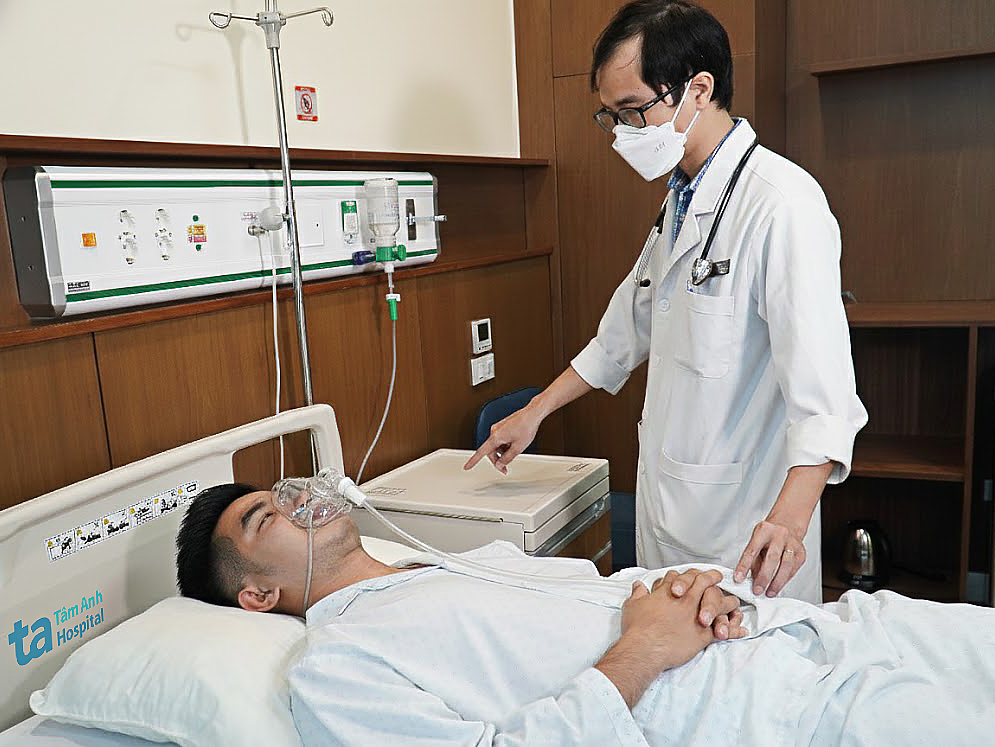 |
A doctor treats a smoke inhalation patient. Illustrative photo: Tam Anh General Hospital |
Doctor Thom advises that avoiding smoke inhalation helps preserve lives during a fire. Families should equip themselves with certified gas masks, sized appropriately for adults and children. Households and buildings should install fire alarm systems and smoke detectors.
If trapped in a fire without prior preparation, remain calm and use a wet cloth to cover your nose and mouth, limiting smoke inhalation. Move close to the floor by crouching, squatting, or crawling to avoid inhaling toxic smoke, which typically rises. Do not attempt to rush through dense smoke, as you could lose consciousness before escaping. Use wet clothes or rags to seal gaps and door crevices, helping to block smoke and extend survival time until rescue.
Smoke inhalation victims require proper first aid and immediate transport to a hospital for injury assessment and intervention. Victims experiencing respiratory failure with symptoms such as shortness of breath, chest pain, dizziness, or confusion need high-flow oxygen or intubation before airway edema develops.
Individuals who have just escaped a fire or live near a fire zone, even without obvious symptoms of respiratory failure, still need hospital medical monitoring. Many fires produce small smoke particles, invisible to the naked eye, which can cause delayed symptoms up to 36 hours later, according to Doctor Thom.
Thanh Long
| Readers can ask questions about respiratory diseases here for doctors to answer |