Glioblastoma is a prevalent, dangerous brain cancer. It grows rapidly and invades aggressively, often compressing brain tissue. This can increase intracranial pressure, leading to memory loss, vision impairment, and paralysis.
Treating glioblastoma requires a multimodal approach, beginning with microsurgical removal of the maximum tumor volume. However, glioblastoma is complex, and surgery often cannot completely remove the tumor. Therefore, doctors typically prescribe adjuvant radiotherapy after surgery to destroy residual cancer cells, helping to prevent or slow down disease recurrence.
The patient underwent brain tumor removal surgery 5 weeks ago. The wound has healed, and general health has largely recovered. This is the optimal time to begin adjuvant radiotherapy. After identifying the boundaries of residual tumor parts post-surgery using CT and MRI images, doctors outline the target volumes for radiation. Medical engineers then calculate the radiation dose to be delivered to each brain region.
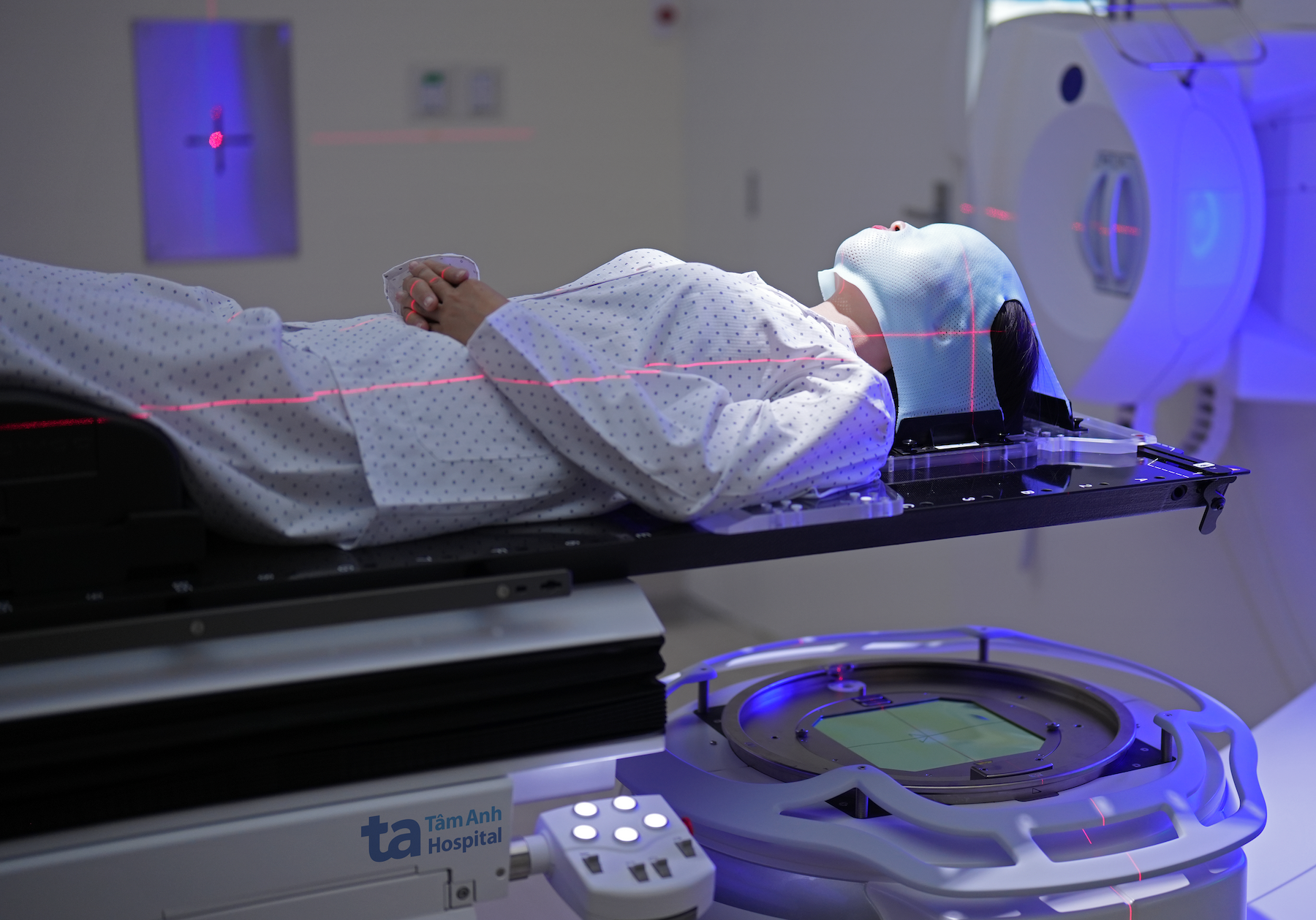 |
A patient undergoing post-surgery brain tumor radiotherapy with a custom immobilization mask. Photo: Tam Anh General Hospital |
A patient undergoing post-surgery brain tumor radiotherapy with a custom immobilization mask. Photo: Tam Anh General Hospital
The radiotherapy regimen and technique depend on each patient's specific case. After treatment, patients can return home without needing isolation. If you have undergone brain tumor surgery and been prescribed adjuvant radiotherapy, you should seek continued treatment at a multidisciplinary hospital with a specialized oncology department and advanced radiotherapy facilities.
Master, Doctor Vuong Ngoc Duong
Deputy Head of Radiotherapy Department
Tam Anh General Hospital Hanoi
| Readers can send questions about cancer here for doctors to answer |