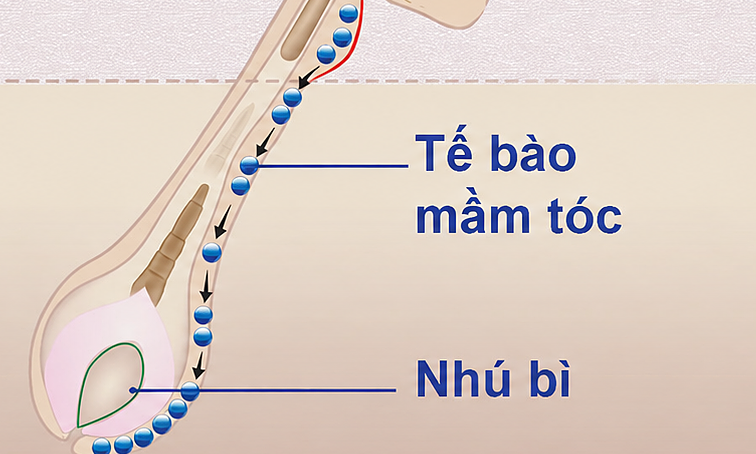
Dr. Nguyen Duy Quan, from the Planning and General Department at TP HCM Dermatology Hospital, stated at a scientific conference on updating medical aesthetic equipment and technology, organized by the hospital on 28/6, that hair loss is a natural physiological phenomenon. This occurs because hair follows a cycle of growth, regression, and shedding. On average, one person can shed fewer than 100 strands of hair each day without cause for concern.
However, if hair loss exceeds this threshold, occurs in patches, or is accompanied by symptoms such as severe itching or a red scalp, patients should seek medical examination to determine the cause. Additionally, cases where hair loss significantly impacts psychology or aesthetics should be addressed early.
In clinical practice, doctors most commonly encounter hair loss due to male hormones and telogen effluvium. Telogen effluvium is a condition where hair prematurely enters the resting phase and sheds en masse. Another common form is alopecia areata, characterized by circular bald patches on the scalp.
Many people believe that frequent shampooing causes more hair loss. However, according to Dr. Quan, there is currently no clear scientific evidence suggesting that frequent shampooing directly leads to hair loss. The key is proper scalp cleansing and selecting suitable shampoos. Excessive shampooing with harsh detergents can damage the scalp, leading to inflammation and indirectly contributing to hair loss.
Similarly, beauty treatments such as perming, coloring, straightening, or bleaching hair do not necessarily cause hair loss if performed correctly and with quality products. Conversely, overuse of chemicals or performing these treatments too frequently can weaken hair strands, increasing the risk of breakage and leading to scalp conditions.
 |
Dr. Quan consults a patient at TP HCM Dermatology Hospital. Photo: Hospital provided |
The doctor also noted that hair loss is increasingly common among young people, including those in their 20s and 30s. Some types of hair loss, such as hair loss due to male hormones, can begin early. Additionally, telogen effluvium is often observed after severe illnesses, high fevers, or prolonged stress.
In some cases, hair loss is not just a scalp issue but can also be a warning sign of a systemic illness. Patients should be aware if hair loss is accompanied by prolonged fatigue, fever, joint pain, or the appearance of abnormal skin and mucous membrane lesions.
A common mistake is placing too much trust in products advertised for "miraculous hair growth." According to Dr. Quan, the process of hair recovery and regrowth takes time, so most current treatment methods require many months to show noticeable results.
Currently, hair loss treatment offers many options: oral medications, topical medications, laser therapy, light therapy, micro-injection, or hair transplantation. The choice of method depends on the cause and severity of hair loss for each patient. Even genetic baldness can be improved with modern treatment measures, although effectiveness varies by case.
Recently, social media has spread many tips for treating hair loss using natural ingredients like onion and grapefruit essential oil. According to the doctor, these ingredients may contain some beneficial nutrients, but indiscriminate use without quality control can cause contact dermatitis or scalp infections.
To prevent early hair loss, the doctor recommends maintaining a balanced diet, limiting prolonged stress, and proper hair care. If abnormal hair shedding is noticed or the scalp shows unusual signs, patients should seek early examination for timely diagnosis and treatment.
Le Phuong