This proposal is part of a draft law amending and supplementing the Law on Donation, Retrieval, and Transplantation of Human Tissues, Body Parts, and Cadavers. The Ministry of Health sought feedback on 14/8. Under the draft, living donors to family members must be at least 18 years old. For donations to non-family members, donors must be at least 25 years old.
The Ministry of Health states that current regulations do not differentiate the age requirement between donors to family members and those to non-family members. Individuals aged 18 to 25 may still be developing physically and cognitively, with potentially unstable careers and incomes. Allowing organ donation to non-family members at this age could increase vulnerability to influence, coercion, or exploitation for organ trafficking.
Living donors currently account for about 94% of all transplant cases in Vietnam. This high reliance on living donations necessitates stronger measures to prevent trafficking, brokerage, and forced organ donations.
In addition to raising the age for non-relative living donors, the Ministry of Health proposes expanding the donor pool to include brain-dead individuals under 18. If a brain-dead person under 18 had expressed a wish to donate organs before death, and their family agrees, donation can proceed. This regulation addresses the current law's limitation, which only allows individuals aged 18 and older to register for organ donation, thereby increasing the supply of organs, especially for children.
The draft also adds individuals experiencing circulatory death (cardiac death, meaning the heart has permanently stopped beating) to the group eligible for tissue and organ donation, alongside brain-dead individuals. This practice, adopted from many countries, aims to significantly expand the available organ pool.
Organ transplant priority includes: emergency patients, children, individuals registered for tissue or organ donation who have a transplant indication, first-degree heirs of donors, and those with the longest waiting time on the national transplant list. Organ allocation ensures compatibility between donor and recipient, fairness, transparency, and objectivity, prioritizing urgency, compatibility, treatment effectiveness, the waiting list, and national coordination procedures.
A current challenge is the lack of standardized economic-technical norms and service prices for human tissue and organ retrieval and transplantation. Each facility sets different prices, and many do not disclose them. Therefore, the Ministry of Health proposes adding regulations for human tissue and organ transplant service prices. These service prices would cover expenses for: resuscitation to maintain tissues and organs of donors at risk of brain death or circulatory death; determination of brain death or circulatory death; retrieval and quality assessment of tissues and organs; tissue and organ transplantation; and other legally prescribed expenses.
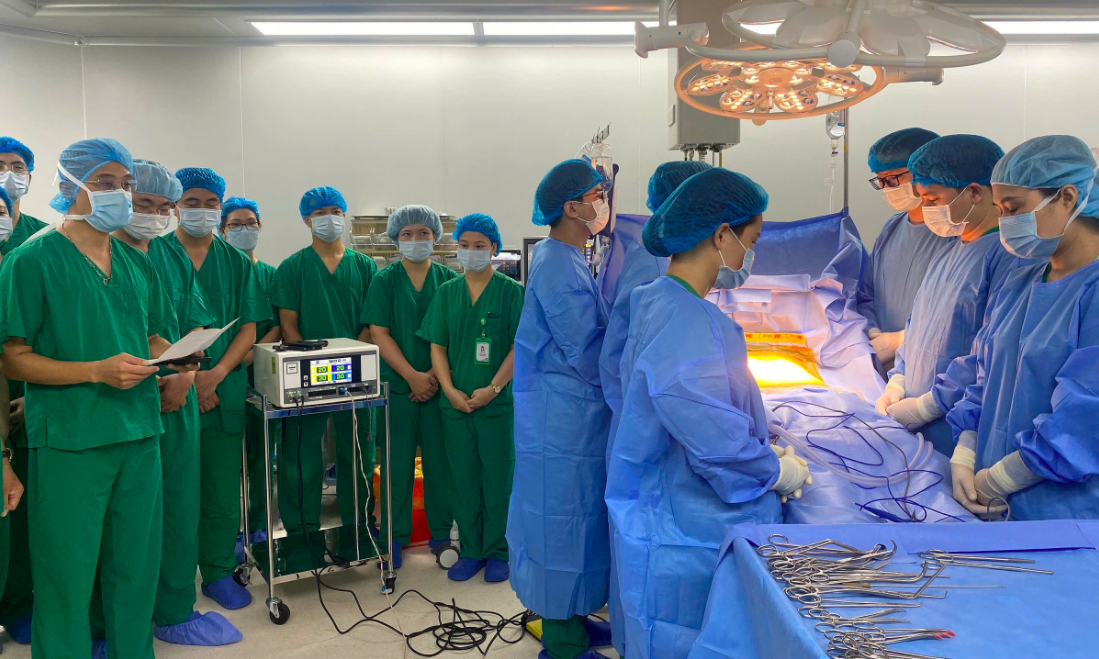 |
Doctors bow in gratitude to organ donors before retrieval and transplant surgery. Photo: Xanh Pon Hospital |
These amended policies are expected to remove legal barriers, enhance coordination efficiency, and increase life-saving opportunities for patients awaiting organ transplants amid growing demand. In the last three years, the number of brain-dead organ donations in Vietnam has steadily risen, with 41 cases in 2024, 66 cases in 2025, and 46 cases as of early August this year. Despite this increase, the actual supply of donated organs remains limited compared to the demand.
Since 1992, Vietnam has performed about 11,000 transplants. Currently, the supply of organs from deceased or brain-dead donors remains scarce, while the demand for transplants continues to grow. Vietnam has the highest transplant rate in Southeast Asia, exceeding 1,000 cases per year, yet its post-mortem organ donation rate is among the lowest globally.
Le Nga