Vuong's wife, Phuong Tuyet, 50, contracted hepatitis B from her father. For many years, she has managed her condition with antiviral medication, regular viral load tests, and a suitable diet and lifestyle. Since they met in 2003, she openly shared her health status, reminding her husband to get vaccinated and avoid sharing personal items that could transmit blood. As a result, their two children, born in 2005 and 2007, remain uninfected.
Many young people are also proactively protecting their partners. Bao Khanh, 24, from TP HCM, inherited the disease from her mother. She now effectively controls it through antiviral medication and a healthy lifestyle, avoiding alcohol and tobacco. Khanh consistently shares her condition openly, encouraging her partner to get vaccinated as a preventative measure rather than living in fear.
 |
The rate of hepatitis B transmission among couples is high without vaccination and safe sexual practices. Photo: Vecteezy |
According to Doctor Huynh Dang Ngoc Phuong, Head Doctor of VNVC Thu Duc Center, TP HCM, hepatitis B can lead to cirrhosis and liver cancer, and is easily transmitted between partners if prevention is neglected. A study in Quangdong, Trung Quoc, revealed numerous couples where only one partner was infected, often because they had not been vaccinated or had not received booster shots when their antibody levels declined.
Doctor Phuong emphasizes that the primary principle for cohabiting couples is that the healthy individual must be fully vaccinated and undergo regular antibody checks to ensure protection. Ideally, antibody levels should be above 100mIU/ml. Currently, Viet Nam uses both single hepatitis B vaccines and combination vaccines that also protect against hepatitis A in a single shot. The standard vaccination schedule involves three doses over 6 months, with antibody quantification required before the first dose.
For couples where one partner is infected, the other is considered high-risk. Therefore, they should follow a high-risk vaccination regimen consisting of 4 doses: three doses administered within one month, followed by a booster shot one year later. Subsequent regular antibody quantification and booster shots are necessary if antibody levels fall below the protective threshold.
The second principle is that the infected partner must undergo consistent treatment and monitoring, including antiviral medication, liver cancer screening, and viral load reduction. Once the infected partner's condition is controlled and the other partner has protective antibodies, the couple can still engage in sexual activity and plan for children, guided by a doctor's advice.
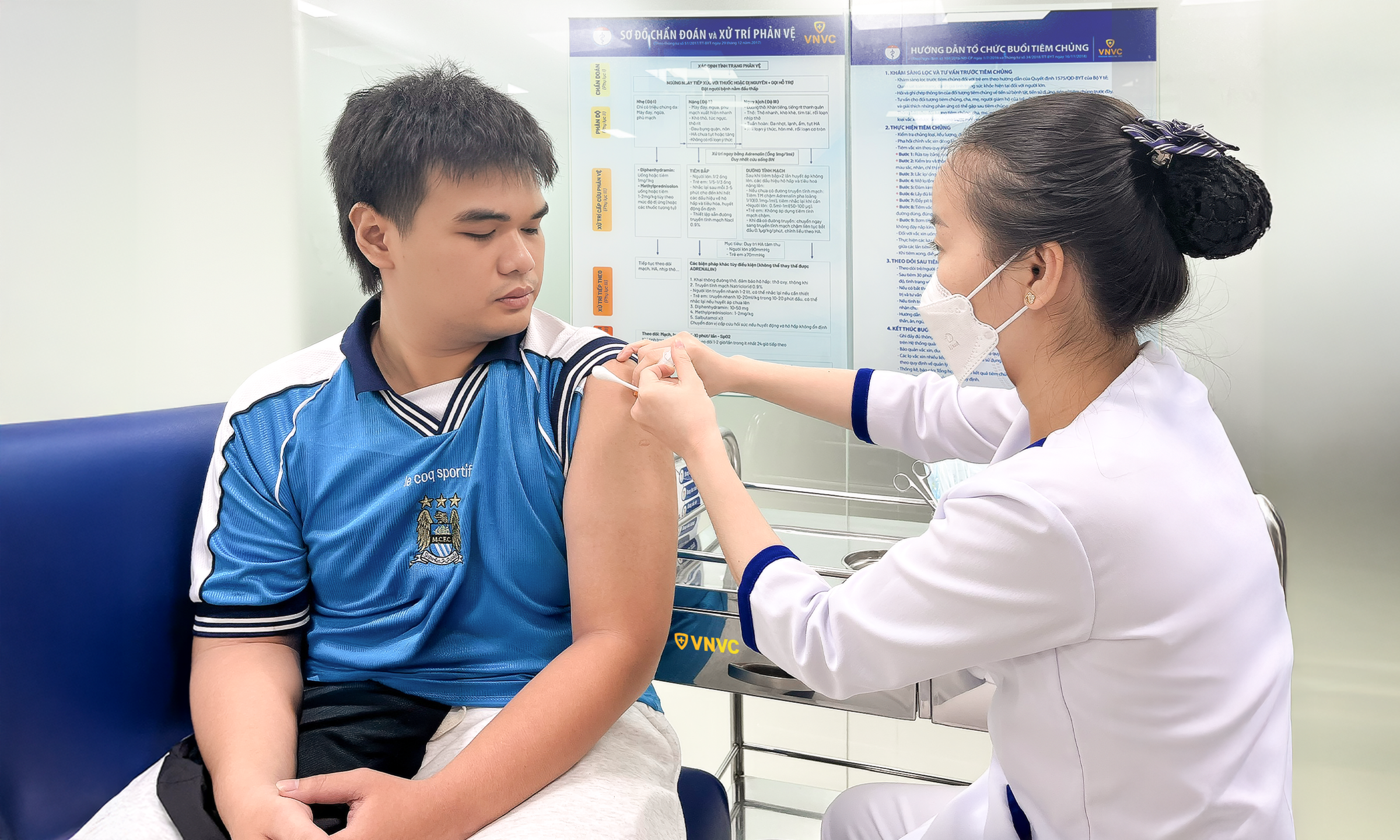 |
A young man receives a hepatitis B vaccine at the VNVC Vaccination System. Photo: Dieu Thuan |
Beyond vaccination and treatment, couples must avoid sharing personal items that could cause scratches or bleeding, such as toothbrushes, razors, tweezers, and nail clippers. Family members living in the same household are also at high risk, so they should undergo antibody testing and vaccination if not adequately protected. If already infected, they should seek treatment to mitigate complications.
Women with hepatitis B who plan to conceive should undergo testing and monitoring. They may be prescribed medication during the last three months of pregnancy to reduce viral load. After birth, infants require a hepatitis B immunoglobulin injection within 6 hours and the first vaccine dose within 24 hours, followed by completion of the full vaccination schedule.
Doctor Phuong stresses that living with someone who has hepatitis B does not guarantee infection. The crucial steps are to understand the disease, ensure full vaccination, monitor antibody levels, receive effective treatment, and adhere to safety protocols to protect health, maintain marital harmony, and pursue normal family planning.
Phuong Minh