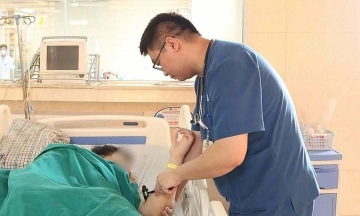
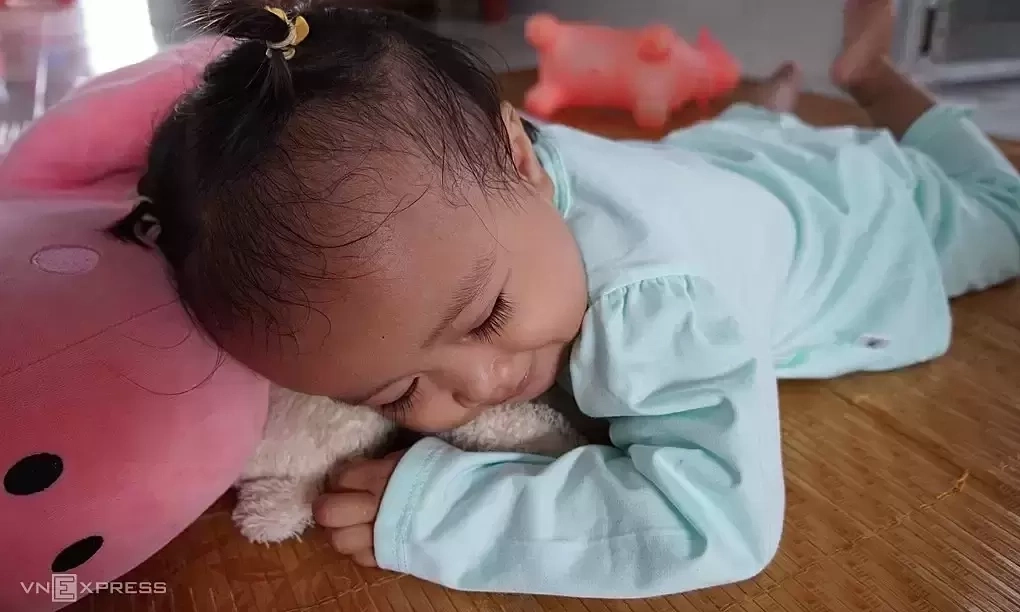
Enlarged tonsils, a chronic swelling and hypertrophy of the tonsils, are common in children. This occurs as the tonsils actively protect the respiratory tract from bacteria and viruses.
Symptoms of enlarged tonsils include: fever, sore throat, difficulty swallowing, a feeling of obstruction, bad breath, and swollen lymph nodes in the neck. Children may also experience snoring, sleep apnea, restless sleep, waking up startled, and wheezing.
Normally, airflow through the throat is clear during sleep. However, enlarged tonsils can obstruct the pharynx, narrowing the airway. This makes airflow difficult and causes snoring.
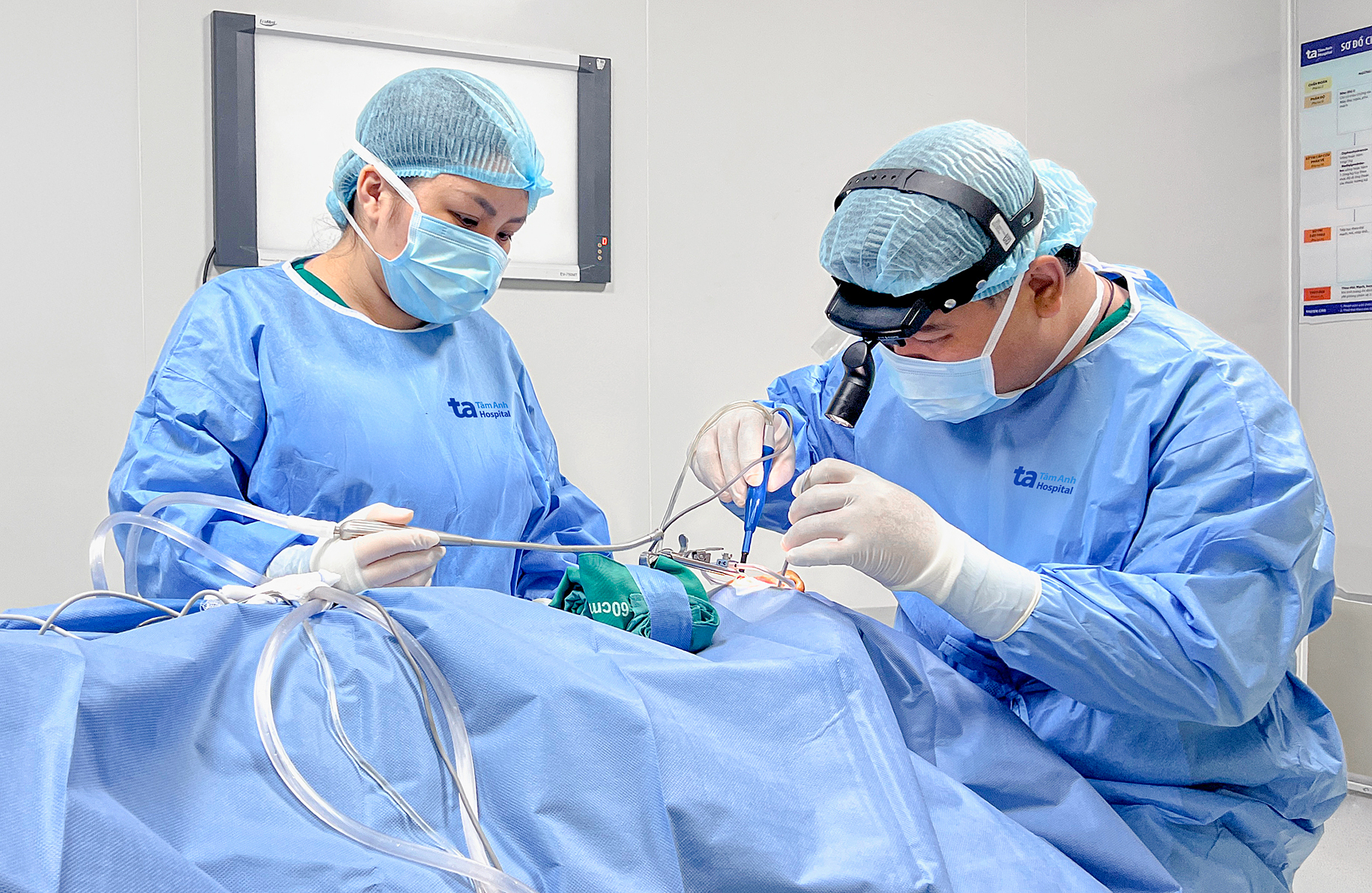 |
Dr. Ngoc performing tonsillectomy for a patient. Photo: Tam Anh General Hospital
Children may snore when they have a cold or stuffy nose. If they sleep soundly, breathe evenly, and wake up feeling rested, this is usually normal. However, snoring becomes a concern when a child snores loudly more than three nights per week, sleeps with an open mouth, experiences sleep apnea, frequently breathes through the mouth, tosses and turns excessively, sweats at night, or wakes up startled.
Frequent snoring can indicate obstructive sleep apnea syndrome. This condition involves temporary airway blockage during sleep, causing breathing to stop for several seconds before a forceful compensatory breath. If prolonged, this can lead to oxygen deficiency during sleep, poor sleep quality, daytime fatigue, reduced concentration, and impaired physical and academic development.
If your child snores often, wakes up startled at night, experiences sleep apnea, or has recurrent tonsillitis, medical evaluation is recommended. A doctor will assess the degree of tonsil enlargement, the frequency of recurrence, and any airway obstruction. For mild tonsillitis, medical treatment is prioritized. Parents should ensure daily nose and throat hygiene for their child, avoid cigarette smoke and fine dust, provide adequate hydration, and maintain a regular sleep schedule.
Tonsillectomy may be considered if tonsillitis recurs multiple times a year, or if tonsils are grade 3 or 4, leading to persistent snoring, sleep apnea, difficulty eating, or developmental issues.
Currently, doctors perform tonsillectomies using Plasma technology or Coblator knives. These methods quickly and gently remove the infected tissue, provide local hemostasis, and minimize damage to surrounding tissues. Children can typically talk and eat within three hours post-surgery. Patients should drink plenty of water, avoid spicy or hot foods, and refrain from shouting loudly.
Dr. Nguyen Duc Ngoc
ENT Center
Tam Anh General Hospital TP HCM
| Readers can submit questions about ENT conditions here for doctors to answer |