This rare incident was recently shared by Doctor Nguyen Bien Thuy, from Hanoi Obstetrics and Gynecology Hospital, on 30/7.
According to Doctor Thuy, the expectant mother, 38 weeks pregnant, was scheduled for her first cesarean section. The surgery proceeded successfully, but as the 3,8 kg baby girl let out her first cry, the husband suddenly collapsed. The medical team, having just completed the intense delivery, immediately shifted to provide medical assistance to the father. After a few minutes, he regained consciousness and his condition stabilized.
Doctor Thuy stated that it is uncommon for family members to faint in the delivery or operating room. Many individuals with a sensitive disposition can panic and faint simply by seeing a small amount of blood on the umbilical cord or around the baby.
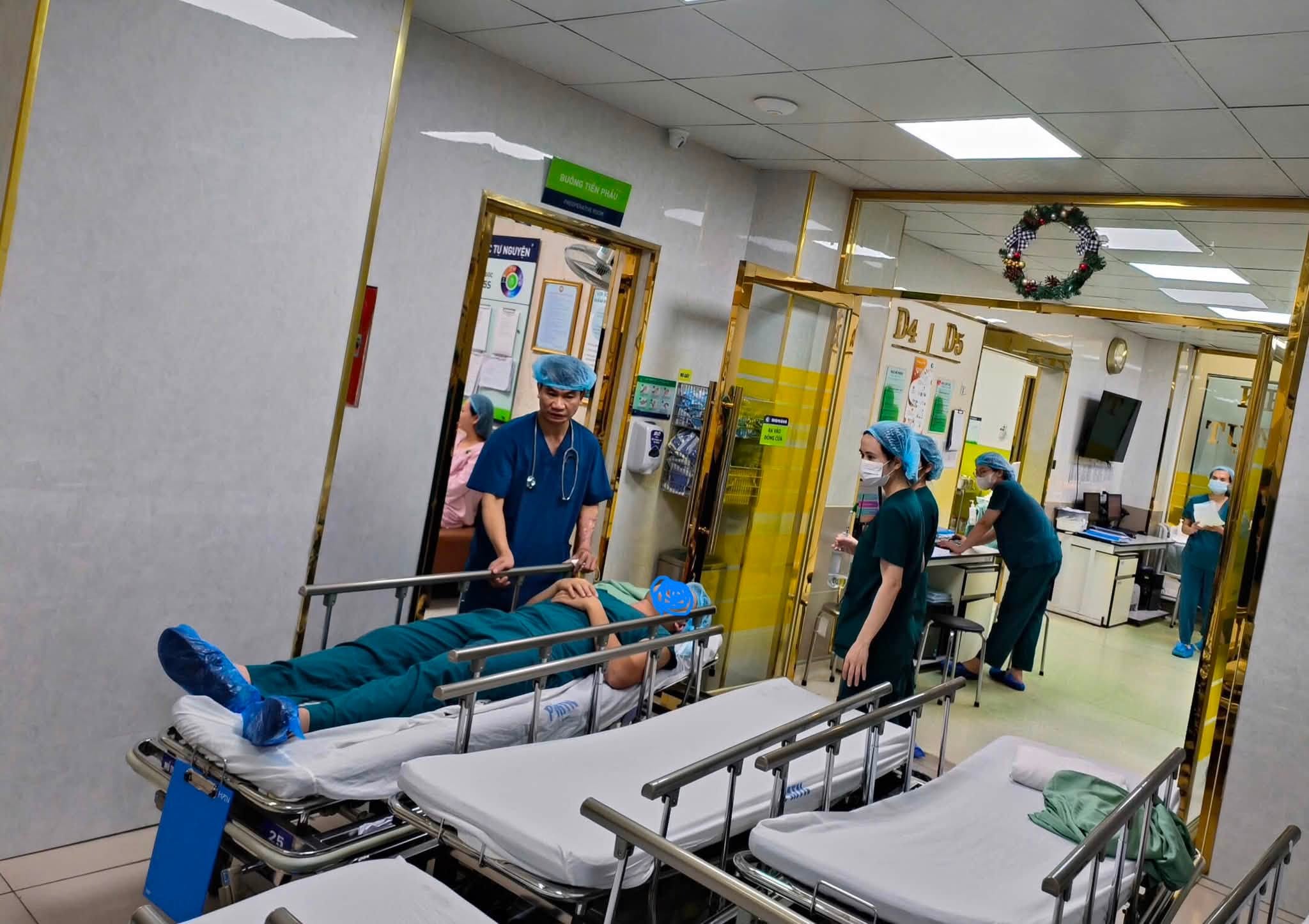 |
The man fainted while in the operating room with his wife. Photo: Doctor provided. |
The man fainted while in the operating room with his wife. Photo: Doctor provided.
Having a family member, especially the husband, present during childbirth is significant. It helps reduce pressure on the expectant mother and strengthens family bonds. The hospital supports these emotional moments, but Doctor Thuy also noted that "not everyone is suitable to accompany their wife in the operating room".
A cesarean section is a major surgery with inherent risks, such as hemorrhage or complications from anesthesia. Expectant mothers face fears from surgical instruments, the sounds of medical tools, and the sensation of full-body numbness while still aware of the doctors' actions.
For husbands, directly witnessing the tense atmosphere, distinctive disinfectant smell, continuous heart rate monitor beeps, and medical interventions can cause significant psychological shock. The combination of extreme anxiety for the safety of his wife and child, along with overwhelming joy upon hearing the baby's first cry, can lead to intense emotional reactions and fainting.
Experts advise that individuals with a history of blood phobia or a fragile disposition should avoid entering the operating room. If a husband still decides to be present, he must be psychologically prepared and strictly avoid looking at the surgical area. This prevents exposure to shocking sights that could affect his health and disrupt the medical team's work. Families must strictly adhere to disinfection regulations, wear specialized attire, and follow instructions to maintain the sterile environment and the surgical team's procedures.
Thuy An